

Ryan Field • Northwestern University
Illinois
Date: 2026
Watertight Stadium Expansion Joints in the Seating Bowl
Project Background
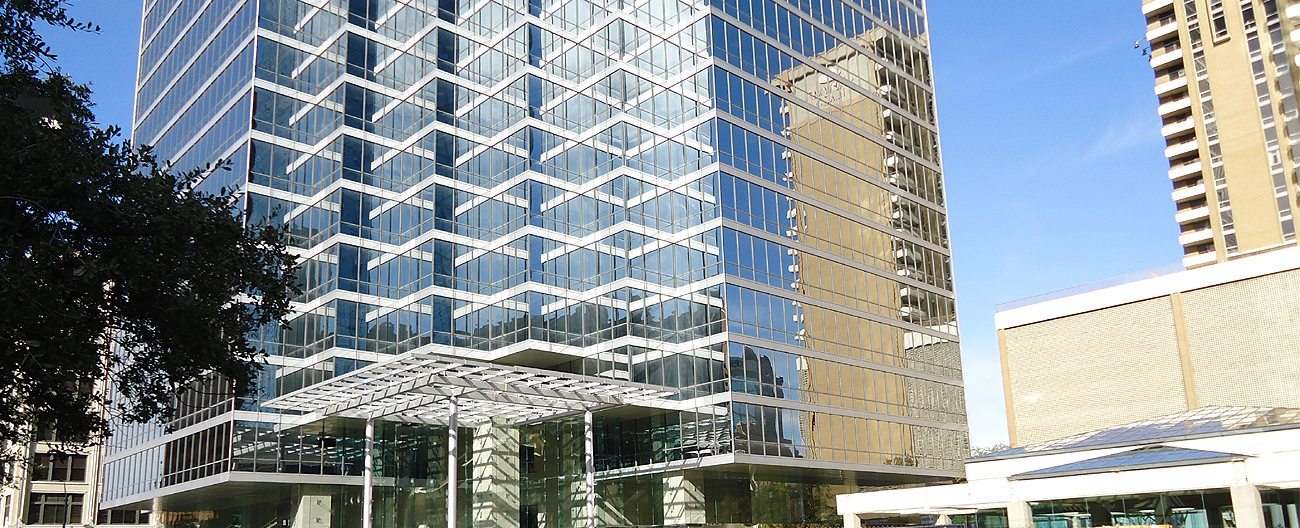
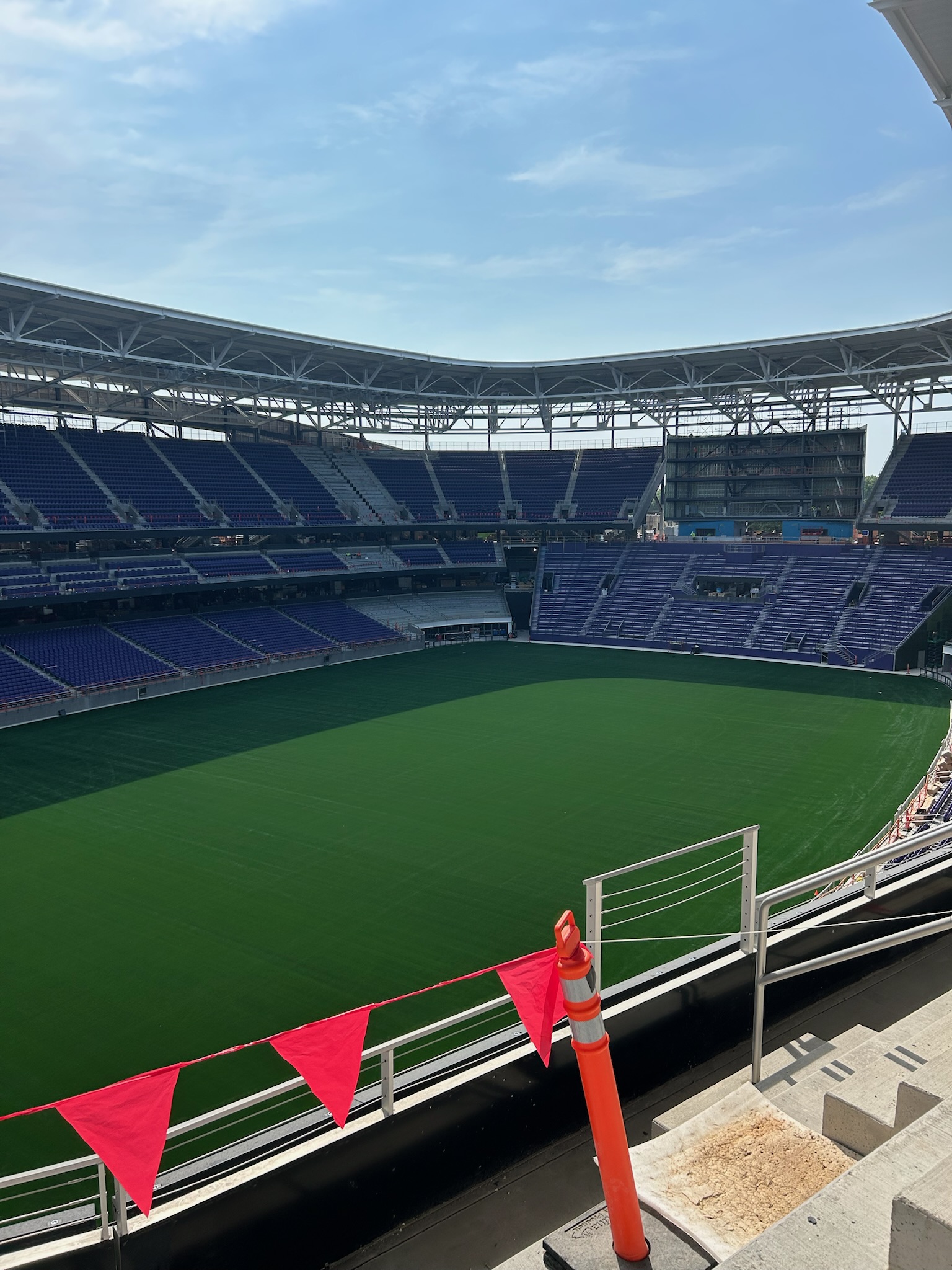
Northwestern’s new Ryan Field replaces the 1926 stadium that stood on the same site for nearly a century. Like any large stadium, it incorporates expansion joints throughout the structure to accommodate movement from thermal change, structural loading, and seismic forces. In the seating bowl, those joints maintain a watertight seal through sixteen tread-and-riser transitions in the northwest lower bowl alone, tracing the seating profile as it rises and falls without interruption.
Project Details
| Location | 1501 Central Street, Evanston, IL |
| Owner | Northwestern University |
| Architect | HNTB (architect of record), Perkins&Will (associate design architect) |
| General Contractor | Turner-Walsh Joint Venture |
| Installer | IWS, Aurora, IL |
| Capacity | 35,000 |
| Completion | 2026 |
| Products | Seismic Colorseal, Seismic Colorseal-DS, Emshield DFR2, SJS, SJS-FR2, DSM System, RoofJoint |
Elevation and Plane
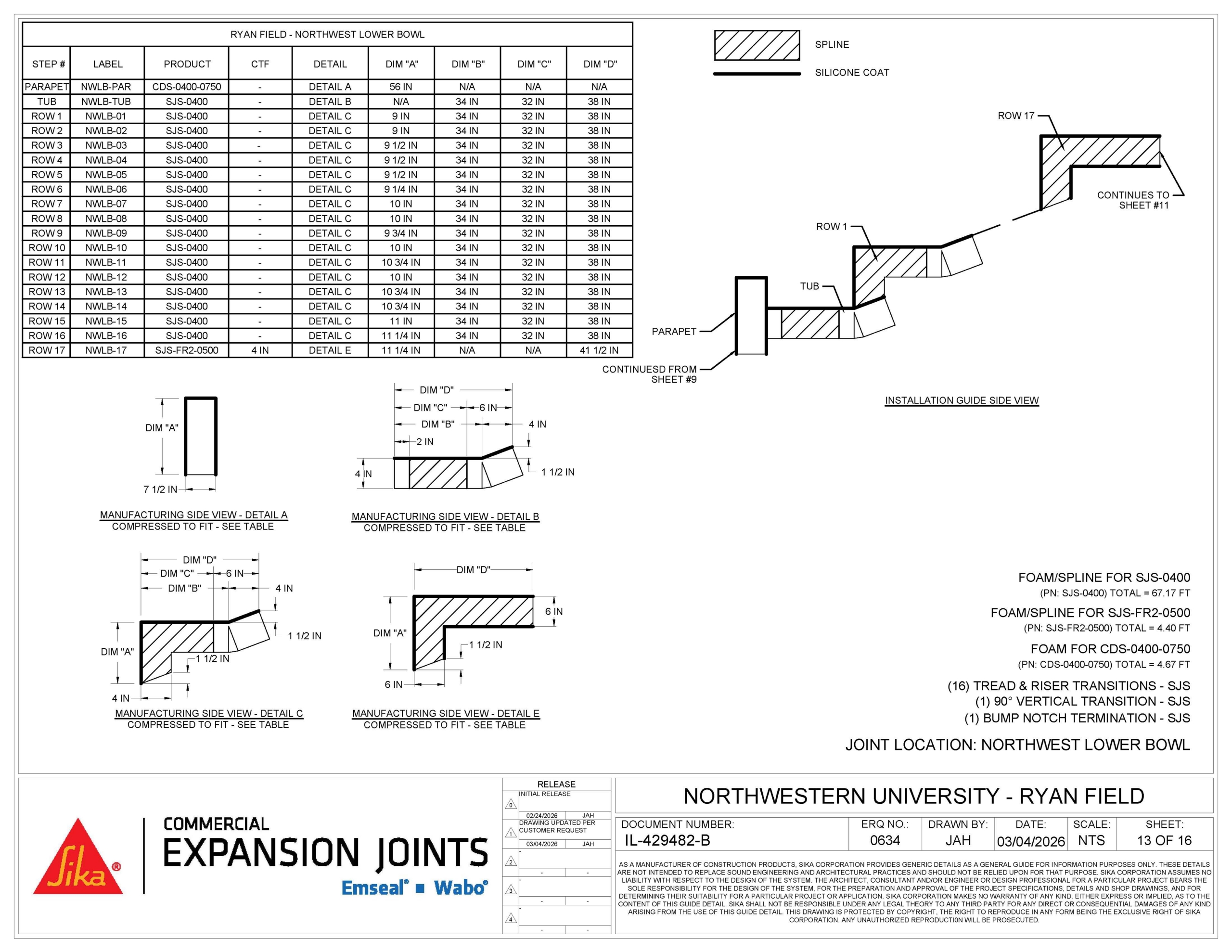
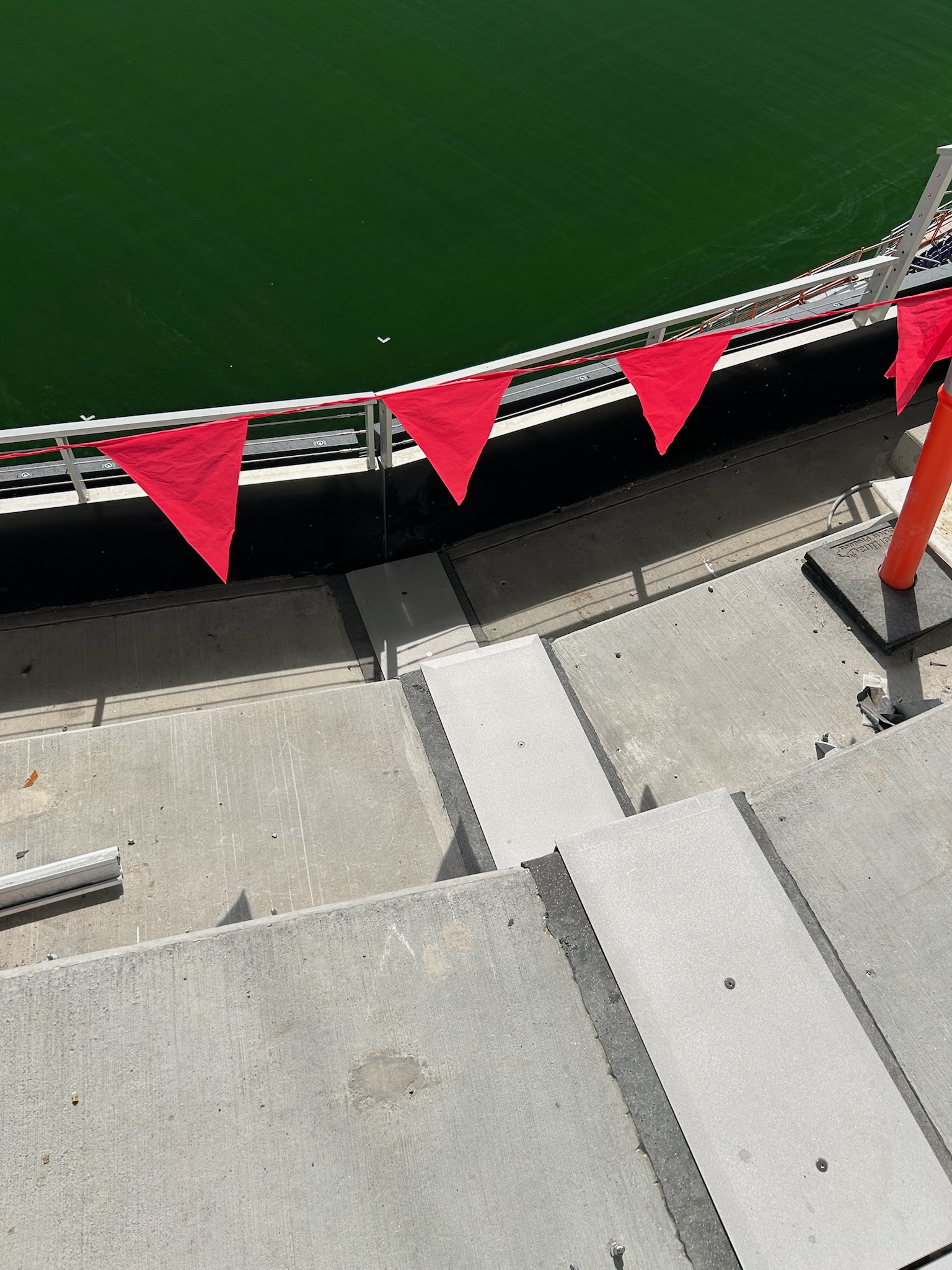
Expansion joints in a stadium rarely stay level. In the seating bowl, the joint follows a linear path down the aisle in plan, but its elevation changes continuously through the seating profile. Tracing that path from tread to riser and riser to tread, the joint moves between horizontal and vertical planes along the same straight line, part of a single run that never breaks.
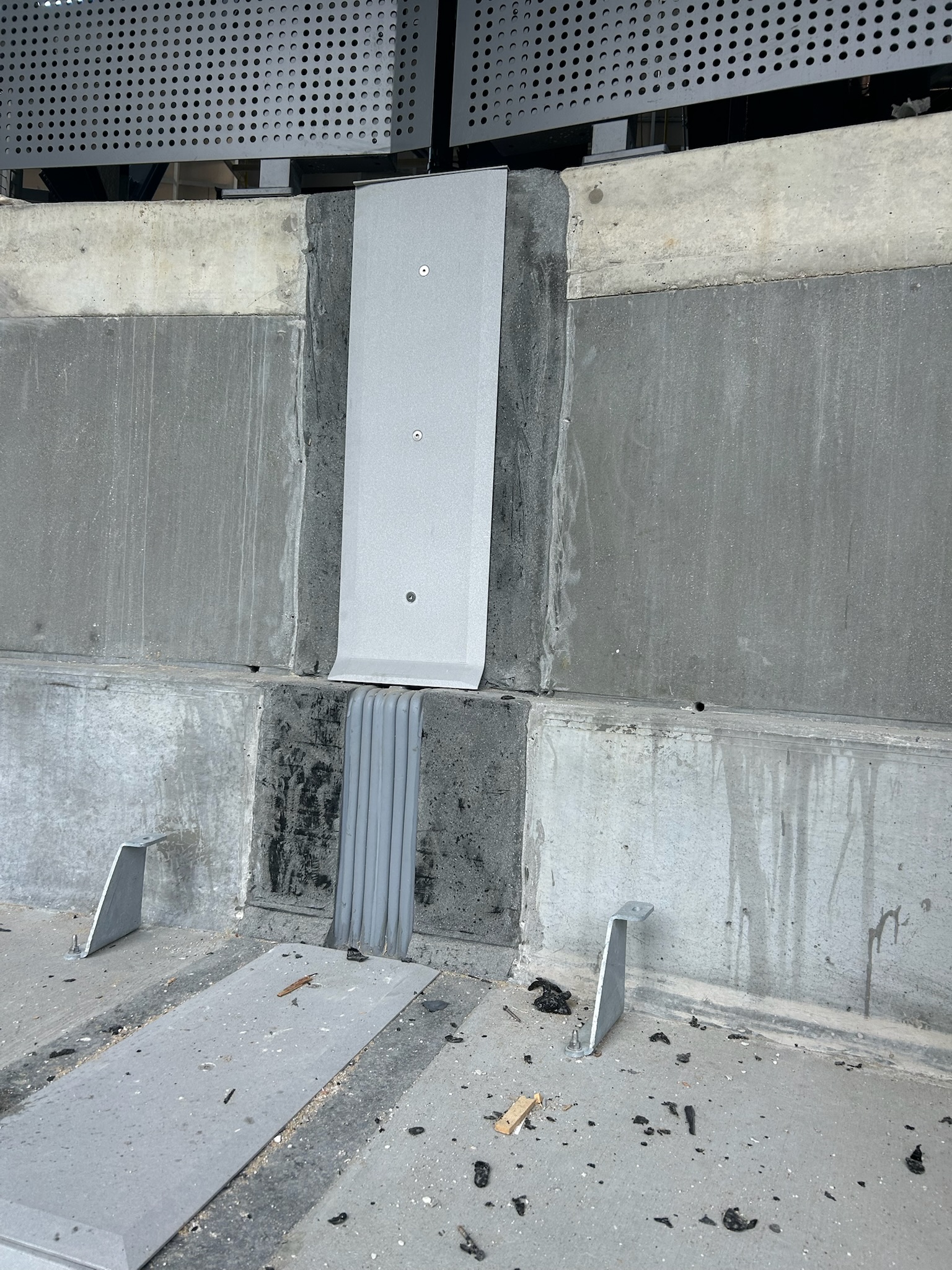
In the northwest lower bowl, that line includes sixteen distinct tread-to-riser transitions, a 90-degree shift from horizontal to vertical plane, and a bump notch termination between the parapet and the tub. The joint width shifts row to row, from 9 inches (229 mm) at the base to over 11 inches (279 mm) near the top, sized to the movement expected at each location while the seal remains unbroken across the run.
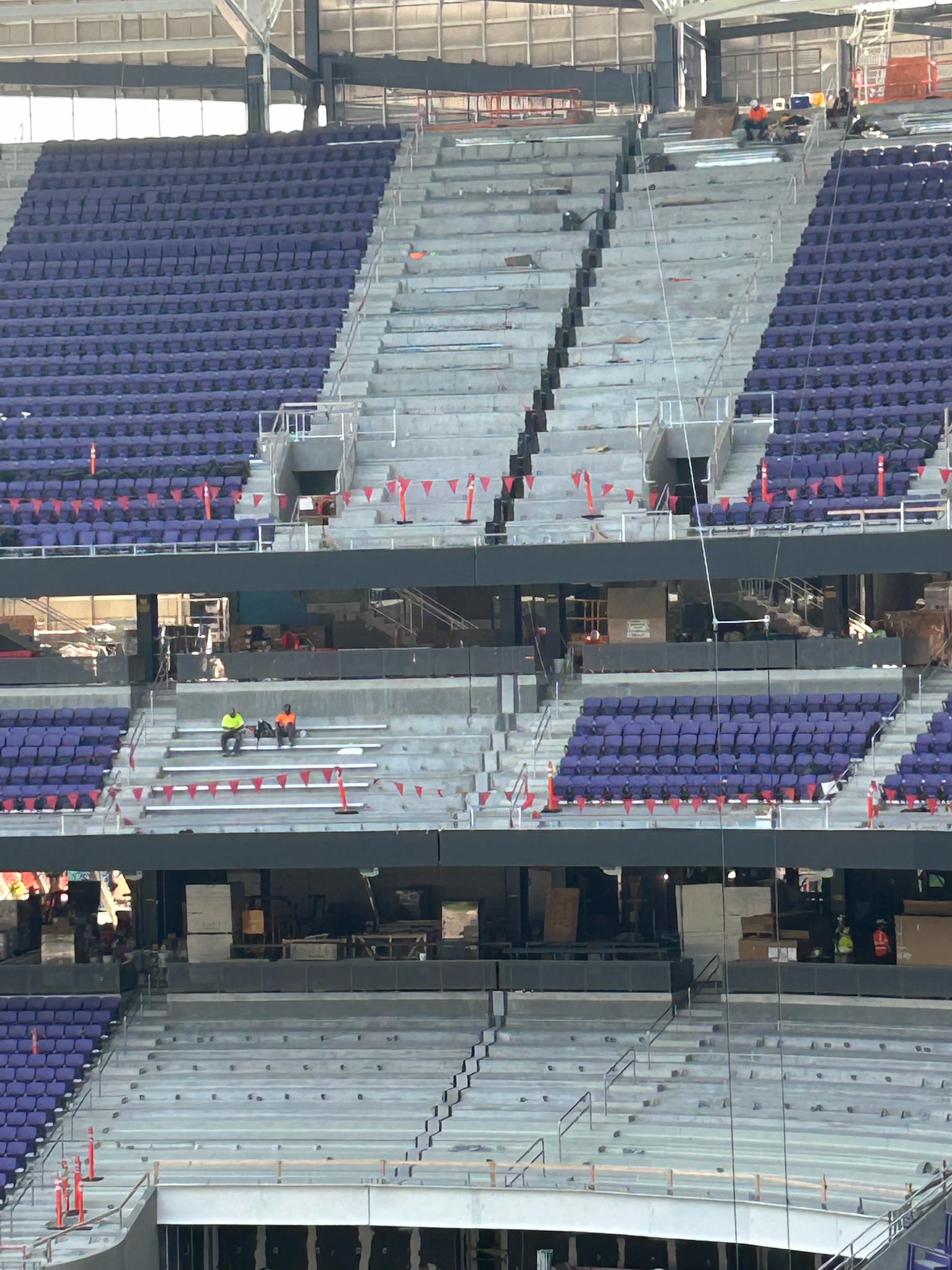
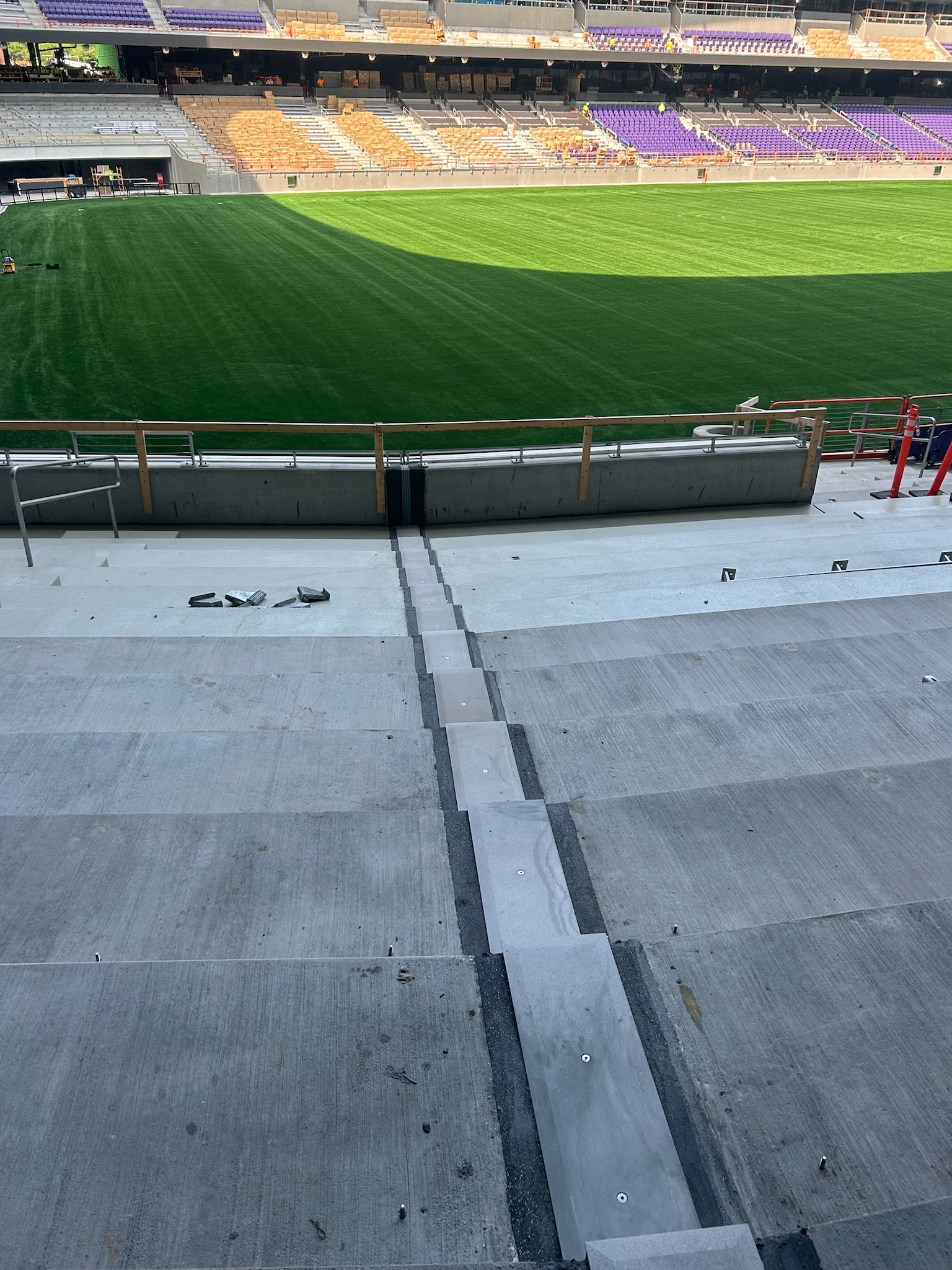
Continuity matters because the demands on the joint don’t stop at a transition. Movement continues through it. So does waterproofing. Where fire ratings apply, so does fire protection. Every transition is a potential point of failure if the seal breaks.
A Custom Fit at Every Transition
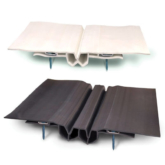
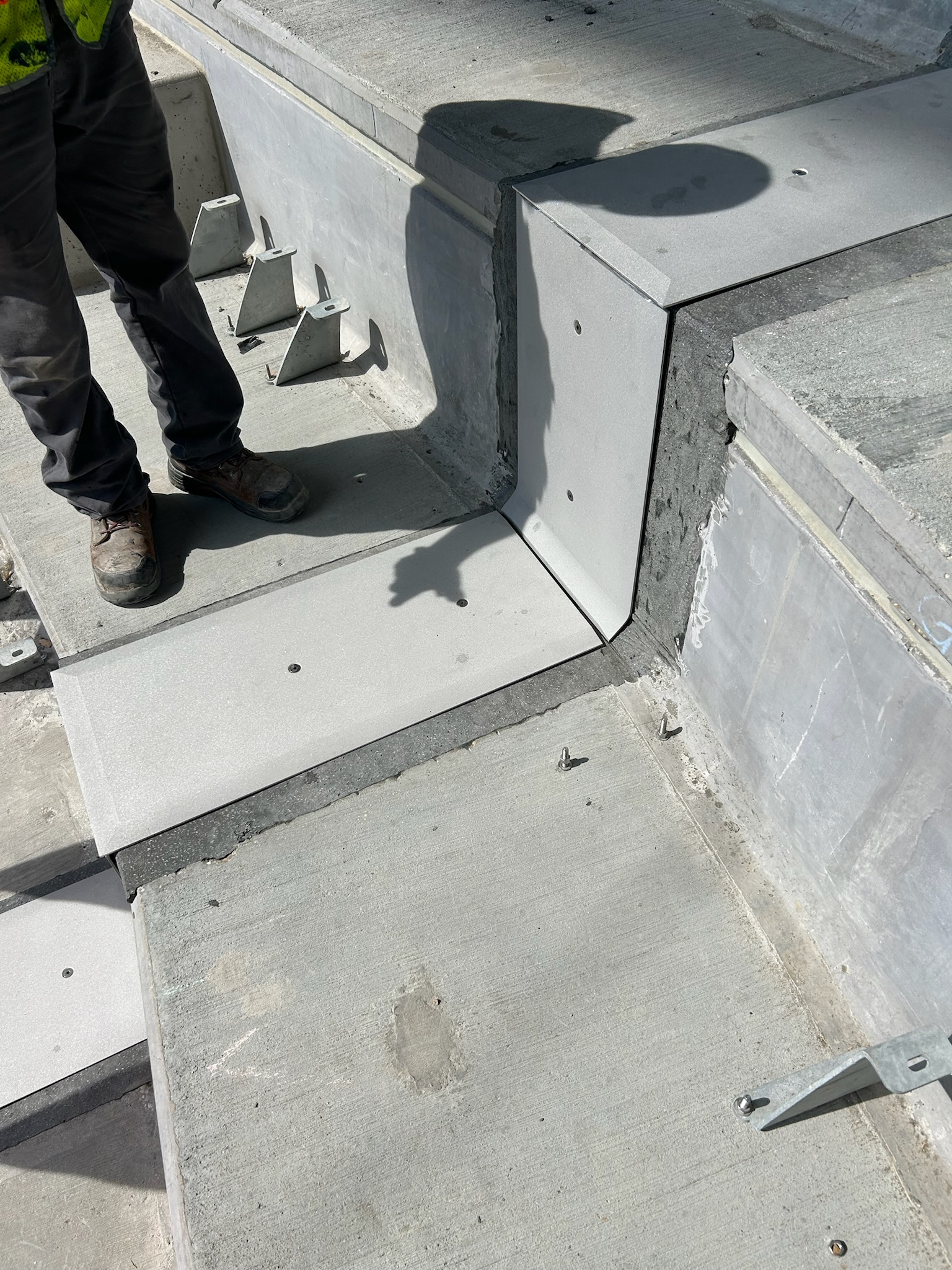
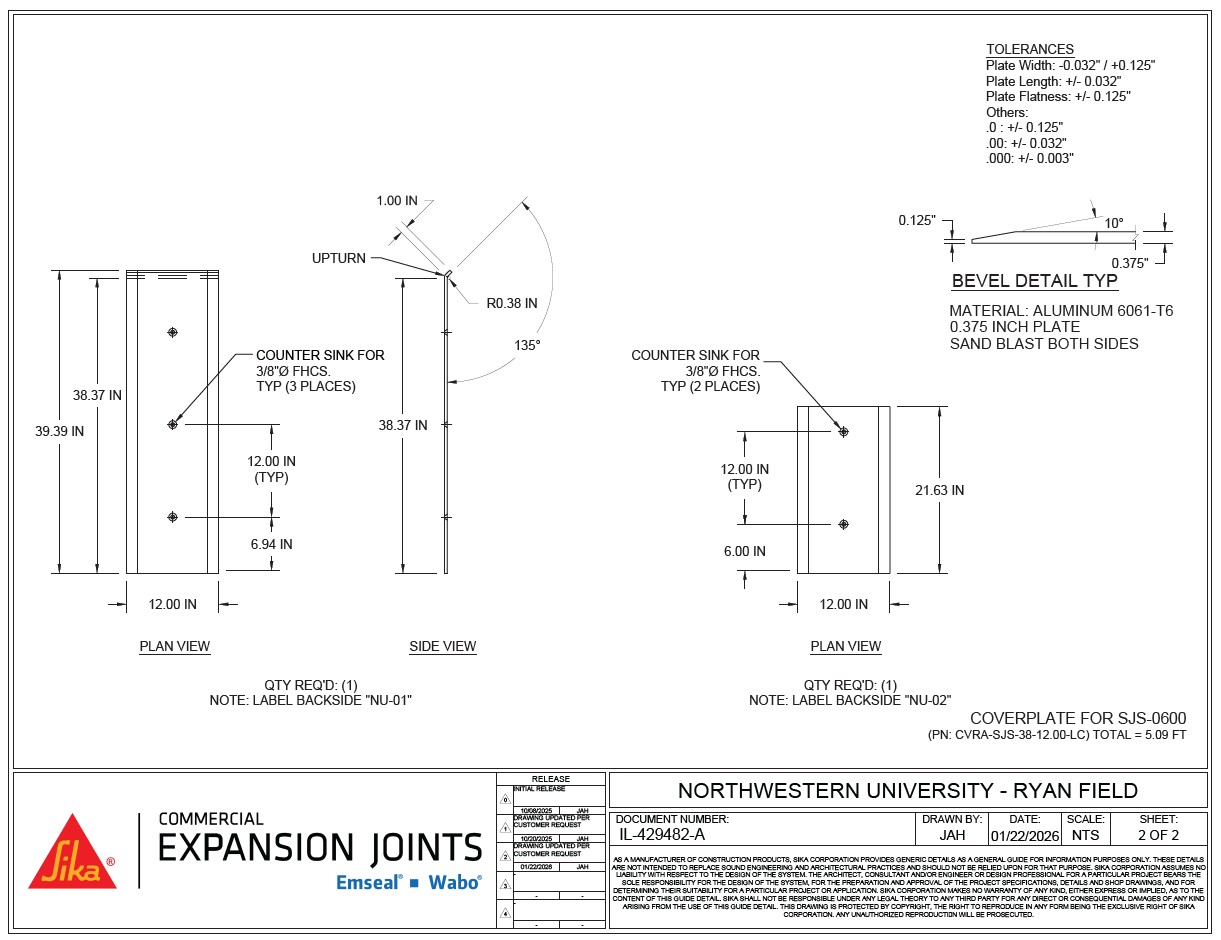
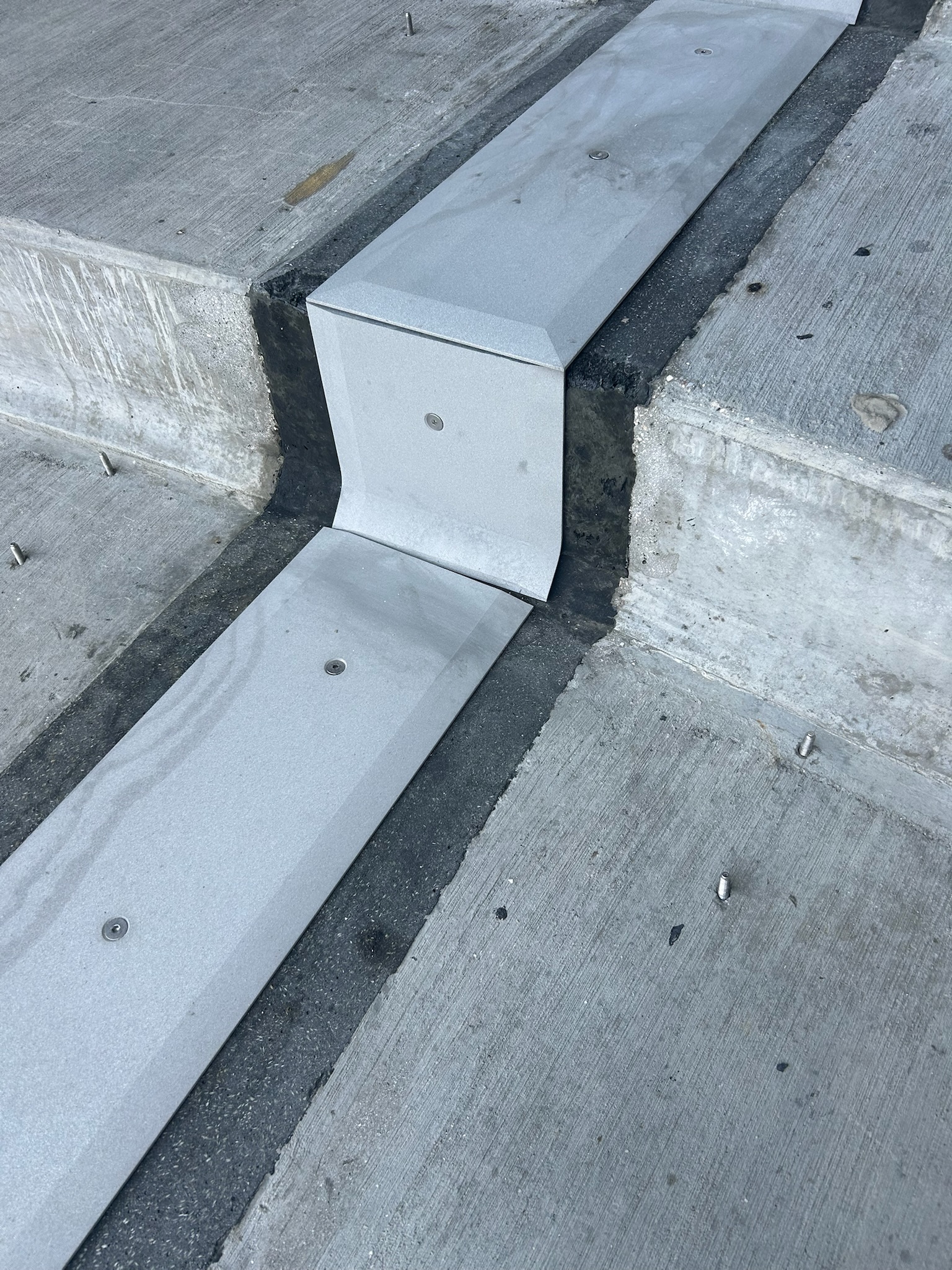
At each tread-riser transition, the coverplate is custom-configured to match the chamfer where tread meets riser, extending up the riser face rather than stopping at the tread, with an integrated upturn detail that carries the seal over the chamfer edge. Because chamfer geometry varies by location, each plate is manufactured to field-verified measurements rather than a standard shop dimension.
Factory-Fabricated Transitions
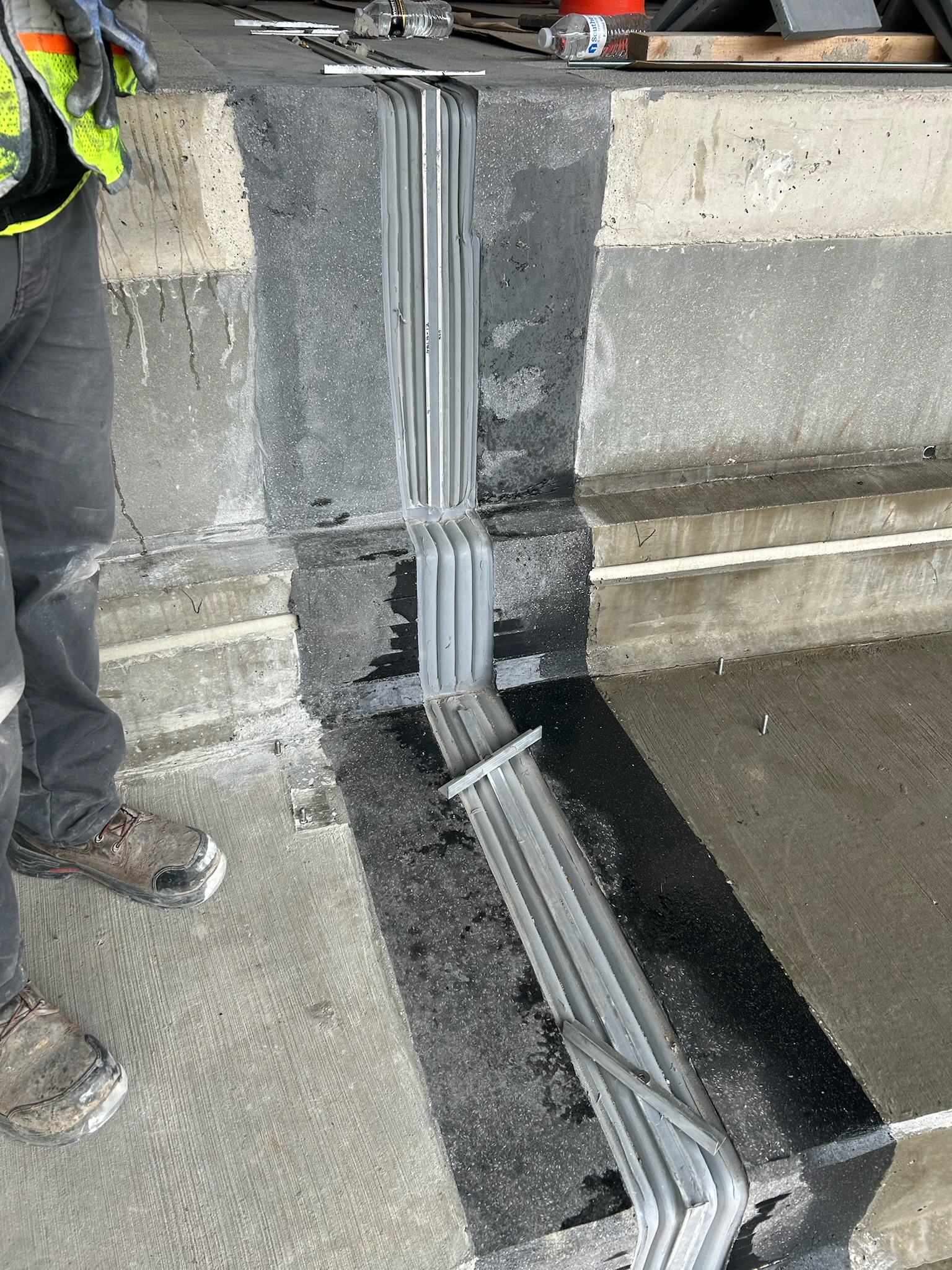
To accommodate the seating bowl’s plan-linear, elevation-complex geometry, transition assemblies are manufactured off-site as field-verified preformed joint sections, providing a continuous, watertight seal through changes in elevation and joint intersections. Built to match as-built field conditions and ready to install, the transitions replace time-consuming field fabrication with a faster, more reliable installation process.
Seven Systems, One Continuous Seal
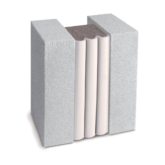
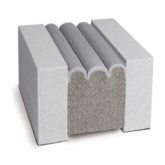
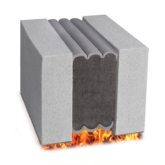
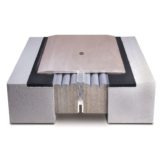
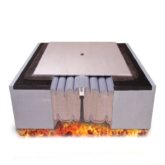
Seismic Colorseal, Seismic Colorseal-DS, Emshield DFR2, SJS, SJS-FR2, DSM System, and RoofJoint were specified across Ryan Field, each selected for the joint width, expected movement, and fire-rating requirements of a specific location. A stadium of this scale presents a wide range of those conditions, so no single system could address all of them.
Each product is matched to the joint it serves. Together, they form a set of watertight stadium expansion joints that carry an unbroken seal from one building condition to the next, tied together by the same factory-fabricated transitions that run through the seating bowl.
An Ongoing Body of Work at Northwestern
The project adds to Sika Emseal’s history at Northwestern University, which spans multiple buildings over the past several years, now including the seating bowl of a 35,000-capacity stadium.
Conclusion
Beyond accommodating movement, Ryan Field shows what continuous expansion joint performance looks like at scale: systems selected for site-specific conditions, transitions engineered rather than built in the field, and a seal that carries through every plane change without a break.
Related Article: Stadium Expansion Joints: Types, Design Guidelines & Watertight Solutions