


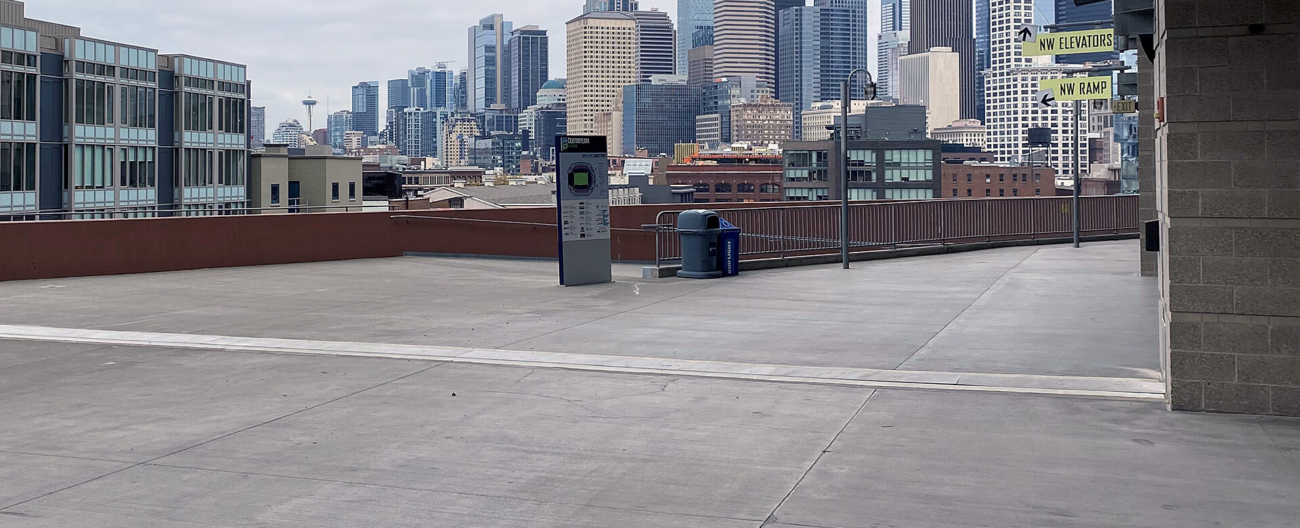
Stadium Expansion Joints: Types, Design Guidelines & Watertight Solutions
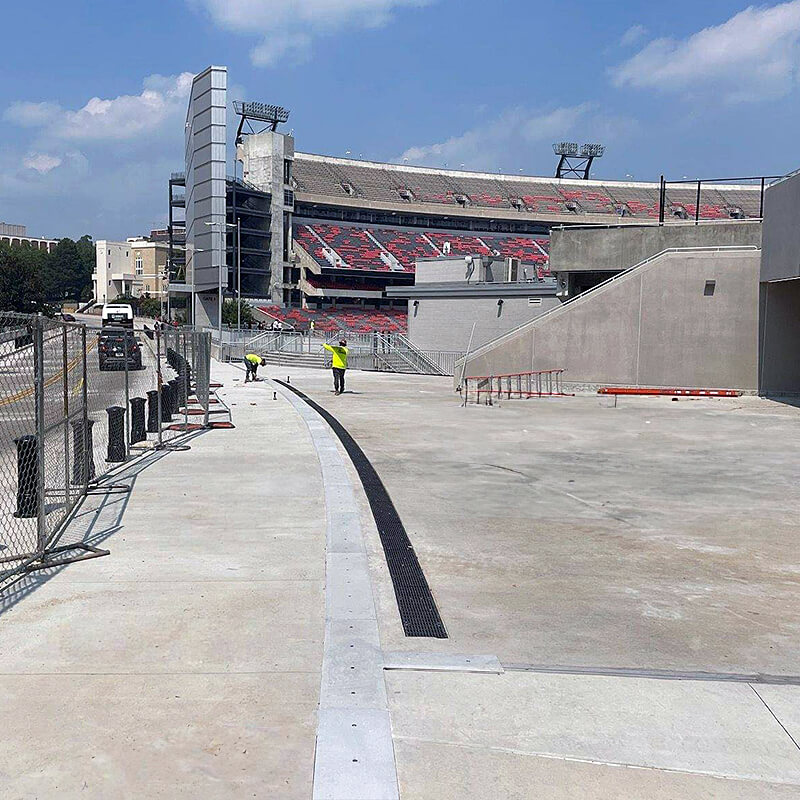
Designing Out Leaks with Modern Stadium Expansion Joints
Stadium Expansion Joints Defined
Stadium expansion joints are engineered systems designed to accommodate structural movement in large sports venues while maintaining continuous waterproofing, durability, and safety. These structural expansion joints allow buildings to respond to thermal expansion and contraction, live loads from crowds and vehicles, seismic forces, and long-term material movement without compromising performance.
In modern stadium construction, expansion joints are no longer treated as secondary details. Instead, they are integrated into the building enclosure system (building envelope), where they play a critical role in preventing water intrusion and maintaining long-term durability across complex geometries such as seating bowls, concourses, ramps, plazas, and roof assemblies.
Why Stadium Expansion Joints Leak (and How to Prevent It)
For decades, stadium expansion joints were widely associated with leaks. This was not due to a single failure point, but rather a lack of coordination between structural design, waterproofing systems, and installation practices.
Common causes of failure included late-stage joint design, discontinuous waterproofing transitions, and the challenges of stadium geometry, particularly in areas like seating bowl expansion joints where direction changes and elevation shifts are frequent.
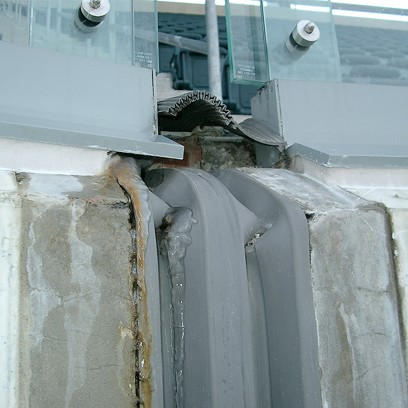
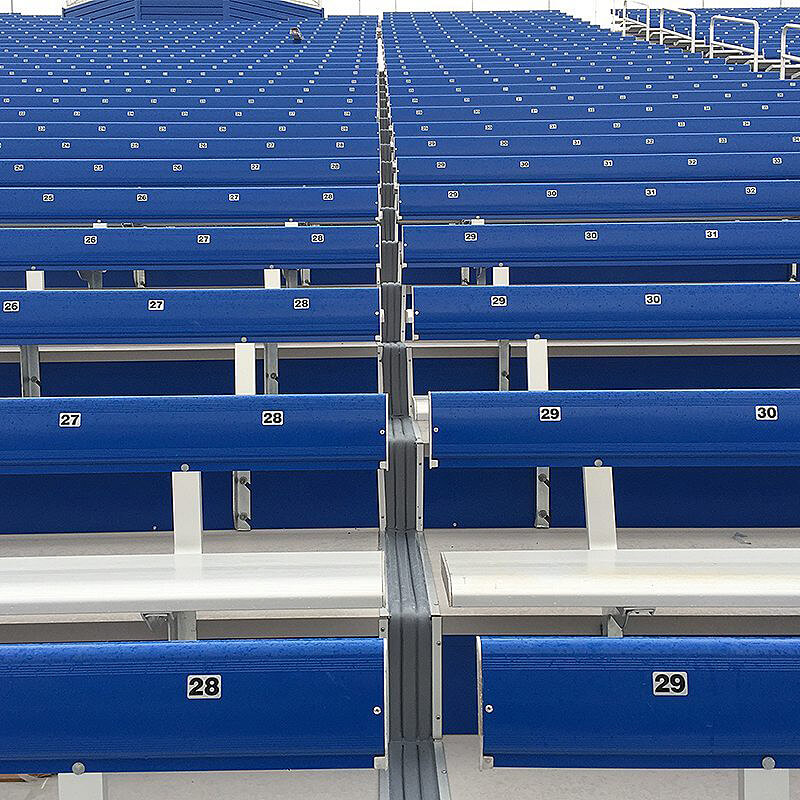
Today, that expectation has changed. Advances in precompressed foam expansion joint systems, improved detailing practices, and earlier collaboration among designers, contractors, and manufacturers have made watertight performance achievable. Modern systems can reliably prevent water intrusion when movement requirements, system selection, and construction practices are aligned from the outset.
Types of Stadium Expansion Joints and When to Use Them
Stadium expansion joints must perform under demanding conditions that go beyond typical building applications. These include wide joint openings, multidirectional movement, heavy pedestrian and vehicular traffic, and continuous exposure to weather.
To meet these requirements, several types of expansion joint systems are used throughout stadium environments, each designed for specific structural and waterproofing conditions. These expansion joint systems in stadium construction must be carefully matched to movement demands, joint width, and exposure conditions.
Stadium Expansion Joint System Comparison
Low-Movement Control Joints in Stadiums
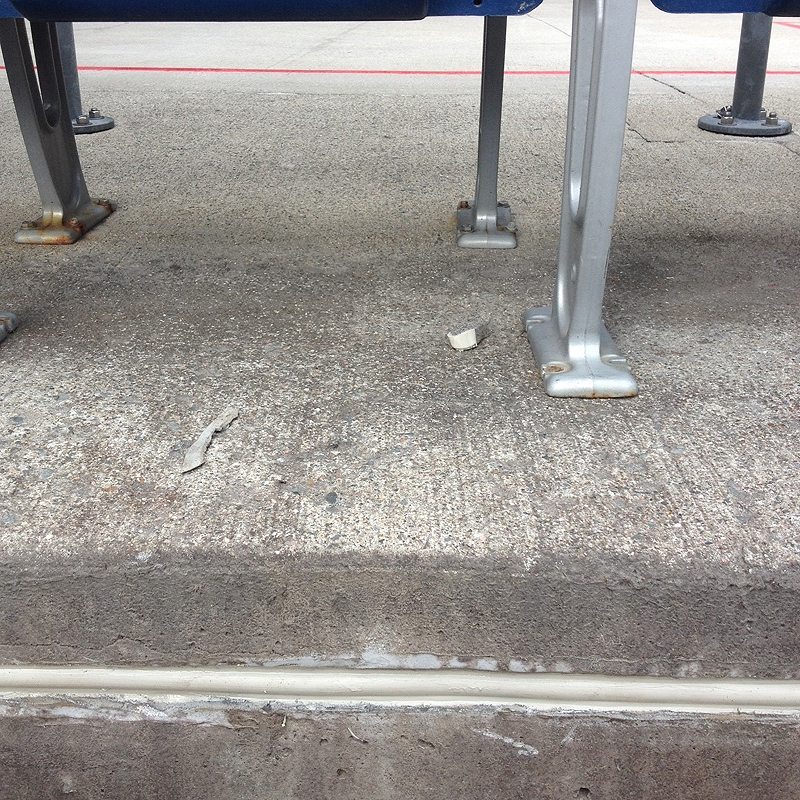
Control joints are designed to manage shrinkage and minor movement within concrete slabs. While effective in areas with limited structural motion, they are not intended for the multidirectional and higher-magnitude movement typical of stadium expansion joints.
In stadium environments, traditional liquid sealants used in control joints often deteriorate over time due to adhesion loss and cyclic movement.
Precompressed sealants such as Colorseal-On-A-Reel provide a more durable alternative. By maintaining continuous contact with joint substrates, these systems deliver a watertight seal without relying on adhesion, supporting long-term performance in low-movement conditions.
Membrane-and-Nosing “Wing Joint” Systems
Membrane-and-nosing systems are surface-applied waterproofing assemblies commonly used in vehicular and pedestrian traffic areas such as parking decks.
These systems combine a flexible waterproofing membrane with elastomeric concrete nosings that protect the membrane edges from mechanical damage and wear.
In stadium applications, where durability and movement capability are required, systems such as Thermaflex with Emcrete are designed to integrate with deck waterproofing while maintaining performance under traffic and environmental exposure.
While effective, these systems rely on exposed materials and may require periodic maintenance to sustain long-term waterproofing performance.
Precompressed Foam Expansion Joint Systems for Stadiums
Precompressed foam expansion joint systems provide a continuously watertight seal by installing in a factory-compressed state and expanding in place to maintain constant contact with joint substrates.
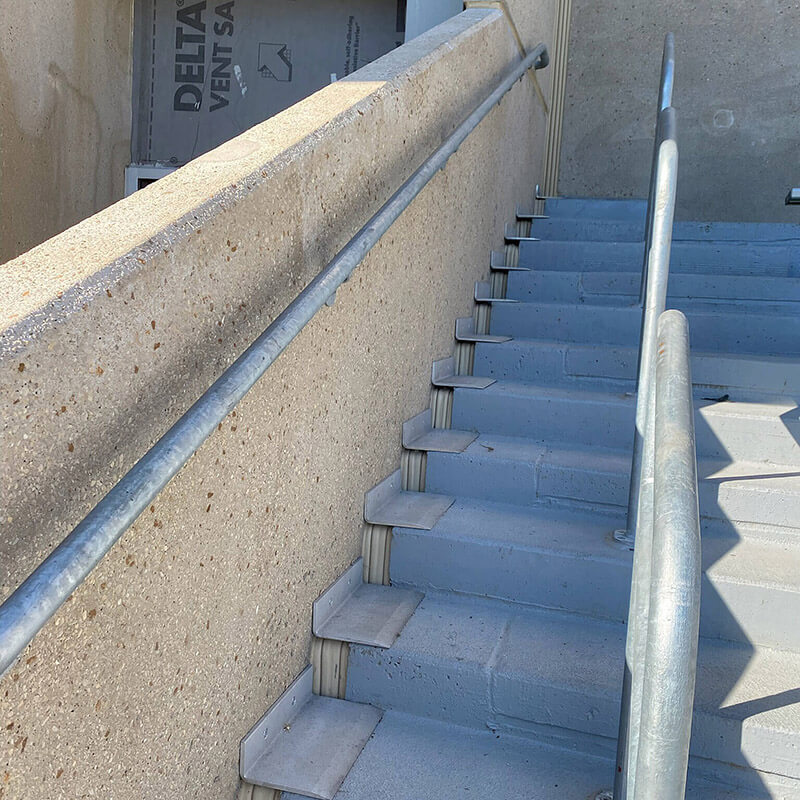
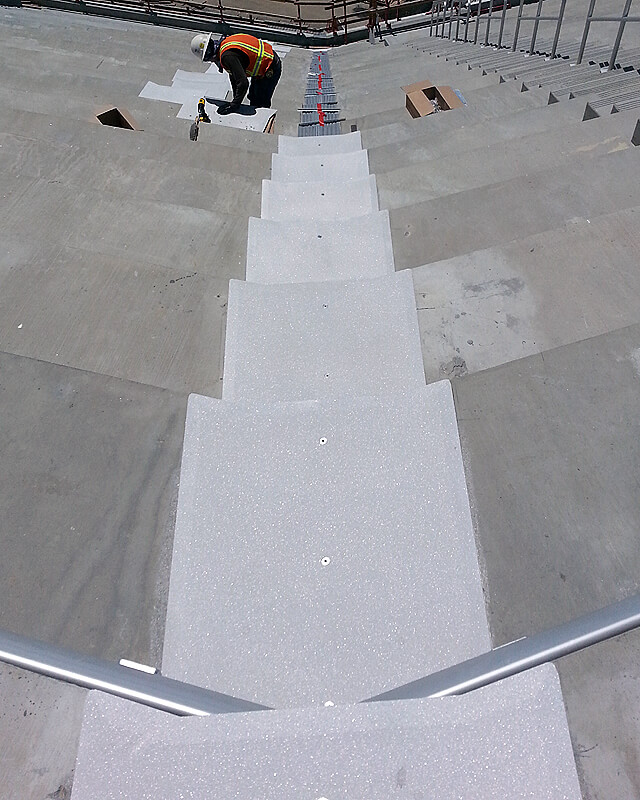
This compression-based sealing approach accommodates multidirectional structural movement, including expansion, contraction, shear, and minor rotation–conditions commonly found in stadium seating bowls, concourses, and vertical transitions.
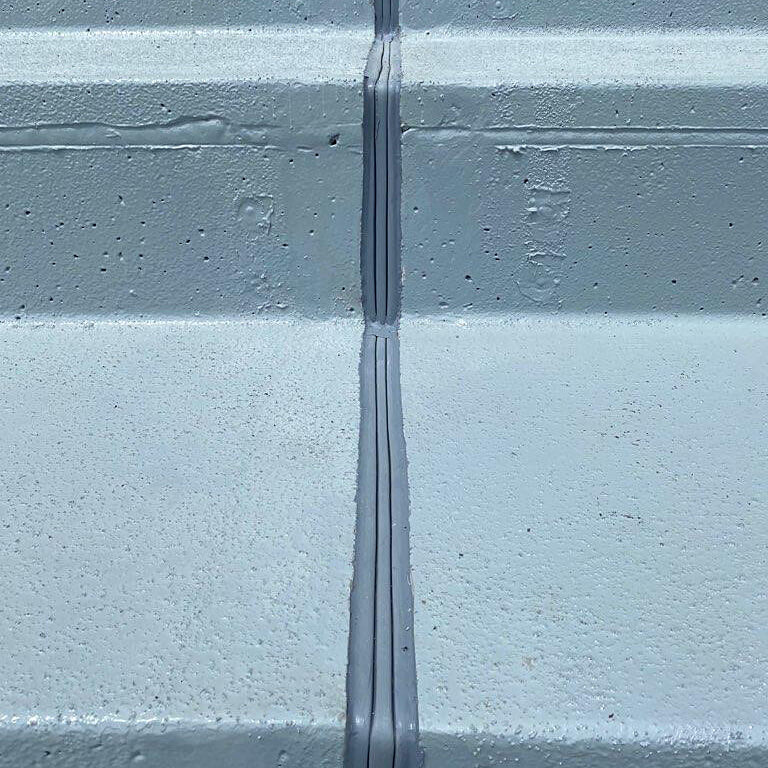
Because the seal remains in constant contact with the substrate, these systems do not rely on adhesion or mechanical attachment at the joint surface. This makes them particularly effective in stadium environments where:
- Geometry changes frequently (treads, risers, corners)
- Movement occurs in multiple directions
- Long-term waterproofing performance is critical
Typical applications include:
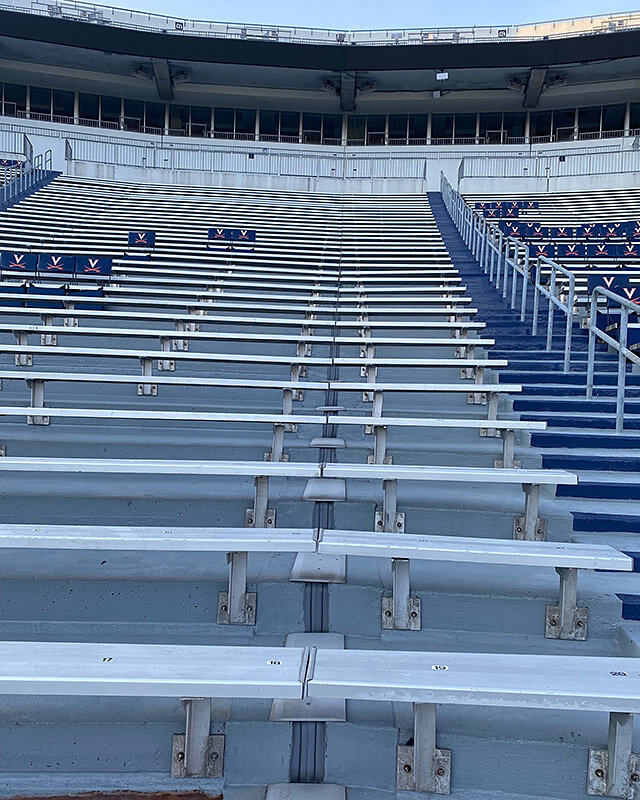
- Stadium seating bowl expansion joints
- Vertical-to-horizontal transitions
- Ramps and concourse interfaces
Examples include DSM and Horizontal Colorseal, which are engineered to maintain continuous compression and watertightness across complex joint configurations.
Coverplate Expansion Joint Systems
Coverplate expansion joint systems are used in stadium seating areas, concourses, and large open spaces where joint openings must be safely bridged while maintaining a durable walking or rolling surface.
It is important to distinguish between expansion joint systems with an integrated coverplate and expansion joint cover systems (surface cover only).
Integrated Coverplate Systems
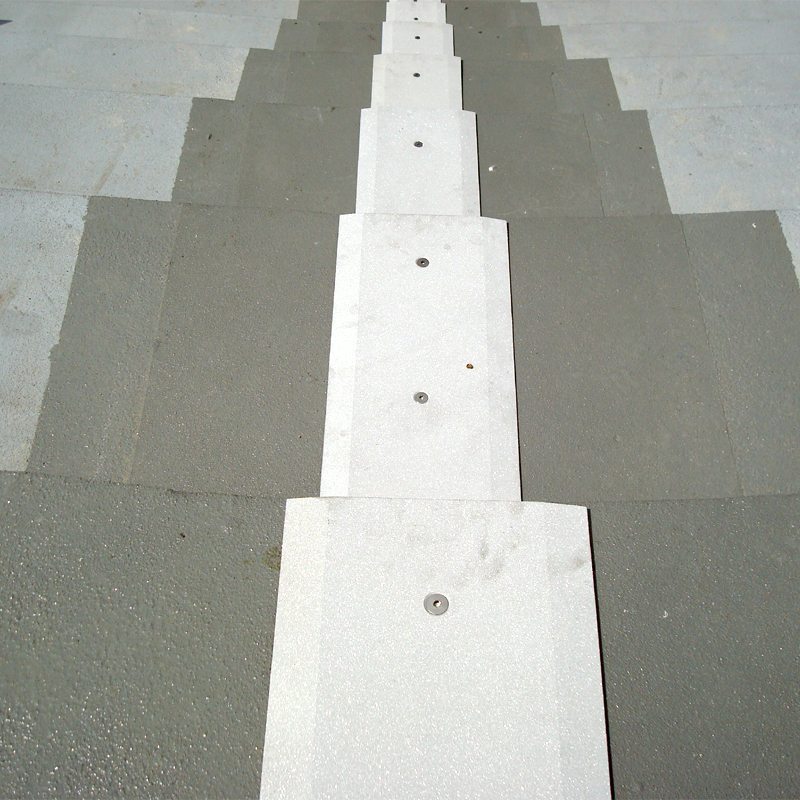
Integrated systems combine a precompressed foam seal with an integrated coverplate, providing both:
- Continuous watertight sealing through compression
- A durable, trafficable surface
Because the waterproofing is achieved at the joint itself, these systems do not require secondary drainage components.
Systems such as SJS are commonly used in stadium seating areas, treads and risers, and concourses. Due to their compression-based design, they are typically suitable for joint widths up to approximately 16 inches, depending on project conditions.
Expansion Joint Cover Systems (Surface Cover Only)
For wider joints beyond the practical range of precompressed foam systems, expansion joint cover systems are used. These consist of a metal or composite coverplate spanning the joint opening.
Unlike compression-sealed systems, these assemblies are not inherently watertight. Instead, they rely on a secondary water management strategy beneath the coverplate, such as:
- Gutters
- Drain troughs
- Subsurface waterproofing membranes
Systems such as SafetyFlex (SFP) are commonly used in large concourses and plaza decks where joint widths exceed the limits of integrated systems.
Performance depends on proper design, installation, and long-term maintenance of the underlying drainage system.
Fire-Rated Stadium Expansion Joint Systems
Fire-rated expansion joint systems maintain the fire resistance rating of walls, floors, and roofs while accommodating structural movement. These systems are critical in stadium construction where expansion joints intersect rated assemblies in concourses, seating areas, and service spaces.
Fire-rated systems use intumescent or insulating materials that expand under high heat to block the passage of flame, smoke, and heat.
Fire-rated precompressed foam systems provide this protection in a flexible form, allowing movement while maintaining a continuous seal. This approach reduces the complexity associated with rigid fire barriers or mechanical blanket systems.
Examples include systems such as SJS-FR.
Split-Slab Expansion Joint Systems for Plazas and Decks
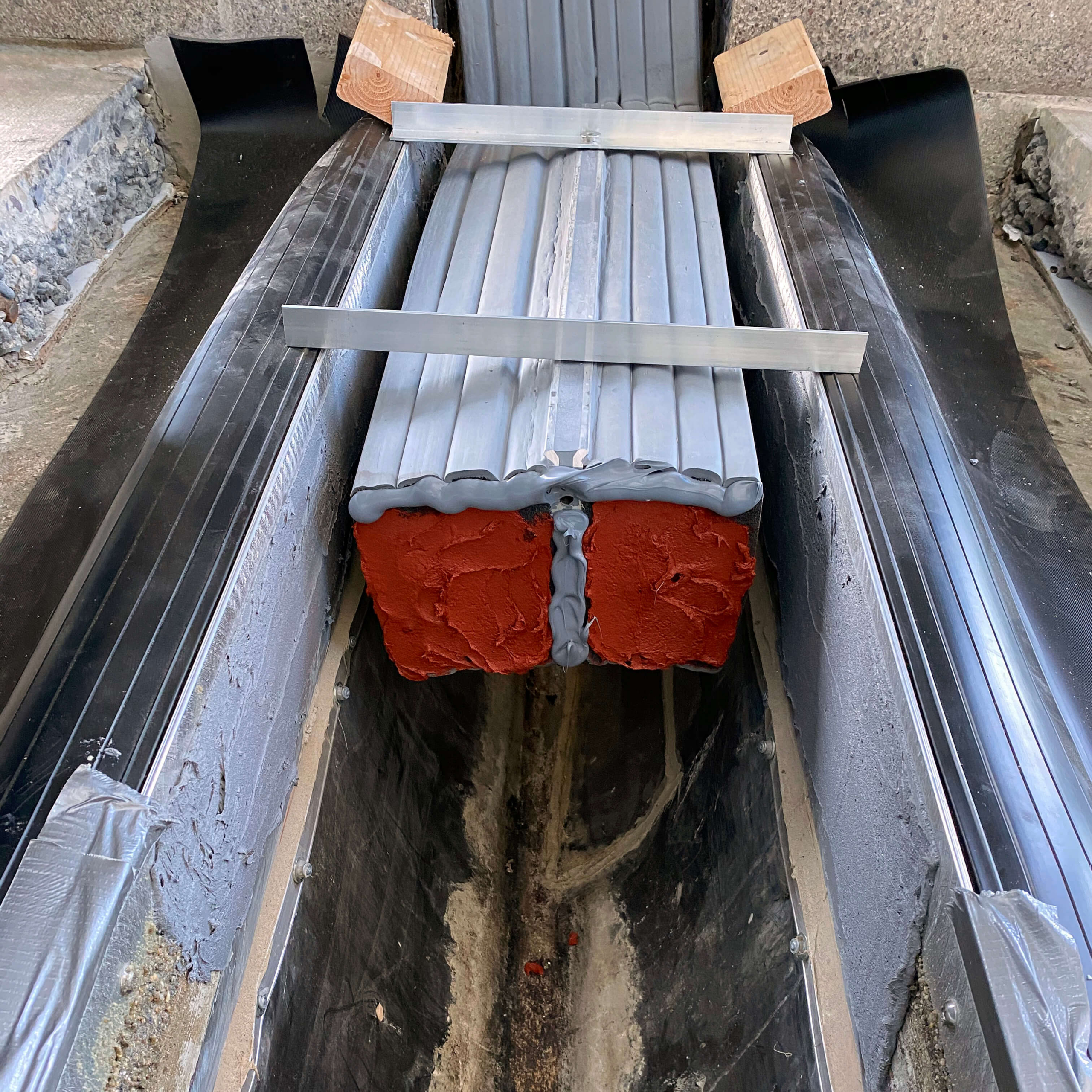
Split-slab expansion joint systems are used in stadium plazas, terraces, and concourse decks where the waterproofing membrane is installed below a topping slab.
These assemblies must accommodate structural movement at the deck level while maintaining waterproofing continuity and supporting surface traffic.
Systems such as SJS-FP provide a fully trafficable, watertight solution for wide joints in split-slab configurations. By tying directly into the underlying waterproofing membrane, these systems maintain seal continuity from the structural slab to the finished surface.
For applications requiring fire resistance, SJS-FP-FR combines movement capability, waterproofing integration, and fire-rated performance into a single system.
Roof Expansion Joint Systems in Stadium Construction
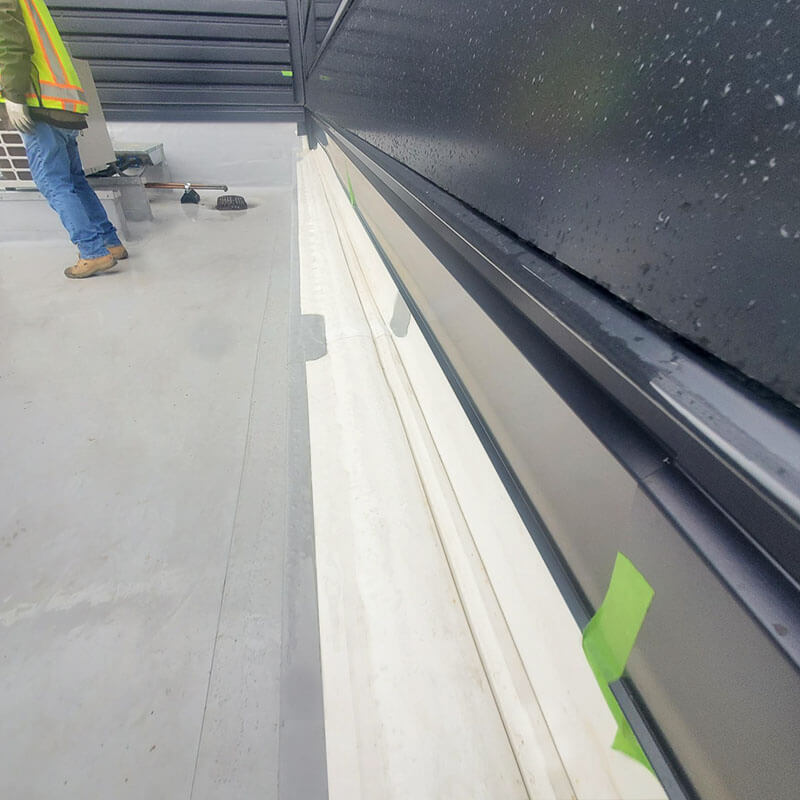
Roof expansion joint systems maintain the continuity of the roofing assembly across areas of structural movement. In stadium roofs, often characterized by long spans, elevation changes, and complex geometry, these systems must perform under both thermal cycling and dynamic structural movement.
Systems such as RoofJoint integrate directly into the roofing membrane, maintaining a continuous seal against water intrusion without relying on exposed metal components or mechanically attached covers.
This approach reduces potential failure points, minimizes maintenance, and supports long-term roofing performance.
Stadium Expansion Joint Design Guidelines
Stadium expansion joint failures rarely result from incorrect movement calculations alone. More often, failures occur when structural movement assumptions are not aligned with expansion joint system capabilities.
Modern stadium expansion joints must accommodate:
- Multidirectional movement
- Irregular geometry
- Changes in plane and direction
- Wide joint openings typical of large venues
Best-practice stadium expansion joint design includes:
- Selecting expansion joint systems early in design development
- Coordinating movement requirements with system performance
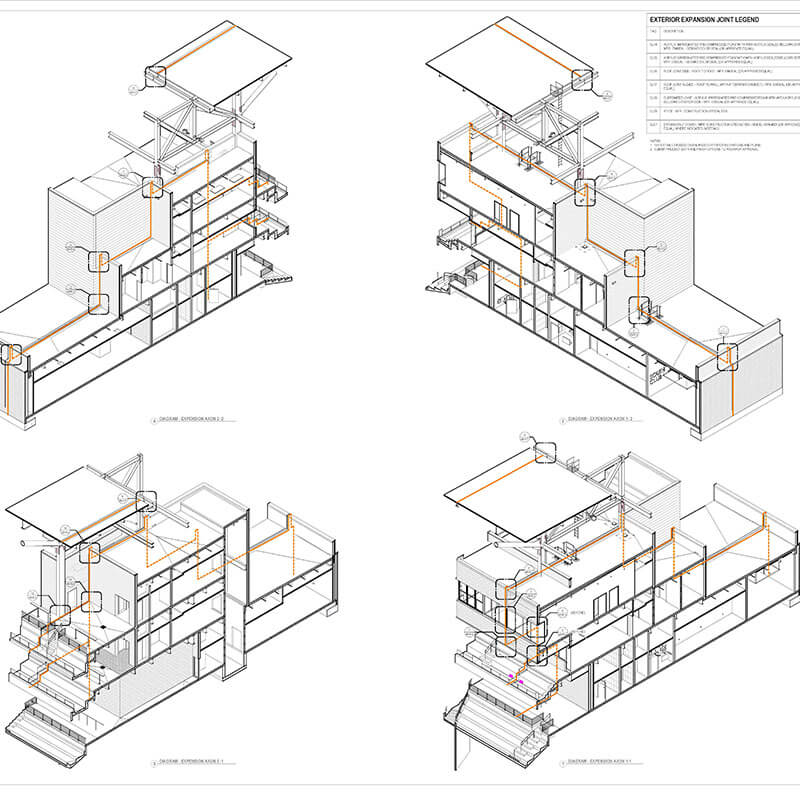
- Detailing joints in three dimensions, including transitions and terminations
- Clearly assigning responsibility for waterproofing and joint integration
Owner Priorities That Improve Stadium Expansion Joint Performance
Owners ultimately bear the long-term consequences of expansion joint design decisions. Water intrusion remains one of the most disruptive and costly operational risks in stadium facilities.
Successful projects are characterized by owners who:
- Support performance-based design decisions
- Allow sufficient time for detailing and coordination
- Prioritize lifecycle performance over first cost
- Engage expansion joint manufacturers early in the design process
When durability is prioritized over minimum compliance, watertight movement joint systems become the standard rather than the exception.
Construction Coordination: Stadium Expansion Joints as Critical Path Elements
Historically, stadium expansion joints were often treated as punch-list items. This approach frequently resulted in rework, detailing conflicts, and compromised waterproofing performance.
Modern project delivery recognizes expansion joints as critical path components requiring early and continuous coordination.
Successful contractors:
- Address joint geometry during forming and concrete placement
- Maintain strict blockout tolerances
- Coordinate adjacent trades, including waterproofing and finishes
- Protect joint openings and adjacent substrates throughout construction
- Include joints in regular coordination meetings
Early coordination reduces risk and prevents costly corrections during later project phases.
Why Expansion Joint Installation Expertise Matters
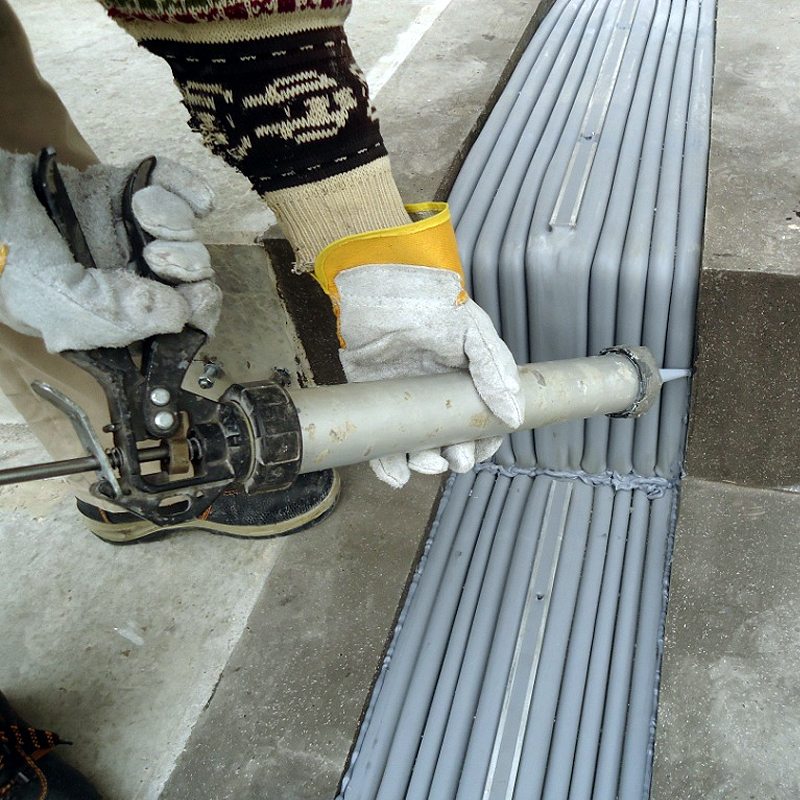
Modern stadium expansion joint systems depend on controlled installation conditions and trained installers familiar with system-specific requirements.
Manufacturer-supported installers help ensure:
- Proper substrate preparation
- Correct installation procedures
- Reliable detailing at transitions and terminations
- Consistent communication among project stakeholders
Experience with stadium construction conditions–particularly complex geometry and sequencing–significantly improves long-term performance.
Expansion Joint Manufacturers: Systems, Not Commodities
Stadium expansion joints are increasingly specified as engineered systems rather than interchangeable materials.
Manufacturers capable of delivering complete systems provide:
- Integrated waterproofing strategies
- Multidirectional movement accommodation
- Factory-controlled compression and sealing
- Proven transition detailing for changes in plane and direction
- Maintainable solutions designed for long service life
This system-based approach reduces coordination gaps and improves long-term watertight performance across structural movement joints.
Designing Watertight Stadium Expansion Joints: Key Principles
1. Acknowledge Movement
Movement is unavoidable. Unaccounted movement leads to failure.
2. Locate Expansion Joints Strategically
- Avoid tight radii and seating bowl corners
- Keep joints out of primary drainage paths
- Coordinate locations with structural and architectural layouts
3. Communicate Locations Clearly
Show expansion joints across all disciplines and define responsibility for integration.
4. Select Structural Support Carefully
Minimize unintended restraint and shear at joint interfaces.
5. Design in Three Dimensions
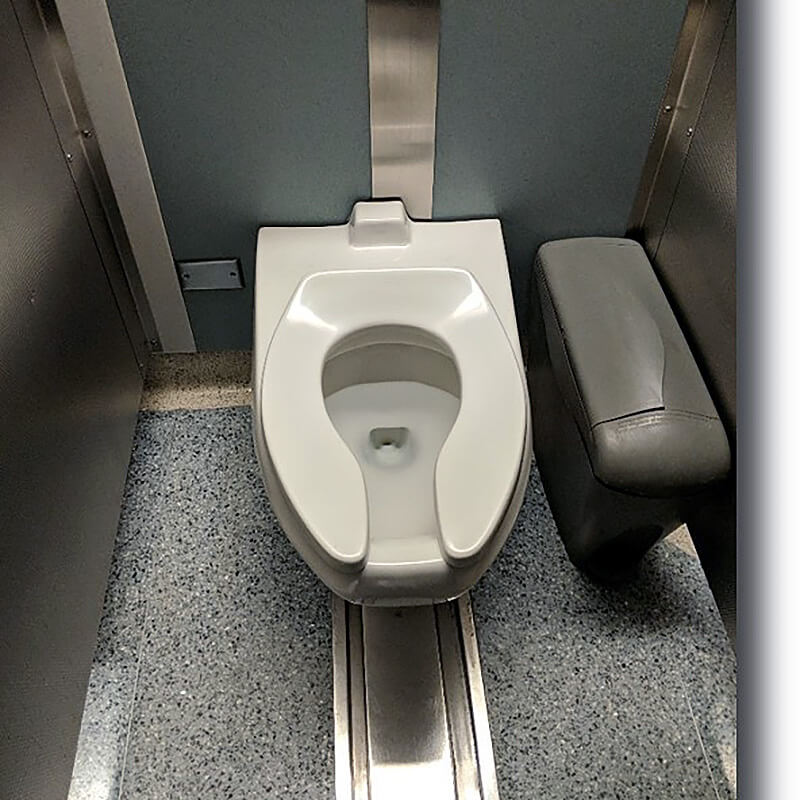
Expansion joints most often fail at transitions and terminations, where movement and waterproofing conditions are most complex.
6. Size Joints Based on System Capability
Align expected movement with the tested performance range of the selected system.
7. Integrate Waterproofing Continuously
Tie expansion joints into adjacent waterproofing systems to maintain enclosure continuity.
8. Write Project-Specific Specifications
Avoid generic specifications that do not reflect project conditions.
9. Maintain Specification Integrity
Control substitutions to ensure performance requirements are preserved.
10. Coordinate Early and Continuously
Coordination remains the most reliable strategy for preventing water intrusion.
The sections above outline how stadium expansion joints function, how systems differ, and how proper design and coordination prevent water intrusion.
Frequently Asked Questions About Stadium Expansion Joints
Why do stadium expansion joints leak?
Stadium expansion joints typically leak when system selection occurs too late, waterproofing transitions are discontinuous, or installation tolerances are not properly coordinated.
What type of expansion joint works best for stadiums?
Systems capable of accommodating multidirectional movement while maintaining a continuous seal, such as precompressed foam expansion joint systems, generally provide the most reliable long-term waterproofing performance.
Where are expansion joints located in stadiums?
Common locations include seating bowls, concourses, ramps, plazas, and roof interfaces–areas where structural movement is concentrated.
Are stadium expansion joints part of the building enclosure?
Yes. Modern stadium expansion joints are considered part of the building enclosure system because they directly control water infiltration and impact long-term durability.
Conclusion: Stadium Expansion Joints No Longer Have to Leak
Modern stadium construction demonstrates that leaking expansion joints are not inevitable; they are preventable.
When owners prioritize durability, designers coordinate expansion joint systems early, contractors treat joints as critical infrastructure, and manufacturers provide system-based solutions, stadium expansion joints become reliable components of the building enclosure.
The industry has shifted from reacting to failures to designing out leaks through coordination, engineering, and proven system performance.
About the Author
This article was developed by technical specialists experienced in the design, specification, and installation support of stadium expansion joint systems for large public venues, including professional and collegiate projects across North America.