


Fire-Rated Expansion Joints in Precast Smoke Downstands
West London, United Kingdom
Date: 2026
Old Oak Common Station, HS2
Project Details
| Project | Old Oak Common Station, HS2 Interchange, West London |
| Architects | WilkinsonEyre |
| Consulting Engineers | WSP |
| Fire Testing | Warringtonfire (Element Group) |
| Main Contractor | BBVS Joint Venture (Balfour Beatty, VINCI, and SYSTRA) |
| Specialist Contractor | Kilnbridge Fire Protection |
| Product | Sika Emseal Emshield® DFR/WFR-CE |
| Supply, Technical & Site Support | NCC (Movement Joints) Ltd. |
Project Background
Old Oak Common Station in West London is one of Europe’s most significant rail infrastructure projects in a generation. Being built as the principal HS2 interchange as the new high-speed line enters London, the station will link HS2 with the Elizabeth Line, Great Western Railway, and local transport connections, with capacity for up to 250,000 passengers per day.
At the heart of the project is a 20-meter-deep underground station box, 850 meters long, housing six 400-meter-long high-speed platforms. It is the largest subsurface station ever built in the United Kingdom. Structures of this scale generate complex conditions: long spans, live and dynamic loading, and temperature variation all drive structural movement that must be accommodated throughout the building envelope.
To accommodate this movement, expansion joints (commonly referred to as “movement joints” in the UK) are integrated throughout the structure. In enclosed transport environments, these joints frequently intersect with fire and smoke safety systems, creating critical interfaces where fire protection continuity must be maintained without compromising the joint’s ability to move.

The Role of Smoke Downstands in Underground Station Design
Smoke downstands are vertical fire and smoke barriers that extend downward from a ceiling or soffit, creating compartments that trap hot smoke and toxic gases at ceiling level, away from escape routes. In large, open underground spaces (station concourses, tunnels, and atria) they are the primary means of controlling smoke movement, buying time for safe evacuation and limiting fire spread.
At Old Oak Common Station, the precast concrete smoke downstands form a key part of the fire engineering strategy developed by WSP and WilkinsonEyre. Positioned at the uppermost level of the station’s interior, they create a continuous sealed barrier that prevents smoke from descending into the passenger concourse and platform levels below.
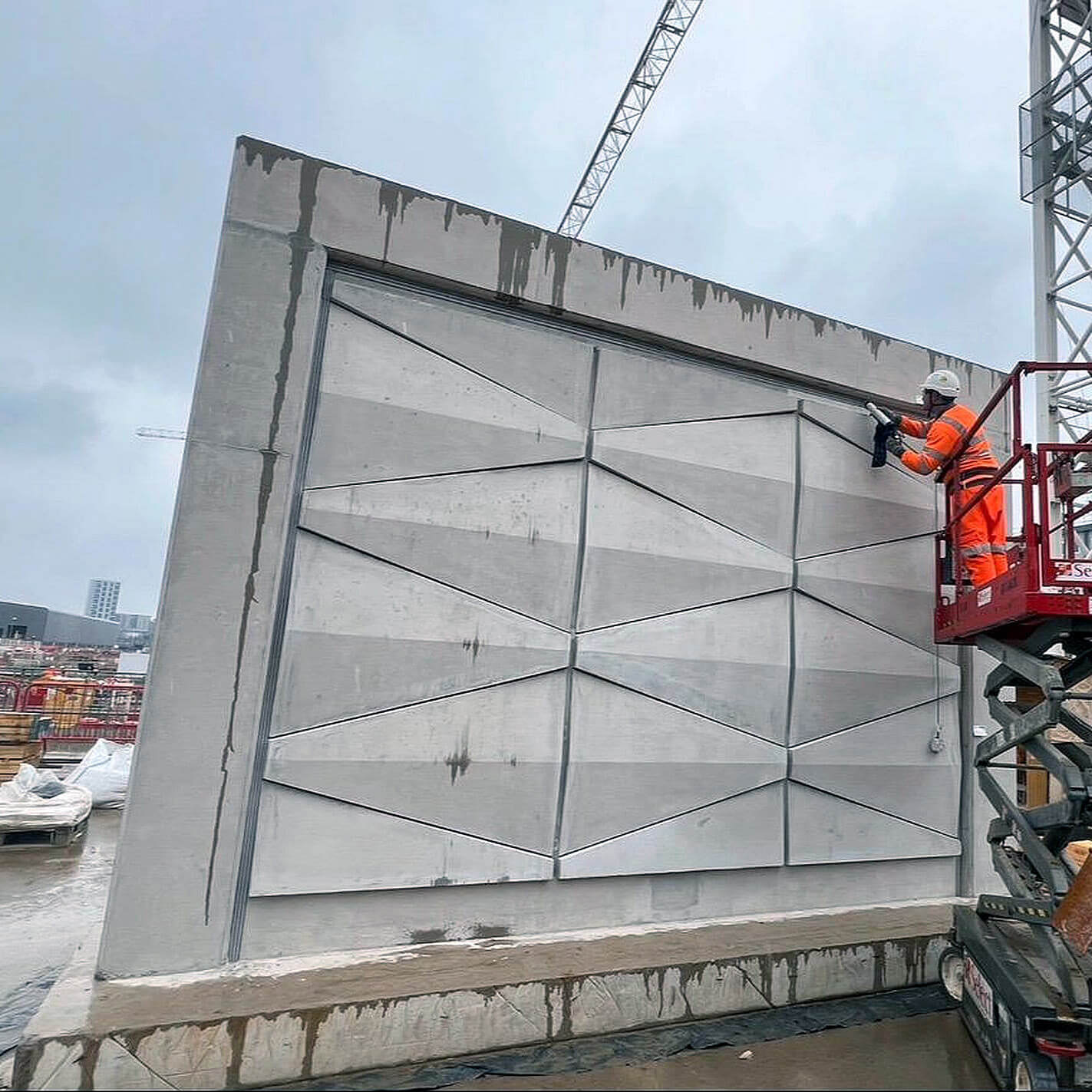
Constructed from long precast concrete segments, the downstands introduce expansion joints at each interface between sections. These joints must accommodate structural movement while maintaining the assembly’s fire-resisting and smoke-containment performance.
To meet the project’s fire safety requirements, the smoke downstand assemblies are required to comply with BS EN 12101-1:2020 and TfL Fire Engineering Standards for subsurface environments, achieving a minimum of 120 minutes of fire integrity (E120) or integrity with reduced heat transfer (EW120).
From Design to Verification: Full-Scale Fire Testing
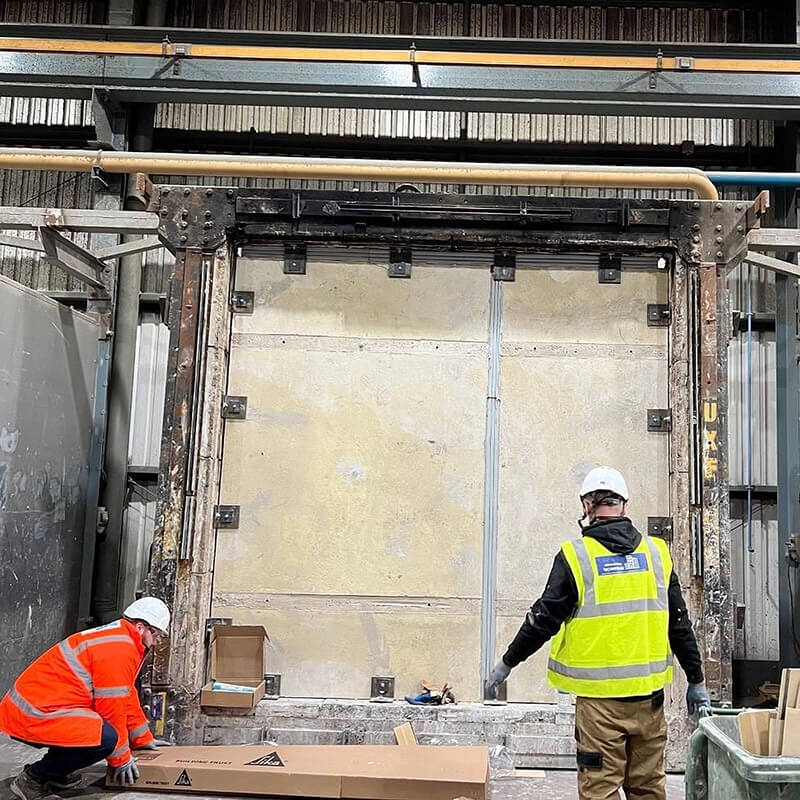
Before any product could be specified, the project team undertook a rigorous testing and evaluation program. Rather than relying on standard product certification alone, full-scale physical testing was carried out under real fire conditions, using panels representative of the actual installation geometry.
Kilnbridge Fire Protection, appointed as specialist fire protection contractor, was involved from the earliest stages of this process. Working with NCC (Movement Joints) Ltd., they fabricated full-scale precast smoke downstand panels on-site at Old Oak Common, each incorporating the proposed joint sealing system, ready for submission to Warringtonfire.
The panels were submitted to Warringtonfire (part of Element Group) for testing to EN 1366-4, the European standard for linear joint seals.
The assemblies achieved the required E120 and EW120 fire integrity ratings, providing the project team with verified, project-specific evidence of performance grounded in the actual assembly and geometry of this project.
Fire-rated Expansion Joint Product Selection: Emshield® DFR/WFR-CE
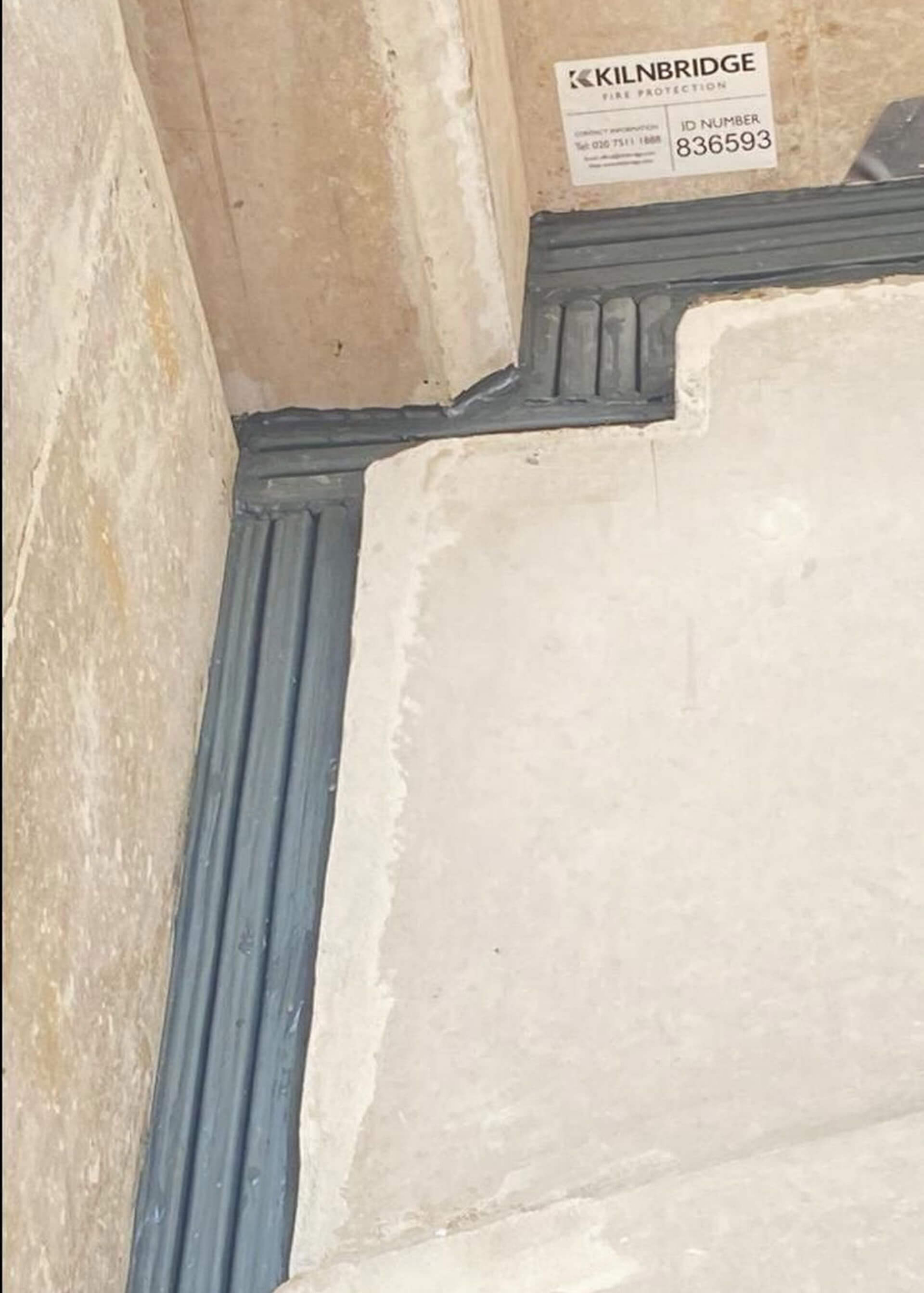
Emshield® DFR/WFR-CE was selected as the specified expansion joint solution following the evaluation and testing program. The system combines a silicone facing with a fire-retardant foam core, delivering fire resistance, watertight sealing, and multi-directional movement capability within a single profile, without the need for layered assemblies, multiple components, or additional trades at a critical interface.
| Performance Attribute | Specification |
| Fire Integrity Rating | Up to 240 minutes (EN 1366-4), E120 / EW120 as specified |
| CE Marking | CE-marked for European construction applications |
| Movement Capability | ±50% (100% total movement), multi-directional including shear, vertical, and lateral |
| Weathertightness | 100% watertight and airtight, suitable for underground conditions |
| Acoustic Performance | Excellent STC (Sound Transmission Coefficient), which contributes to acoustic barrier performance |
| Thermal Insulation | High R-value thermal insulation, which contributes to building envelope energy performance |
| Mechanical Fixings | None required; no damaging attachments into the structure |
| Installation | Fast, cost-effective single-trade installation |
| Joint Widths Supplied | Bespoke widths from 2 1/2″ to 4″ (60mm to 100mm) |
How Precompressed Foam Expansion Joint Technology Works
Unlike traditional fire barrier assemblies that rely on multiple components, mechanical fasteners, and coordinated installation across trades, precompressed foam systems operate through a straightforward physical mechanism.
The material is supplied precompressed to slightly less than the joint width and installed directly into the opening. It then expands under its own stored energy to establish continuous contact with both joint faces, forming a durable seal without fixings, adhesives, or secondary components.
For fire-rated applications, the foam core is impregnated with fire-retardant compounds and finished with a silicone facing. The result is a single profile that delivers fire resistance, movement capability, acoustic performance, thermal insulation, and building enclosure sealing, installed by one trade in one pass.
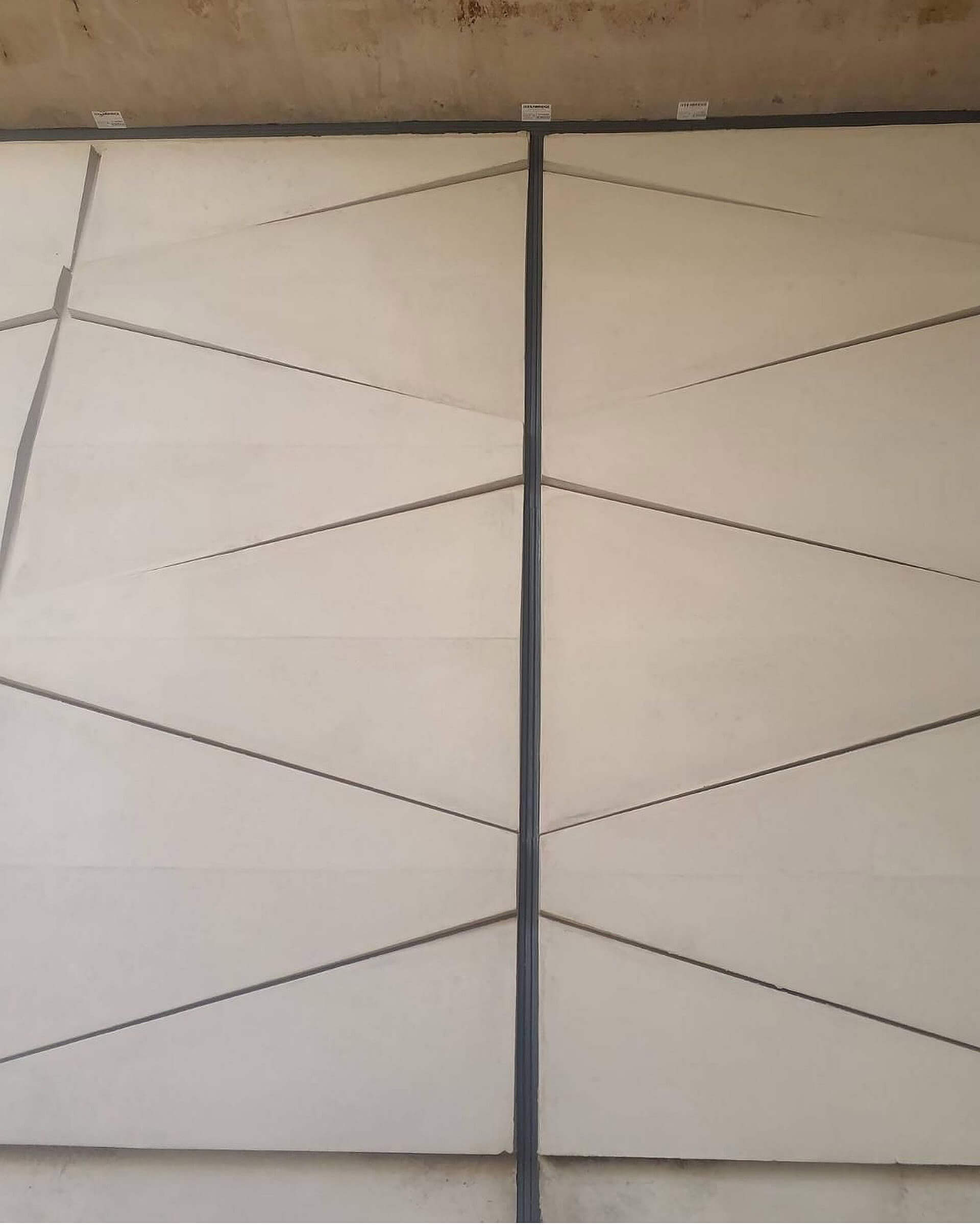
In precast construction, the absence of mechanical fixings carries particular importance. Drilling into precast elements can compromise structural integrity and introduce coordination risk. Emshield® WFR-CE removes both concerns entirely.
Site Installation at Old Oak Common
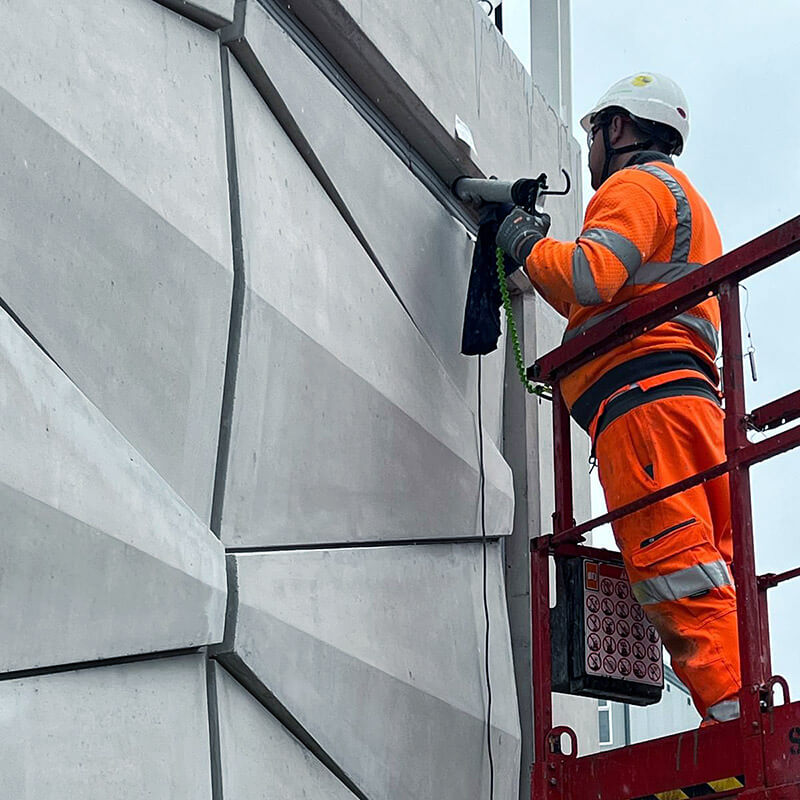
Installation was carried out by Kilnbridge Fire Protection across three phases, each covering approximately 180 linear meters. Emshield® WFR-CE was supplied in custom widths from 60mm to 100mm, accommodating the range of joint sizes across the smoke downstand assemblies.
NCC (Movement Joints) Ltd. provided on-site installation training for the Kilnbridge teams ahead of each phase, covering joint preparation, foam handling, and navigation of direction changes. This ensured a consistent, high-quality result across a substantial and geometrically varied installation program.
The installed system sits flush within the joint, leaving no exposed hardware or surface-mounted fixings. In a station interior designed with as much architectural care as Old Oak Common, that clean, unobtrusive finish matters as much as the performance behind it.
Why Sika Emseal Fire-Rated Expansion Joints?
At Old Oak Common, the consequences of joint failure are not theoretical. The smoke downstands must perform reliably under fire conditions, in a permanently underground environment with persistent humidity and restricted ventilation, over a design life measured in decades.
Emshield® DFR/WFR-CE was specified because it addresses these demands within a single, independently tested system. At Old Oak Common, it delivered:
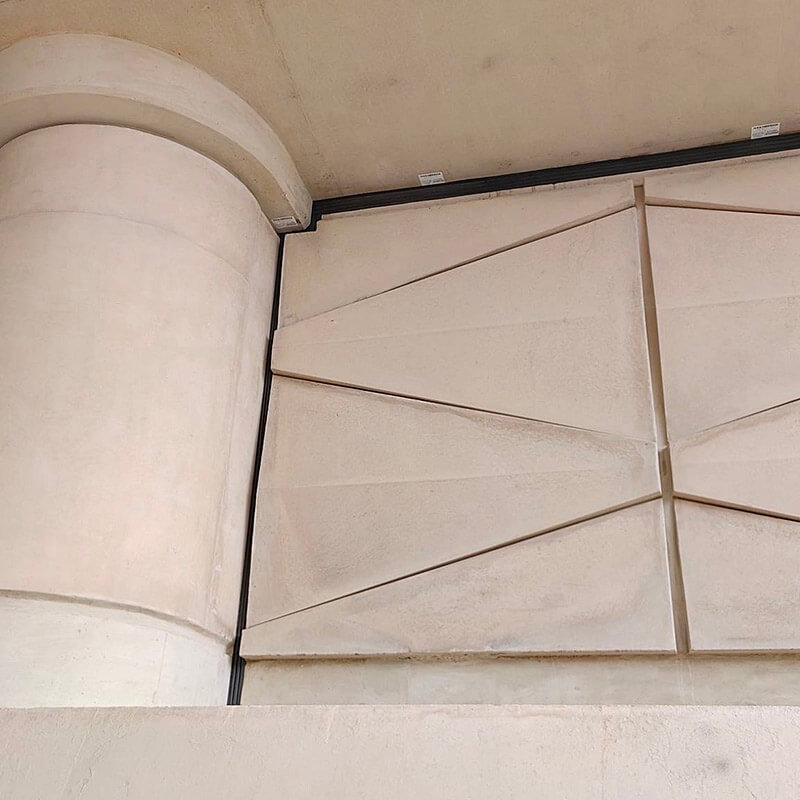
- Verified E120 / EW120 fire integrity, confirmed through full-scale independent testing specific to the project geometry
- ±50% movement capability (100% total), accommodating shear, vertical, and lateral movement
- 100% watertight and airtight performance suited to permanently underground conditions
- High STC acoustic performance supporting smoke downstand assemblies
- High thermal insulation contributing to building enclosure continuity
- No mechanical fixings, eliminating drilling and coordination risk
- Fast, single-trade installation reducing program time and complexity
- A clean, flush finish suited to an architecturally detailed station interior
For a project of this scale and life-safety significance, a single system that could be independently verified, installed without structural compromise, and relied upon long term was not a convenience; it was a requirement.
Supporting Next-Generation Rail Infrastructure
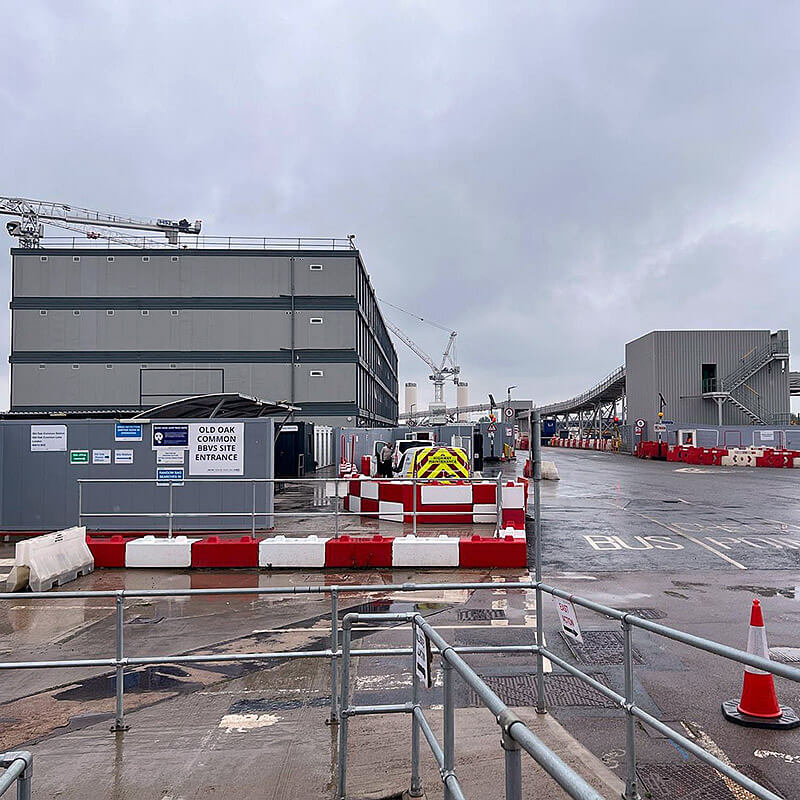
As Old Oak Common Station progresses toward completion, its expansion joints must perform reliably for decades, in an environment with no tolerance for failure and no straightforward means of remediation.
The use of Emshield® DFR/WFR-CE within the precast smoke downstand assemblies demonstrates what becomes possible when product selection is grounded in rigorous independent testing, close technical collaboration from design through installation, and a clear understanding of what an underground station demands from its joints.