


Expansion Joint Systems for LEED‑Aligned Building Design
 Sika Emseal precompressed expansion joint systems are engineered to support durable, high-performance construction and align with contemporary sustainable design principles. Suitable for both new-build and retrofit applications, they are trusted in demanding projects where long-term performance, resilience, and material transparency are essential, supporting high-quality outcomes in complex, high-visibility building retrofits and beyond.
Preformed Sealant Systems and LEED Credit Eligibility
Hybrid preformed expansion joint sealant systems, including Colorseal, Backerseal, Seismic Colorseal, DSM System and SJS-Seismic Joint System, along with the fire-rated all-in-one Emshield product family, are installed throughout the building envelope and across interior and exterior structural joints.
Environmental Product Declaration (EPD)
The Sika Emseal Environmental Product Declaration (EPD) is now available, providing third-party verified environmental data for precompressed foam sealants and engineered expansion joint systems. This resource supports LEED materials documentation requirements and increased transparency through the recently published EPD.
LEED 2009 for New Construction and Major Renovations
Energy and Atmosphere
- Optimize Energy Performance | Y | Credit 1
Materials and Resources
- Regional Materials | Y | Credit 5
Indoor Environmental Quality
- Low-Emitting Materials—Adhesives and Sealants | Y | Credit 4.1
- Controllability of Systems—Thermal Comfort | Y | Credit 6.2
Innovation and Design Process
- Innovation in Design: Energy and Atmosphere: Materials | Y | Credit 1.1
- Innovation in Design: Waste Management – Recycle/Reuse/Salvage: Materials Minimization | Y | Credit 1.2
LEED 2009 for Schools New Construction and Major Renovations
Energy and Atmosphere
- Optimize Energy Performance | Y | Credit 1
Materials and Resources
- Regional Materials | Y | Credit 5
Indoor Environmental Quality
- Low-Emitting Materials | Y | Credit 4.1
- Controllability of Systems–Thermal Comfort | Y | Credit 6.2
- Enhanced Acoustical Performance | Y | Credit 9
- Mold Prevention | Y | Credit 10
Innovation and Design Process
- Innovation in Design: Energy and Atmosphere: Materials | Y | Credit 1.1
- Innovation in Design: Waste Management – Recycle/Reuse/Salvage: Materials Minimization | Y | Credit 1.2
Energy and Atmosphere: OPTIMIZE ENERGY PERFORMANCE
According to the US Department of Energy, up to 40% of the costs to heat and cool a building are consumed due to air leakage through the building envelope. Preformed hybrid sealants designed to resist uncontrolled air movement through structural expansion joints and control joints through the building envelope can substantially reduce the amount of this leakage, resulting in reduced building energy consumption and are a key component of air-barrier assembly design.
In addition, preformed, impregnated foam sealants from Emseal feature R-Values that can restore or preserve continuity of insulation across a wall design thereby ensuring that thermal breaks are substantially eliminated.
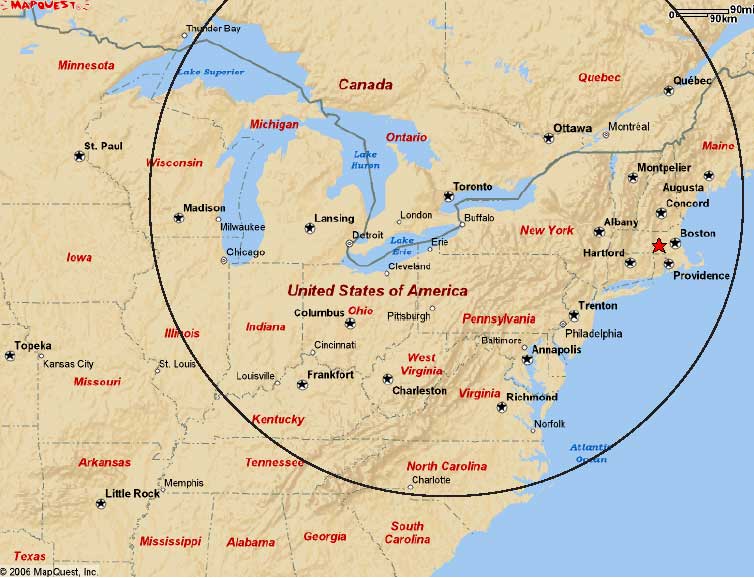
Materials and Resources: REGIONAL MATERIALS
Indoor Environmental Quality: LOW-EMITTING MATERIALS: Adhesives and Sealants
Emseal’s hybrid impregnated materials use emulsions of 100% acrylic that are water based, not solvent based and do not contain any chlorinated wax, isobutylene or other deleterious chemicals. The silicone is applied and cured before leaving the factory ensuring that any remaining volatiles are effectively zero and/or only in trace amounts.
The VOC of the liquid silicone shipped for use in limited amounts as an accessory to Emseal’s silicone-coated products is around 50 grams/liter depending on the type and color. The BAAQMD (Bay Area Air Quality Management District) in Northern California – the most restrictive in the nation – require VOC’s for Architectural sealants to be less than 250 grams/liter. This puts Emseal materials at 5-times lower than this requirement.
Indoor Environmental Quality: CONTROLLABILITY OF SYSTEMS–Thermal Comfort
Preformed sealants reduce air leakage in out of the building. This translates into helping HVAC systems achieve more precise control of the indoor environment by reducing the amount of uncontrolled outside air entering the building as well as preventing pressurized heating and cooling air from escaping.
Indoor Environmental Quality: ENHANCED ACOUSTICAL PERFORMANCE
A wall with an expansion joint or control joint that is sealed with a preformed sealant from Emseal (Colorseal, Backerseal, Seismic Colorseal, Emshield and QuietJoint) will have sound absorption properties restored to a level to that of a solid wall.
These products have all been tested to ASTM E90 to prove STC values as high as 72 and and OITC values as high as 60. This sound attenuation performance is unmatched by any alternative joint sealing method.
Hybrid preformed foam sealants acting as an acoustical seal under these conditions would thus show superior sound absorbing properties. QuietJoint used within the structure, prevents sound transmission between and around wall and partitions and between partitions or mullions and the glass of curtainwall and window wall systems. Emshield simultaneously attenuates sound while fire proofing.
Indoor Environmental Quality: Controllability of Systems–MOLD PREVENTION
Preformed hybrid sealants in the building envelope provide watertight sealing. They seal the building from water intrusion which can mitigate against the formation of molds, which need moisture to grow. Preformed sealants also help seal against other outside contaminants.
Innovation in Design: ENERGY AND ATMOSPHERE: MATERIALS
As previously indicated under “Thermal Comfort”, preformed sealants reduce air leakage in out of the building while at the same time imparting thermal insulation at thermal breaks between building systems.
This translates into a tighter building when it is desired, and helps HVAC systems achieve more precise control of the indoor environment by reducing the amount of uncontrolled outside air entering the building as well as preventing pressurized heating and cooling air from escaping.
It is for this reason, for example, that Backerseal from Emseal was chosen as a secondary seal to liquid silicone sealant for all 6,500+ windows on the LEED Gold, Empire State Building, retrofit.
Innovation and Design Process: Waste Management – Recycle/Reuse/Salvage: MATERIALS MINIMIZATION
Disruptive innovation resulted in the invention in 2009 of Emseal’s breakthrough fire-rated, all-in-one Emshield family of products. These products change not only the way we ensure life-safety and fire compartmentalization, but by virtue of combining ALL of the functions required of wall or floor assembly into a single product, material usage minimized and construction schedules can be condensed. The rapid adoption of this paradigm shift in the way structural expansion joints are sealed and fire-rated is evidence of its innovation. The list of structures, many of them LEED rated, utilizing this new technology grows daily.
Innovation and Design Process:: Waste Management – Recycle/Reuse/Salvage: Materials Minimization: LIFE CYCLE
Emseal preformed foam sealants (Colorseal, Backerseal, Seismic Colorseal, DSM System and SJS-Seismic Joint System) as well as Thermaflex solid-slab deck joints, Migutan sandwich-slab systems, and Wabo interior floor joints conserve resources due to the long life-cycle of the products.
Durability has long been a hallmark of Emseal’s throughout the product line. Installations of these products, or the predecessors from which they evolved, are in place and functioning well in excess of 15 to 20 years.
In comparison to other materials used to seal building envelopes and structural expansion joints with significantly shorter replacement periods this translates into a materials replacement cost savings in addition to the mitigation of seen and unseen instances of damage to building components and contents as a result of moisture ingress through unidentified sealant failure. This long life cycle postpones the need for retrofit work which, among other costs, uses energy, generates solid waste, and can release silica into the atmosphere from substrate preparation.
As the USGBC contemplates inclusion of life-cycle considerations in its LEED rating system, the specification of lasting structural and other building component sealants and expansion joint systems can arguably considered innovation in design process.
Discerning designers recognize the high cost of lower quality materials in shorter usable lifespans. The full cost, and environmental impact of replacing lower-cost materials goes far beyond the cost of the product. Air-borne pollution from grinding dust and cleaning solvents, solid waste from substrate repair and discarded failed product, noise, staging, and retrofit labor costs, not to mention cradle-to-grave fully loaded costs of extraction, transportation and processing of raw materials, as well as manufacturing, packaging and transportation of replacement materials are the true life-cycle cost of low performing, inferior material selections.
Resources:
LEED: US Green Building Council
Air Barrier Design: Air Barrier Association of America
Building Envelope: International Institute of Building Enclosure Consultants
ASTM: Sika Emseal published EPD (Environmental Product Declaration)