
Fire-Rated Expansion Joints: What They Are and How to Specify Them
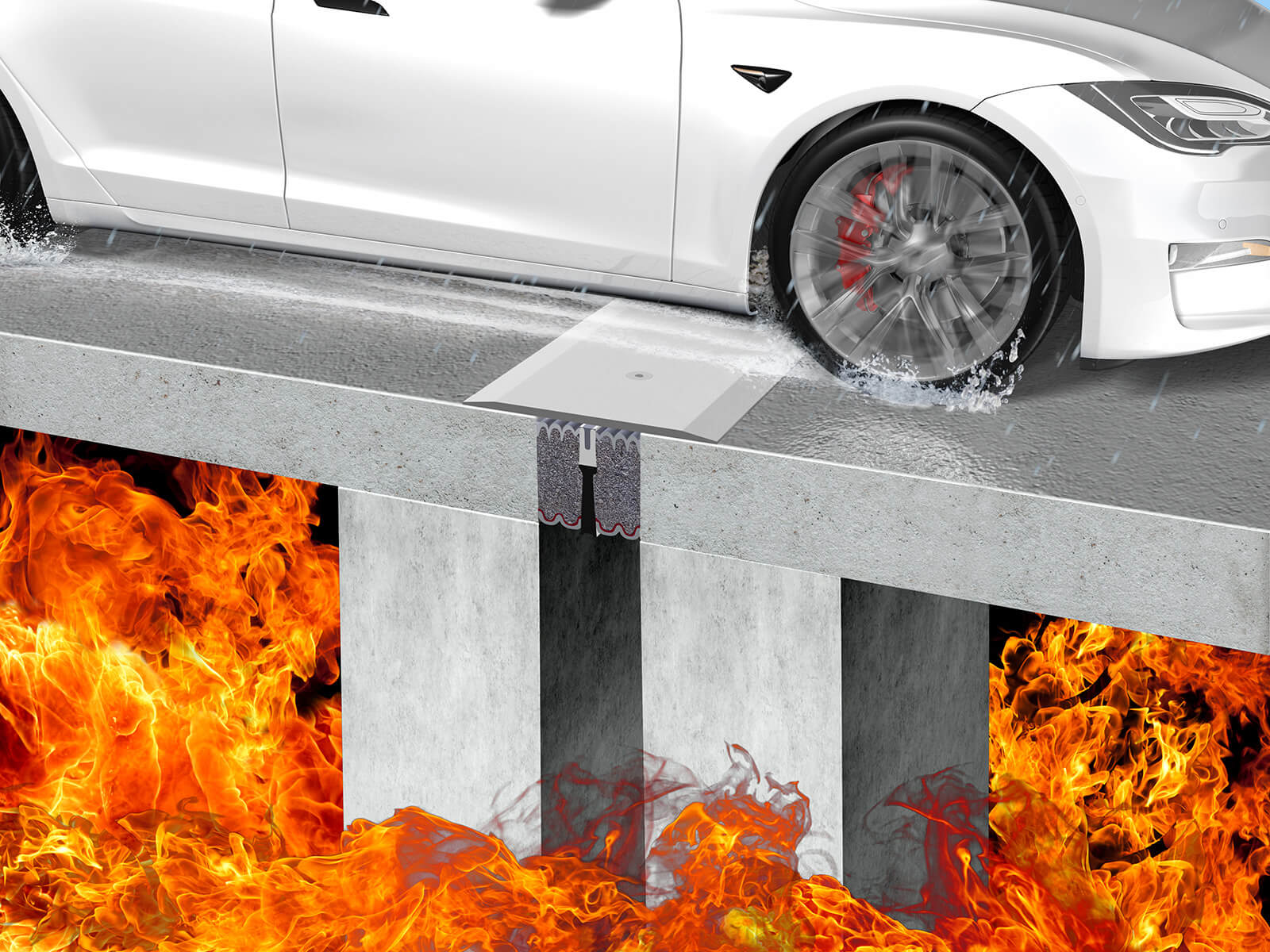
Expansion joints are intentional openings designed into walls and floors to accommodate building movement. When those openings occur in fire-resistance-rated assemblies, the joint itself must be protected with a tested and listed fire-rated expansion joint system. Without that protection, the continuity of the fire barrier is compromised, and the rated assembly fails at the joint.
This article covers what fire-rated expansion joints are, how they are tested, what performance properties specifiers should require, and how to select the right system for wall, floor, deck, coverplate, and specialty applications.
What Is a Fire-Rated Expansion Joint?
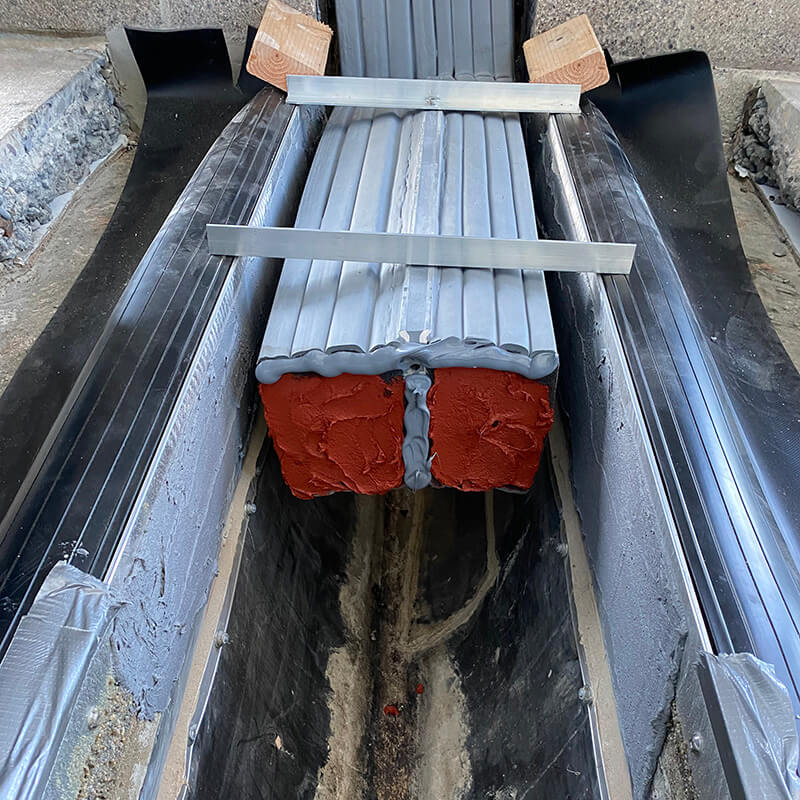
A fire-rated expansion joint is a tested and listed system that seals structural movement gaps in fire-resistance-rated building assemblies. Buildings require expansion joints to accommodate thermal movement, structural loads, wind, and seismic activity. Those gaps represent a physical break through the wall or floor. Where the wall or floor is required to have a fire-resistance rating, that break must be addressed with a product independently tested to resist the passage of flame, heat, and smoke for a defined period while continuing to accommodate movement.
Fire-rated expansion joints differ from standard expansion joint sealants in a critical way: they are not simply fire-resistant by composition. They are tested as complete systems and listed for specific joint configurations, movement capabilities, and hourly fire-resistance ratings. A product that has not been tested and listed to UL 2079 should not be specified in fire-resistance-rated assemblies, regardless of its material properties.
Fire-Rated Expansion Joints vs. Firestop Systems
Fire-rated expansion joints and firestop systems both address openings in fire-resistance-rated assemblies, but they are not interchangeable and are not tested to the same standards.
Firestop systems protect penetrations: conduit, pipe, cable, and duct assemblies that pass through rated walls and floors. The relevant test standards for penetration firestops are UL 1479 and ASTM E814. These systems are designed for static or minimally moving conditions.
Fire-rated expansion joints protect movement gaps: intentional structural openings designed to accommodate thermal movement, structural loads, and seismic displacement. The relevant test standard is UL 2079, which incorporates movement cycling as a required component of the test sequence. A product that passes UL 1479 is not listed for use in a moving structural joint. A product that passes UL 2079 is.
The distinction matters in the field. Expansion joints filled with firestop caulk or sealant without a tested and listed expansion joint system are not compliant with UL 2079, regardless of the fire rating of the sealant material. The movement demands of a structural joint will compromise a static firestop system over time, and the assembly will no longer perform as rated.
When a structural expansion joint occurs in a fire-resistance-rated assembly, the correct specification is a UL 2079 listed fire-rated expansion joint system, not a penetration firestop product.
UL 2079 Testing Requirements
UL 2079 is the North American standard for fire resistance of building joint systems and the benchmark specifiers should require when evaluating any fire-rated expansion joint.
A UL 2079 listing requires more than fire endurance alone. It encompasses movement cycling, fire endurance, and hose stream testing performed on the same assembly. The joint must survive realistic structural movement before being subjected to fire, and then to the force of a fire hose. A product that passes fire endurance alone, without the movement and hose stream components, does not meet UL 2079. See How UL 2079 Tests Fire-Rated Expansion Joints.
A UL 2079 listing is also system-specific. It defines the substrates, system depth, joint width range, movement capability, and fire-resistance duration under which the product was tested. A product installed outside those parameters is no longer covered by that listing.
Equally important is UL’s Follow-Up Service. Under this program, Emshield’s manufacturing process is independently audited to confirm that products leaving the facility match the listed assembly. Specifiers who require Follow-Up Service certification as the basis of specification have a higher level of assurance that the product on the jobsite is the product that was tested.
Where a listed assembly does not match project conditions exactly, an engineering judgment prepared from actual test data is the appropriate path forward. Engineering judgments are covered in a dedicated section below.
Performance Requirements Beyond Fire Rating
A fire-rated expansion joint occupies the same gap as any other expansion joint in the building envelope. That means it must do more than stop fire. The same opening that requires a fire rating is also a potential path for water, air, sound, and heat. A product that protects against fire while compromising the other performance properties of the surrounding assembly has not solved the problem.
Specifiers should evaluate fire-rated expansion joints across the full range of performance criteria that apply to the adjacent construction.
Watertightness and air barrier continuity
Exterior wall and deck assemblies are designed to resist wind-driven water and control air infiltration. An expansion joint in those assemblies must maintain those properties under dynamic conditions. Emshield fire-rated expansion joints are tested for air leakage, structural performance under wind load, and water penetration using ASTM E283, ASTM E330, and ASTM E331. These results support continuity of the surrounding air barrier and weather-resistant envelope. Emshield WFR2 has also demonstrated hurricane-force wind and water resistance through independent laboratory testing.
Sound attenuation
In walls where sound transmission class ratings are part of the design intent, the expansion joint must not become the acoustic weak point. Emshield wall products achieve STC 62 and OITC 52.
Thermal insulation
Fiberglass batt or other loose-fill insulation placed behind expansion joint covers loses effectiveness when joint movement compresses or displaces it. Precompressed impregnated foam expansion joints maintain their insulating properties through the full range of joint movement.
Movement accommodation
Emshield fire-rated expansion joints accommodate total movement of 100% of nominal supplied size, meaning plus or minus 50% in both compression and extension. That range covers thermal cycling, structural settlement, and seismic displacement.
Low-emitting materials
Emshield products are certified as low-emitting materials per CDPH/EHLB Standard Method Version 1.2, 2017, supporting compliance with LEED v4, WELL, CALGreen, and similar standards. The Emshield line is also covered by a third-party verified Environmental Product Declaration (EPD) under ASTM-EPD1130.
Single-product installation
Emshield fire-rated expansion joints eliminate the need for separate fire blankets, mineral wool, liquid fire caulk, or additional firestop materials in applications covered by their listed assemblies. One product addresses fire rating, watertightness, air barrier continuity, sound attenuation, thermal insulation, and movement in a single non-invasive installation.
Fire-Rated Wall Expansion Joints
The Emshield WFR series addresses fire-rated expansion joints in vertical plane applications, including interior walls, exterior walls, and head-of-wall conditions. All WFR products share the same fundamental construction: dual-sided silicone bellows adhered to a fire-retardant impregnated foam backing, held in place by the backpressure of the foam, field-applied epoxy adhesive, and injected silicone sealant bands at the joint face. No mechanical fastening, tracks, or coverplates are required for standard installations.
WFR products are available in sizes from 1/2 inch (13 mm) to 6 inches (152 mm). Universal-90 transition pieces factory-fabricated to match the product provide continuity of seal at inside and outside corners, plane changes, and direction changes without field fabrication.
The WFR series covers three fire-resistance durations:
WFR1 for 1-hour wall and head-of-wall assemblies, serving as a preformed alternative to fire caulk and firestop materials in data centers, hospitals, schools, military facilities, and manufacturing environments.
WFR2 for 2-hour wall and head-of-wall assemblies, used across commercial, healthcare, civic, and institutional building types.
WFR3 for 3-hour wall assemblies, specified in high-occupancy buildings, facilities with extended egress requirements, and projects where the authority having jurisdiction requires a 3-hour fire-resistance rating.
All three products are manufactured under UL’s Follow-Up Service and provide the performance characteristics described above. Engineering judgments can be prepared for all Emshield products where project conditions fall outside listed parameters; see Engineering Judgments below.
For secure facilities where pick resistance is an additional requirement, SecuritySeal SSW2 provides 2-hour fire-rated wall joint protection with a reinforced facing designed to resist tampering.
Fire-Rated Floor and Deck Expansion Joints
Floor and deck applications present different demands than wall joints. Traffic loading, drainage, waterproofing membrane compatibility, and exposure to the elements require products engineered specifically for horizontal plane conditions. The Emshield DFR series covers fire-rated expansion joints in interior floors, structural decks, and plaza deck assemblies.
DFR products use the same precompressed impregnated foam construction as the WFR series, with silicone sealing surfaces engineered for horizontal plane performance. Non-invasive anchoring holds the system in place without drilling or fastening into the substrate, preserving the integrity of adjacent waterproofing and deck coating systems.
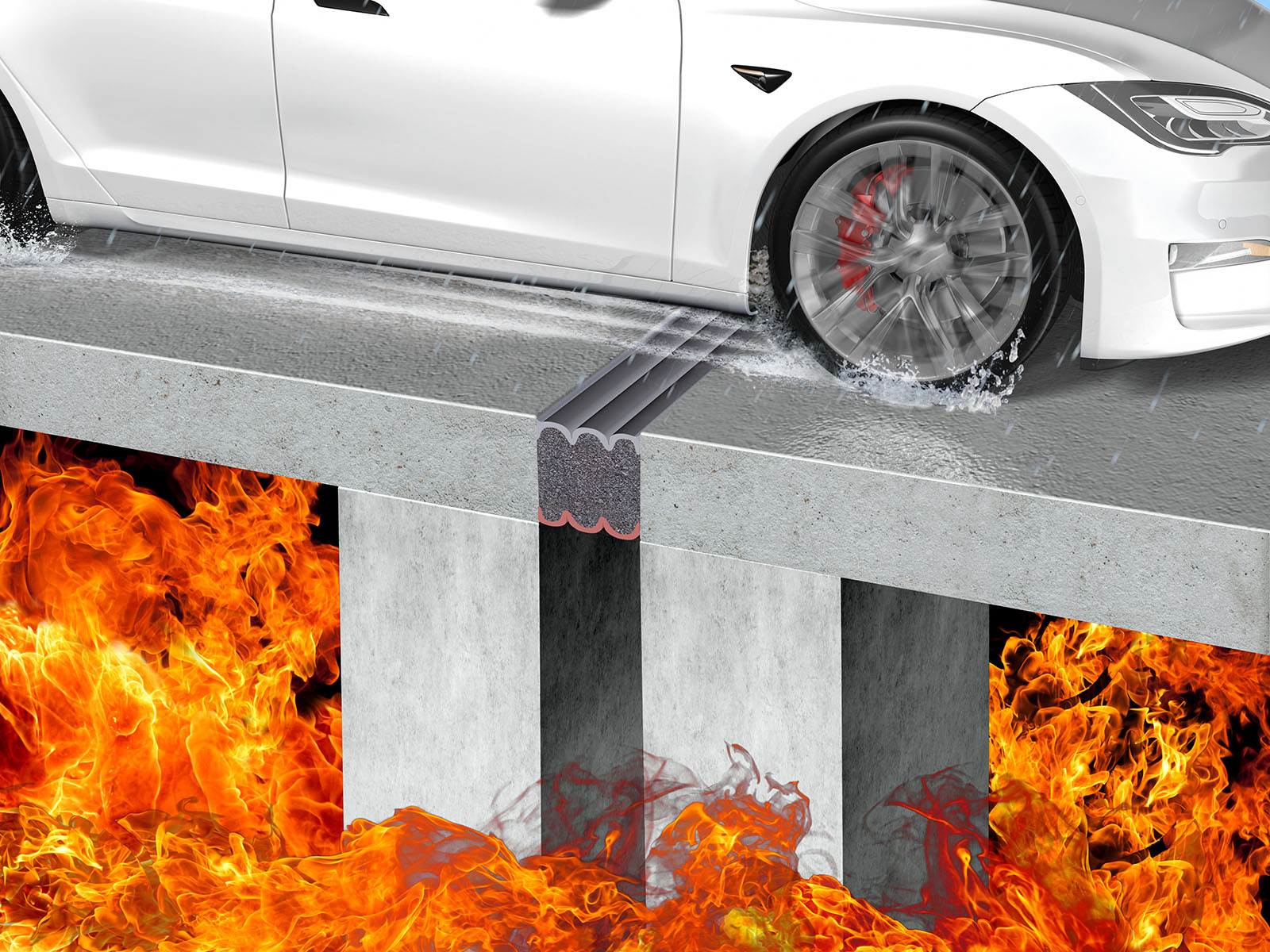
The DFR series covers the primary floor and deck conditions:
DFR2 for 2-hour floor and deck assemblies, the standard specification for structural floor expansion joints in commercial, healthcare, and institutional buildings.
DFR3 for 3-hour floor assemblies, specified in high-rise construction, assembly occupancies, and facilities with extended egress travel distances where the authority having jurisdiction requires a 3-hour rated horizontal joint.
DFR-FP for plaza deck and split-slab assemblies within waterproofing membrane systems, compatible with hot-rubber, liquid-applied, and PVC roofing systems.
For interior floor conditions where a coverplate is required or recommended, Emshield SJS-FR Interior is covered in the section below. For correctional and high-security facilities, SecuritySeal SSF2 and SSF3 provide 2-hour and 3-hour fire-rated floor joint protection with reinforced facings designed to resist tampering and removal.
Fire-Rated Coverplate Expansion Joints
The Emshield SJS-FR series delivers fire-rated expansion joint performance in applications requiring a coverplate, high point-loading capacity, or joint widths beyond the range of standard exposed foam systems.
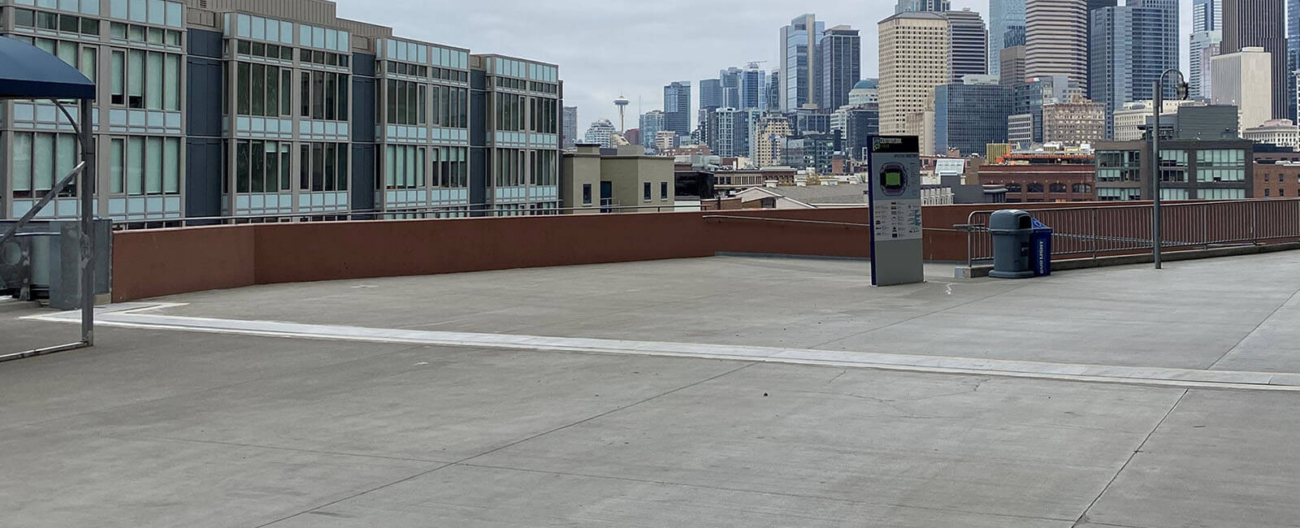
SJS-FR combines a coverplate-protected design with an integrated UL 2079 fire-rated system, providing a trafficable solution for parking decks, stadiums, floors, and other horizontal structural joints where point loading, traffic exposure, or joint width require a coverplate. SJS-FR is available in 1-hour and 2-hour rated configurations for joint widths up to 10 inches (254 mm).
Emshield SJS-FP-FR extends fire-rated SJS performance to plaza deck and split-slab assemblies. For expansion joints within waterproofed plaza or podium deck systems, SJS-FP-FR integrates with the surrounding waterproofing assembly while providing fire-rated joint protection.
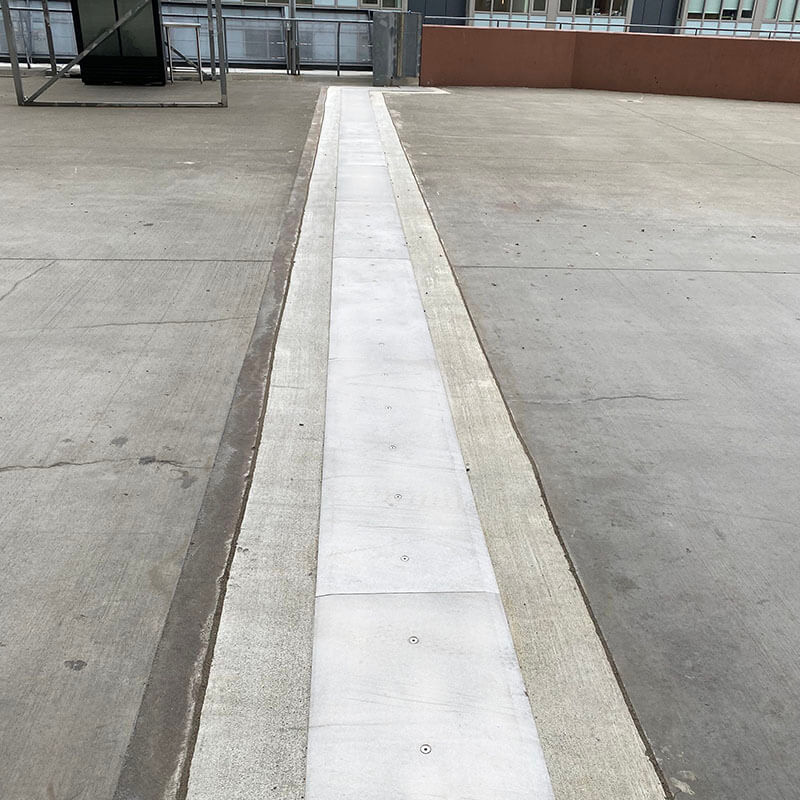
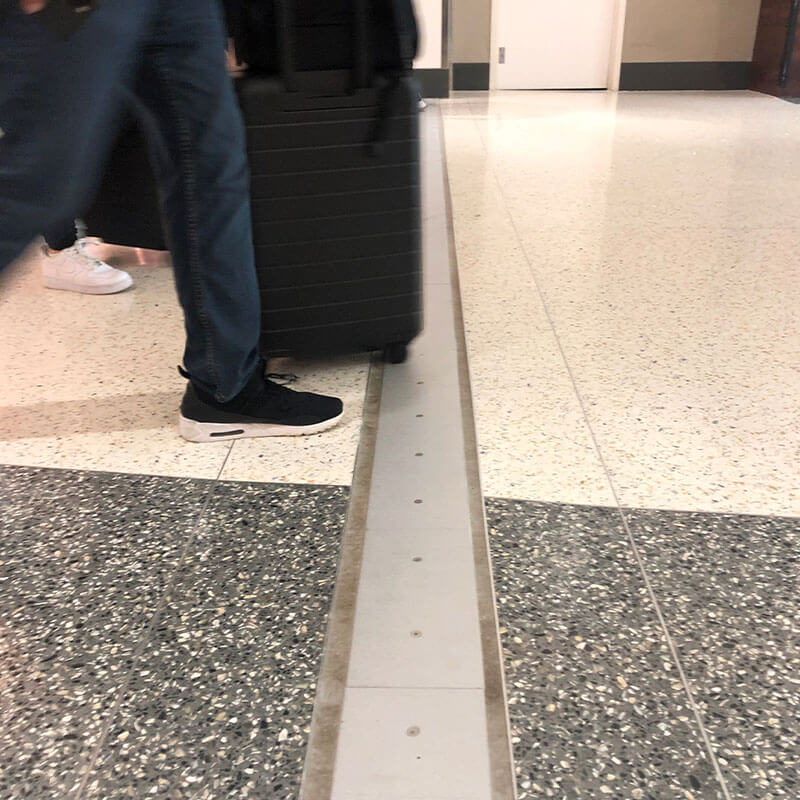
Emshield SJS-FR Interior brings fire-rated performance to interior floor conditions where a coverplate is required or preferred. Two configurations are available. SJS-FR-NB is a flush, recessed installation designed for high point-loading and rolling loads, installed entirely from above the floor surface. SJS-FR-Inlay uses a custom-milled coverplate that accepts the surrounding flooring material, creating a finished surface with minimal visual disruption. Both configurations are available in 1-hour and 2-hour UL 2079 fire-rated options and are suited for applications such as data centers, warehouses, distribution centers, airports, and healthcare facilities where interior floor continuity and fire resistance are required.
Parking Deck Considerations for Electric Vehicles
Parking structures are evolving as electric vehicle adoption increases. While fire-rated expansion joints continue to be specified using the same UL 2079 listed systems, designers are increasingly evaluating how changing fire scenarios, including lithium-ion battery fires and thermal runaway events, affect the overall passive fire protection strategy of parking structures.
In these applications, maintaining the continuity of fire-resistance-rated floor assemblies across expansion joints remains critical. Emshield SJS-FR combines a trafficable coverplate with an integrated UL 2079 listed fire-rated expansion joint system for parking decks, stadiums, and other horizontal applications requiring both fire resistance and heavy-load durability. As parking structure designs continue to evolve, early coordination with the project team helps confirm that the selected joint system aligns with the project’s fire-resistance requirements and applicable code.
Engineering Judgments for Fire-Rated Expansion Joints
UL listings cover a defined range of conditions. Joint widths, substrate materials, system depths, and movement requirements in the field do not always match those conditions exactly. When a project requires a fire-rated expansion joint in an assembly that falls outside the parameters of an available UL listing, an engineering judgment provides the basis for evaluating an alternate solution.
An engineering judgment is a project-specific document prepared by a qualified engineer that evaluates whether a fire-rated expansion joint system will perform in accordance with applicable standards under conditions not explicitly covered by a UL listing. It is a recognized tool in passive fire protection, accepted by authorities having jurisdiction when prepared and documented appropriately.
Not all engineering judgments are equivalent. The quality of an engineering judgment depends directly on the quality of the underlying test data and the rigor of the analysis used to extrapolate from it.
Engineering judgments follow a consistent methodology. Each judgment begins with actual full-scale UL 2079 test data from Emshield products. Using Finite Element Analysis (FEA) modeling software, that data is used to evaluate heat transfer through the proposed assembly under project-specific conditions, including joint width, substrate configuration, system depth, and movement range.
This process means the engineering judgments are not interpolations from general material properties or manufacturer assertions. They are analyses grounded in tested performance data and reviewed by an independent specialist.
Engineering judgments are available for all Emshield products across wall, floor, deck, and coverplate applications. Common scenarios that require an engineering judgment include joints wider than the listed range, substrate combinations not covered by an existing listing, system depths that differ from tested configurations, and movement demands beyond standard listing parameters.
Because engineering judgments are tailored to the conditions of each project, early engagement with the technical team during the design phase produces the most useful outcomes. Submitting actual project conditions allows the technical team to determine whether the design aligns with an existing UL listing. Existing engineering judgments can be referenced for context, but each judgment is project-specific and cannot be applied to a different project.
Where conditions fall outside current UL listings, engineering judgment requirements, applicable fees, and acceptance criteria should be coordinated with the project team, engineer of record, and authority having jurisdiction.
Fire-Rated Expansion Joint Product Quick Reference
| Application | Fire Rating | Recommended Product |
| Wall / Head-of-Wall | 1-hour | Emshield WFR1 |
| Wall / Head-of-Wall | 2-hour | Emshield WFR2 |
| Wall / Head-of-Wall | 3-hour | Emshield WFR3 |
| Floor / Deck | 2-hour | Emshield DFR2 |
| Floor / Deck | 3-hour | Emshield DFR3 |
| Plaza Deck / Split Slab | 2-hour | Emshield DFR-FP |
| Trafficable Floor / Deck | 1-hour / 2-hour | Emshield SJS-FR |
| Plaza Deck / Split Slab | 1-hour / 2-hour | Emshield SJS-FP-FR |
| Interior Floor | 1-hour / 2-hour | Emshield SJS-FR Interior |
| Tunnel Wall / Soffit | Varies | Emshield TFR-RWS |
| Wide Joints (Fire Barrier) | 2-hour | Wabo®FireFlex |
| Security / Pick-Resistant Wall | 2-hour | SecuritySeal SSW2 |
| Security / Pick-Resistant Floor | 2-hour / 3-hour | SSF2 / SSF3 |
Specifying Fire-Rated Expansion Joints
Selecting a fire-rated expansion joint early in the design process produces better outcomes than addressing it during submittal review. The joint width, movement range, substrate configuration, and fire-resistance rating all affect product selection, and some conditions require engineering judgments that take time to prepare. Early engagement with a technical representative allows those questions to be resolved before they become schedule issues.
Specification Criteria
Fire-resistance duration
Identify the fire-resistance rating required by the assembly. Wall and floor assemblies carry different ratings depending on occupancy, building height, and construction type. The expansion joint must match or exceed the rating of the assembly it interrupts. For wall applications, WFR1, WFR2, and WFR3 cover 1-hour, 2-hour, and 3-hour requirements respectively. For floor and deck applications, DFR2 and DFR3 cover 2-hour and 3-hour requirements.
Installation location
Wall and floor applications require different products. Head-of-wall conditions, exterior wall joints, interior partitions, structural floor joints, plaza decks, and split-slab assemblies each have products engineered for those conditions. Confirm the location of installation and the exposure conditions before specifying.
Joint width and movement
The nominal joint width and total anticipated movement determine product sizing. Standard Emshield WFR products are available up to 6 inches (152 mm) in width; DFR products are available up to 4 inches (102 mm); SJS-FR systems are available up to 10 inches (254 mm). All systems accommodate total movement of 100% of the nominal supplied size. Conditions outside these ranges may require contacting the technical team to determine the next step or may call for a fire-rated blanket system as covered below.
Substrate configuration
Confirm that substrates are compatible with the listed assembly. Substrate material, depth, and preparation requirements are part of the UL listing and must be met for the installation to be compliant.
UL listing and Follow-Up Service
Require that the specified product be UL 2079 listed and manufactured under UL’s Follow-Up Service. This is the only way to confirm that the product being installed matches the product that was tested. Specify this requirement explicitly in Division 07 of the project manual.
Engineering judgment documentation
Where project conditions fall outside listed parameters, require that any engineering judgment be based on applicable test data and reviewed by a qualified fire protection engineer. Judgments that rely on material properties alone or that are prepared without independent review do not provide equivalent assurance.
For projects requiring LEED v4, WELL, CALGreen, or similar compliance, confirm that the specified product carries low-emitting material certification and an EPD. Emshield products meet both requirements under current certifications.
The technical team provides specification assistance and submittal review support to help confirm product selection and listing compliance for your project conditions. Contact Sika Emseal early in the design phase to identify any conditions that may require an engineering judgment.
When Fire Blankets Are the Right Solution
Precompressed foam systems address standard fire-rated expansion joint applications, but very wide joints fall outside their range. For joints from 10 to 20 inches (254 to 508 mm) wide, Wabo®FireFlex provides a 2-hour, UL 2079 fire-rated barrier system engineered specifically for wide joint conditions. FireFlex is constructed of high-temperature fire-resistive blankets, stainless steel foil, and galvanized edge retainers rather than a precompressed foam and silicone system.
FireFlex is designed primarily for interior fire-rated joint applications where joint widths exceed the practical range of precompressed foam systems. It is commonly used in large interior floor and wall openings where a tested fire barrier is required. Because FireFlex is a fire barrier rather than a watertight expansion joint seal, project conditions should be evaluated carefully to determine whether additional systems are required. For joints within the standard Emshield range that also require a watertight, integrated expansion joint system, the precompressed foam products described above remain the appropriate specification.
Additional Applications
The Emshield fire-rated expansion joint line extends beyond standard wall and floor conditions to address specialty applications where fire resistance, movement accommodation, and environmental performance must be maintained in more demanding contexts.
Tunnel expansion joints
Tunnel environments subject expansion joints to conditions that exceed typical building applications: sustained moisture exposure, vehicle exhaust, and in certain infrastructure applications, elevated temperature requirements under fire scenarios specific to tunnel fire testing standards. Emshield TFR-RWS is engineered for fire-rated expansion joints in tunnel wall and soffit applications, addressing the unique substrate configurations and performance demands of below-grade and infrastructure tunnel construction.

International and CE-marked products
For projects outside North America, fire-rated expansion joint certification requirements differ from UL 2079. In Europe, the applicable standard is EN 1366-4, administered through European Technical Assessment bodies. Emshield DFR/WFR CE is tested and certified by CSTB in France and carries CE marking under EN 1366-4, providing up to 4 hours of fire resistance for floor and wall applications. It functions as a water, air, and smoke seal with 100% movement capability. Colourseal VHE CE provides EN 1366-4 certified fire resistance for movement joints in both floor and wall planes, with 90-minute and 45-minute ratings for vertical and horizontal applications respectively. Both products are supported by European Technical Assessment documentation and are available for international projects through Sika’s global distribution network.
By Jordan Hensley
Product Selection Resources
Sika Emseal provides tools to support fire-rated expansion joint selection, specification, and installation.
Fire-Rated Expansion Joint Selection Guide
Organizes the full Emshield product line by application, fire-resistance duration, and joint type.
UL/ULC Listings
Assembly details, substrate requirements, joint width ranges, movement capabilities, and fire-resistance durations for every listed product.
Engineering Judgment Request
Submit project conditions, including joint width, movement range, substrate materials, and required fire-resistance duration, to begin the process.
Submittal Package Builder
Assemble product data sheets, installation data, guide specs, CAD details, and UL listing information into a single project submittal package.
Design Assistance
Specification assistance and product selection support. Contact the team early in the design phase to confirm listing compliance and identify any conditions that may require an engineering judgment.
SWRI-Validated Training
Installation training for fire-rated, watertight, and coverplate expansion joint systems, offered at the Hensley Training Center at Sika Emseal’s office in Westborough, Massachusetts.