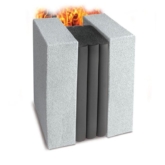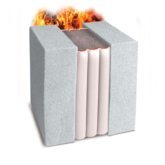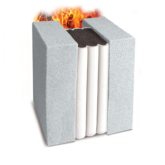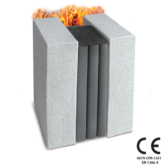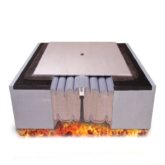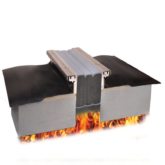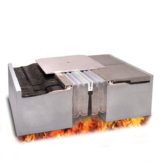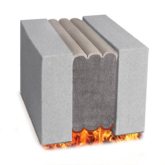



|
DO NOT OPEN ANY PACKAGES or install this material until all
members of your crew have read and understand these instructions as well as
all relevant MSDS sheets. If you do not understand any part of these
instructions CALL EMSEAL: 800-526-8365 or 508-836-0280.
This document does not purport to address all of the safety
concerns, if any, associated with this product's use. It is the
responsibility of the user of this document to establish appropriate safety
and health practices and to determine the applicability of regulatory
limitations prior to use. The use of a dust mask, safety goggles and gloves
is recommended. Keep out of reach of children.
IMPORTANT: This product cannot perform its intended
function if not properly installed.
|
1
Installation
Equipment & Storage
In addition to safety equipment required to comply with applicable
Federal, state and local safety regulations, equipment to prepare and
repair the joint-faces, as well as normal tools of the trade, the
following are required:
Equipment Checklist:
Tape measure
Mixing paddle and heavy-duty, low-speed drill for
mixing epoxy
adhesive
“Bulk” caulking gun & tips for silicone sausages
provided
Large tube-caulking gun for intumescent caulk tubes provided
Long-bladed, serrated bread knife
Hacksaw
Miter box or miter block
Spray bottle with water
Duct Tape (2 ½ times the length of joint)
Spatula to scrape epoxy from can
Chemical resistant gloves
2-inch wide (50mm) margin trowels for applying epoxy adhesive on
gap walls and for spreading intumescent sealant on exposed foam face.
Caulk knives for tooling sealant bands
Toluene** for cleaning joint-faces, trowels and mixer
Clean lint-free, 100% cotton rags
Cold Days: Store Sealant, off the floor,
inside at above 68°F (20°F). It will recover slower when cold and
faster when warm.
Very Hot Days: Keep
sealant out of direct sun when the temperature is greater than 60°F (15°C)
until immediately prior to installation into joint.
|
2
Prepare &
Solvent-Wipe Joint Faces
Concrete:
• Remove loose particles and weak concrete to ensure sound concrete
substrate. Spalls, chipped edges and uneven surfaces must be repaired
using suitable patching material and proper patching geometry and
techniques. Joint faces must be parallel.
• Joints must have unobstructed depth greater than or equal to the full
depth of the largest material supplied plus 1/2-inch (6mm).
• Remove all contaminants by sandblasting or grinding to ensure a
thoroughly clean and sound substrate for the full sealant depth.
NOTE: DO NOT use a wire wheel--this will polish the substrate and cause
bond-failure.
• Dry all wet surfaces.
NOTE: Do not use flame to dry substrate--this
will leave carbon on the substrate and cause bond-failure.
• Wipe joint faces with solvent-dampened, lint-free rags to remove all
concrete dust and contaminants.
Metal:
• Sandblast or grind to rough, white metal and solvent-wipe immediately
prior to applying DFR2 epoxy.
IMPORTANT: Ensure that no oxidation (rusting) occurs before the epoxy is
applied.
Other Substrates: Contact EMSEAL. |
|
3
Measure Joint Width & Find Correct Size Material
• Measure joint width at deck surface and below to
ensure joint faces are parallel.

• Material has been supplied to suit your mean-temperature field
measured joint widths. Widths of material supplied are marked on each
stick of material. Find correct box and open it.
• Compare width of material supplied as marked on each stick against
mean joint width. Actual width of material as measured between hardboard
will be slightly less than marked size because material is over-compressed for ease of installation.
NOTE: If unsure of correct material selection, consult
EMSEAL.
IMPORTANT:
Do not
remove outer plastic packaging until you have read and understand the
rest of these instructions as material may expand prematurely. |
4
Mask Deck & Mix Epoxy
Adhesive
•Using duct tape, tape off the deck on both sides of the
joint.
Mix Epoxy
•EMSEAL epoxy adhesive may be used in the 41°F (5°C) to 95°F (35°C)
temperature range.
•Using a trowel, transfer the entire contents of Part B (hardener) into
the contents of Part A (base).
•Mix the material thoroughly with a drill and mixing paddle. Scrape the
walls and bottom of the container to ensure uniform and complete mixing.
•Always mix component B (hardener) into component A (base). Ensure that
a uniform gray color with no black or white streaks is obtained.
IMPORTANT:
DO NOT thin the epoxy.
PRECAUTION: Wear chemical-resistant gloves and/or barrier hand
cream when handling liquid sealant or epoxy. Remove promptly from skin
with a commercial hand cleaner before eating or smoking. Avoid inhaling
vapors.
|
5
Apply
Epoxy to Substrate, Unwrap DFR
|
Ensure that the mixed epoxy adhesive is applied to
the substrate before the pot life has expired (10 - 30 minutes
depending on the ambient temperature).
WARNING:
Epoxy will harden more quickly when left in the pot. Apply it onto the
joint face as soon as possible.
IMPORTANT: The epoxy must still be uncured when
installing DFR2 or DFR3 foam into the joint-gap.
If the epoxy cures before installing the DFR foam
then reapply new epoxy. If work is interrupted for more than 2 hours
after initial cure then grind the old epoxy and apply new wet epoxy.
|
 |
 |
IMPORTANT: While one or more workers are applying
epoxy to the joint faces, others must prepare the DFR foam. The
DFR foam is kept under compression by plastic wrapping and
hardboard on both sides.
• Slit the plastic packing by cutting on the
hardboard and remove hardboard and inner release liner. DO NOT cut
along the silicone bellows face or the red intumescent bellows face.
IMPORTANT:
Work quickly
and deliberately after cutting the shrink-wrap to avoid material
expanding beyond a usable size. |
|
|
6
Wipe
Release Agent off Silicone Facing of DFR2 or DFR3 Foam
•
For packaging and production reasons, the silicone facing is coated in
the factory with a release agent.
• Prior to installation, this agent must be wiped off in
order for the injected sealant bands described in Step 9 to adhere to the
silicone facing and to avoid contamination of the substrate at this
point.
• Lightly, quickly and thoroughly wipe the cured silicone facing with a
lint-free rag made damp with water to remove the release agent.
TIP: Use the hardboard packaging as a flat, clean working surface. |
|
|
|
|
7
Install First DFR Foam Length into Joint & Apply Silicone to Bellows
Face
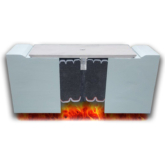
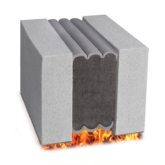
• Identify the traffic (top) and fire (bottom) side of
the foam and install in the correct direction. The top will have only a
smooth silicone bellows. The bottom will always have a layer of a rough
red intumescent bellows coating.
Note: In some cases if specified by
the architect, there may also be a layer of smooth silicone covering the
red intumescent on the bottom side.
IMPORTANT: Always install DFR sticks with the red
luminescent side facing down into the gap.
• Immediately install the
foam into the joint. Ensure that epoxy on the joint face has not cured.
• When installed, the DFR must be recessed so that the top of the
bellows is flush or slightly below the deck surface.
• Note: When material is correctly expanded for a snug fit it will
support its own weight in the joint.
• Feed material into joint, starting from one end. The material should
fit snugly and must be eased into the joint with steady, firm pressure.
• Leave the end to be
joined to the next length sticking slightly proud of the joint.
• Repeat step #7 for each new stick.
• On the end of the next
stick, using a bulk gun and
the sausages of silicone provided, apply the liquid silicone to the
exposed face of the silicone bellows. |
 |
 |
• Using
a large caulk gun and the tube of intumescent sealant provided,
apply the intumescent sealant to the exposed face of the intumescent
bellows and to the exposed face of the foam. |
| • Use a
caulk knife or margin trowel to spread the intumescent sealant over
the face of the foam to an even 1/16th-inch (1mm) thickness. |
 |
IMPORTANT: All sticks of DFR2
or DFR3 foam MUST have a coating
of intumescent on the faces of all joins. This ensures that joins do not
compromise the fire barrier. |
|
8
Install Next Length. Repeat.
• Work
in one direction towards the previously installed length or end of
joint. Do not stretch material.
• Leave the end to be joined to the previous length sticking proud
of the joint--push the joining faces together.
• Push Hard on the stick to compress joins firmly together. Ensure
there are no voids at joins.
• Once the full length is installed, push the protruding join into
the joint and tool off the excess silicone.
• During low temperature installation, provide as much ambient heat
as possible around installed DFR foam to accelerate recovery. |
 |
|
|
9 Inject
Silicone Sealant Bands at Substrates & Tool Excess Silicone
• Wipe any excess epoxy from top of material using a
clean rag.
|
• Before the
epoxy cures, force the tip of the silicone bulk gun between the
substrate and the DFR foam. Inject a 3/4-inch (20mm) deep silicone sealant
band between the foam, cured silicone facing and the joint-face.
|
 |
• Tool the freshly applied silicone firmly to blend with
the substrates and cured silicone facing, and to ensure a proper bond
and seamless appearance.
• Where foam meets at butt joins, tool the excess silicone that
squeezes out from the top and between the bellows.
IMPORTANT: Silicone left between the wrinkles of the
bellows could constrain movement--using a caulk knife, remove excess
sealant and blend what remains into the bellows.
• Note: Silicone sealant band is only applied to the top
side of the DFR foam. |
|
SILICONE-COAT ANY EXPOSED FOAM ENDS
IMPORTANT: Any stick of DFR2 or DFR3 which finishes
with an open end, not terminating into another stick or structural
termination, must be lightly coated on the exposed foam end using the
liquid silicone sealant provided. This is critical to ensure that the
fire-retardant impregnated foam is sealed. |
|