


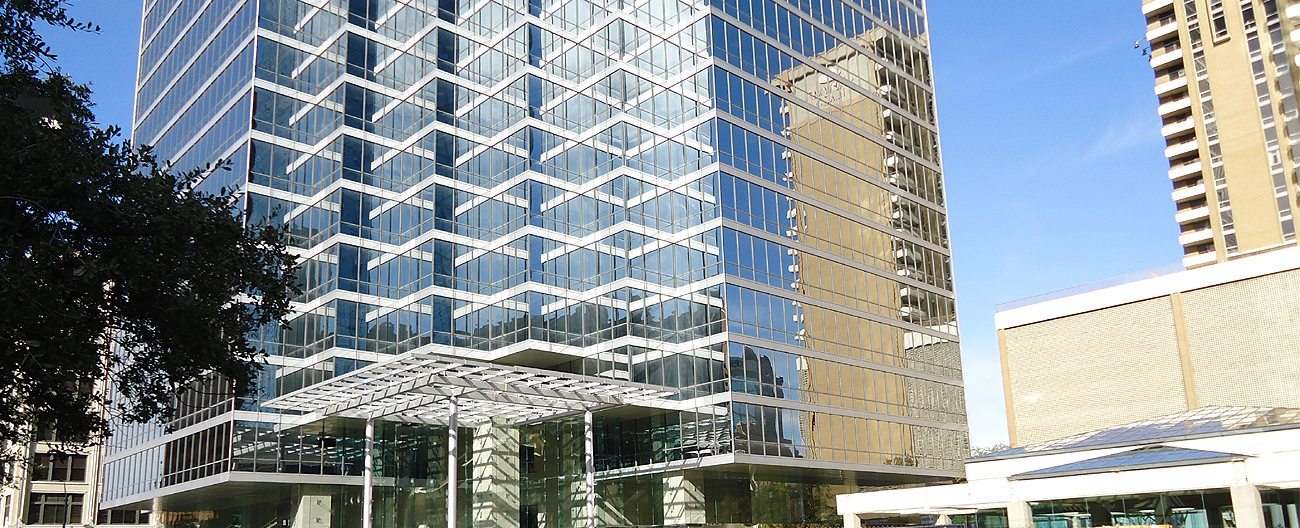
Air Barrier ABAA Compliance
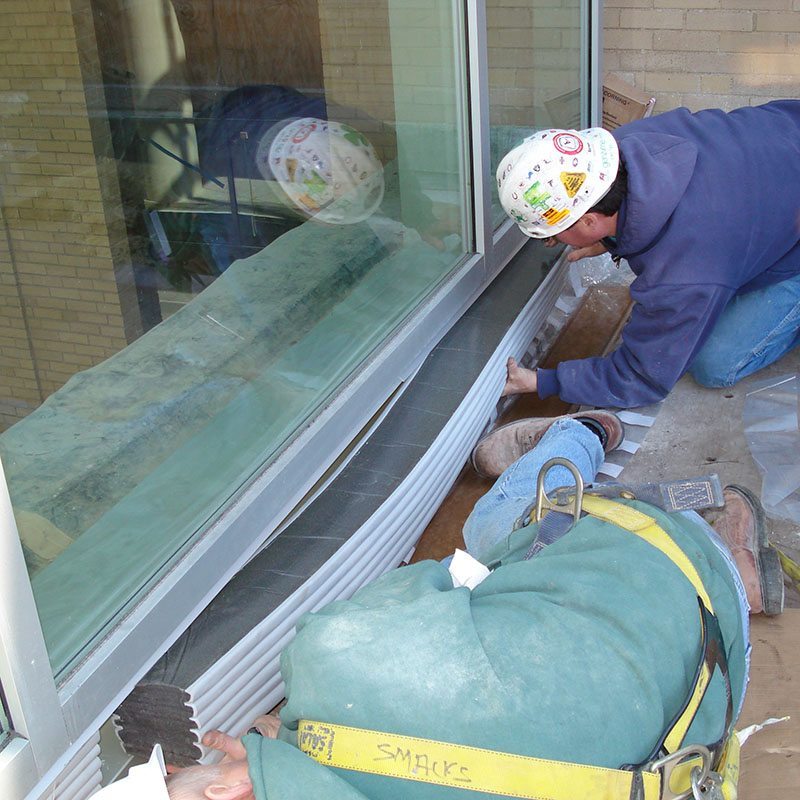
MIT (Massachusetts Institute of Technology), in their award-winning PDSI (Physics, Department of Materials Science and Engineering, Spectroscopy and Infrastructure) building, used SEISMIC COLORSEAL-DS to seal both the inner and outer faces of the window wall systems. In this application the 5 3/4-inch deep material can be expected to impart an R-value approaching R-14 at the window perimeters.
Sika Emseal’s Backerseal and Seismic Colorseal joint sealants are uniquely suited for use as a component in an air barrier assembly.
Seismic Colorseal and Backerseal installed as offered and intended in conjunction with a field-applied, low-modulus, liquid sealant is compliant with the ABAA air barrier performance requirements. This is because the Seismic Colorseal and Backerseal/sealant system are impermeable and airtight when tested according to ASTM E 283*.
“The air barrier material of an envelope assembly shall be joined and sealed in a flexible manner to the air barrier material of adjacent assemblies, allowing for the relative movement of assemblies due to thermal and moisture variations and creep.”
–Massachusetts Building Code780 CMR Appendix 120 AA–Stretch Energy Code.
The Stretch Energy Code is the International Energy Conservation Code (IECC) 2009 with Massachusetts amendments.
Additional Context:
To further put into context the consideration of joint sealants as part of the air barrier assembly, it is useful to consider the Massachusetts building code. Massachusetts has adopted an air barrier code and makes specific reference to the joint sealants that connect the air-barrier membrane to penetrations such as windows, doors, etc.
The highlighted sections of the Mass. Code recognize the ability of liquid sealant systems to be airtight (zero permeability) and require their use a outlined in the highlighted parts of the code.
502.4.0 Air Barriers. The building envelope shall be designed and constructed with a continuous air barrier to control air leakage into, or out of the conditioned space. An air barrier system shall also be provided for interior separations between conditioned space and space designed to maintain temperature or humidity levels which differ from those in the conditioned space by more than 50% of the difference between the conditioned space and design ambient conditions.
The air barrier shall have the following characteristics:
- It must be continuous, with all joints made airtight.
- Materials used for the air barrier system shall have an air permeability not to exceed 0.004 cfm/ft2 under a pressure differential of 0.3 in. water (1.57psf) (75 Pa) when tested in accordance with ASTM E 2178. Air barrier materials shall be taped or sealed in accordance with the manufacturer’s instructions.
- It shall be capable of withstanding positive and negative combined design wind, fan and stack pressures on the envelope without damage or displacement, and shall transfer the load to the structure. It shall not displace adjacent materials under full load.
- Air barrier materials shall be maintainable, or, if inaccessible, shall meet the durability requirements for the service life of the envelope assembly.
- The air barrier material of an envelope assembly shall be joined and sealed in a flexible manner to the air barrier material of adjacent assemblies, allowing for the relative movement of assemblies due to thermal and moisture variations and creep.
Connections shall be made between:
- joints around fenestration and door frames
- junctions between walls and foundations, between walls at building corners, between walls and structural floors or roofs, and between walls and roof or wall panels
- openings at penetrations of utility services through roofs, walls, and floors
- site-built fenestration and doors
- building assemblies used as ducts or plenums
- joints, seams, and penetrations of vapor retarders
- all other openings in the building envelope
502.4.0.1 Air Barrier Penetrations. All penetrations of the air barrier and paths of air infiltration/exfiltration shall be made air tight.
Given that the Seismic Colorseal or Backerseal/liquid sealant system will be sealing control and expansion joints and other penetrations in the air barrier assembly, it would be necessary that the Backerseal be “airtight”.
Backerseal is installed as part of a system comprised of the Backerseal and low-modulus liquid sealant–usually silicone. Like Backerseal, Seismic Colorseal is an acrylic impregnated, precompressed foam with the silicone factory applied and cured.
Given that liquid sealant (usually silicones) tooled to typical thicknesses of ¼-inch or more are airtight and that the silicone is applied over the Backerseal, the sealant system created by these two components is airtight in compliance with the part of the Mass. code referenced above.
The bottom line is that Seismic Colorseal, or Backerseal used in conjunction with a field-applied liquid sealant, is compliant with ABAA guidelines and will not be detrimental to the overall performance of a compliant wall assembly.
*Using the results reported in our Test Report “1990-01-23EMSEAL_COV_BKS_ASTM283-331-330ReportNo90-38-B0020.pdf”, the relevant results are reported on Page 4, Item 5.0 Test Results.
At the relevant pressure 75 Pa and the Flow of 0.97 cu.m/hr converts to 0.0453 L/s.m2 which compared to the requirement of ABAA Compliance Alternative B or 0.2 L/s.m2 is 5-times below the ABAA requirement**.
**NOTE: this measurement is based on the air leakage of the particular compliant wall assembly in which the Seismic Colorseal and Backerseal/silicone sealant was tested. It is safe to assume that if tested in any other ABAA compliant wall assembly, the Seismic Colorseal or Backerseal/silicone would not have a detrimental effect on the performance of the assembly.
As regards R-Value:
The R-Value of the uncompressed base foam of which Seismic Colorseal and Backerseal is comprised is R-3.28/inch of depth.
As density increases R-value decreases. So as layers of uncompressed foam are compressed to form the supplied Backerseal the resulting R-Value is R-1.8 per inch of depth at nominal (mean temperature) joint size.
For example, standard Backerseal for a 1-inch nominal joint would have an R-value of 2.25 (R-1.8 x 1.25” = R-2.25). A custom depth specification of 2 ½” would yield R-4.5 (R-1.8 x 2.5” = R-4.5).
R-value would fluctuate up and down slightly from this value depending on movement at the joint caused by thermal cycling. The R-value would decrease in summer when the joints close up. In contrast, R-value would increase in winter when the joints open thereby lowering the foam density of the Backerseal.
In the previously referenced examples: Backerseal for a nominal 1-inch joint with 1 ¼” depth and a field applied ¼” bead of silicone would yield R-2.75. The custom 2 ½” deep Backerseal with silicone would yield R-5.5.
In structural expansion joints where joint openings typically average around 2 3/4-inches, Seismic Colorseal would typically be specified. 2 3/4-inch nominal material has a standard depth of 3-inches. 3″ x R-2.15 = R-6.45.
Double-Sided Seismic Colorseal provides the designer with additional options. Seismic Colorseal-DS can be customized to suit the entire depth of a wall or window mullion for example. And because both the interior and exterior faces are factory-coated with silicone the R-Value is increased by both the addition of depth and the addition of another layer of silicone.
R-values for the use of any of these systems installed from both faces of the wall with an air gap between the two systems can be expected to more than double the R-Value and insulating effect.
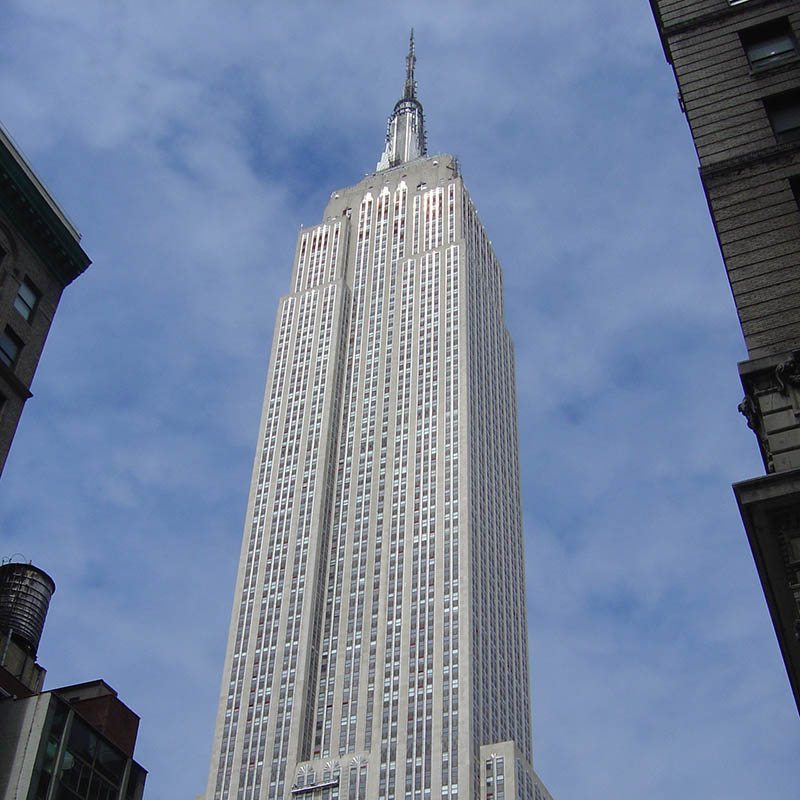
Backerseal selected to seal the perimeters of the 6,500 refurbished windows in the Empire State Buildings ongoing energy retrofit
Engineering New Record in their article “Empire State Building Starts $500M Energy Retrofit,” describe the benefits of the retrofit:
The program is expected to reduce energy consumption by up to 38 percent in the 102-story building at the intersection of Fifth Avenue and West 34th Street and will provide a replicable model for similar projects around the world. Work has already begun, and building systems work is scheduled for completion by year-end 2010.
“Commercial and residential buildings account for the majority of the total carbon footprint of cities around the world – over 70 percent in New York City” said Anthony Malkin of building owner of the Empire State Building Company. ” Beginning in February 2008, the Empire State Building has been used as a test bench to create a replicable process to reduce energy consumption and environmental impacts.
“Most new buildings are built with the environment in mind, but the real key to substantial progress is reducing existing building energy consumption and carbon footprint,” he said.¹
While among the most recognizable structures in the world, the Empire State Building joins a long list of structures that have benefitted from the vision of a designer or consultant who has had the foresight to demand Emseal’s Backerseal as a key component in ensuring the integrity of their buildings facade.
¹”Empire State Building Starts $500M Energy Retrofit”, April 7th, 2009; <http://www.ens-newswire.com/ens/apr2009/2009-04-07-093.asp>