


Gutters Hide
Expansion Joint Leaks
These photos received by our Tech Team inspired a re-post from our
FAQ:
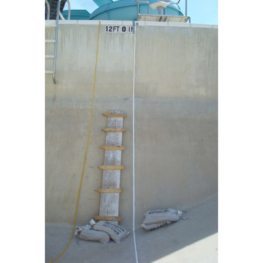
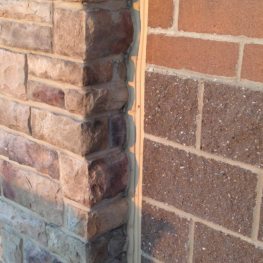
The photo illustrates vividly why expansion joints should be
watertight at their top surface. And why gutters can lead to
the need for seriously costly repairs.
They underscore how gutters conceal leaks, resulting in structural
damage that is dangerous and far more costly than the price of an
expansion joint that works.
|
 |
|
There are several reasons not to use gutters under joint systems:
1) Gutters conceals leaks. The leaks go undetected.
Water (carrying salts and other corrosion causing chemicals) bypasses the primary joint system, runs over
and penetrates the concrete on its way to the gutter. Rebar corrodes,
expands, and spalls the concrete. , Costly and dangerous degradation of
the structure begins.
2) Gutters are not water proofing, they are water management.
Water that reaches a gutter must be managed to drains. To do this
gutters must be pitched to ensure drainage. The gutters must be
dammed at ends and be fabricated to be watertight at plane and direction
changes. Joint systems are too often detailed in cross-section
only. In cross-section a gutter looks effective. Joints
detailed in cross-section will not get constructed either with pitch or
with terminations, transitions, or integration into the drainage
systems.
It is when the gutter is considered in 3-D that the challenges of water
management are revealed. (More
on 3-D joint design).
3)
A
joint system that incorporates a gutter as standard equipment or a joint
design that incorporates a gutter beneath another joint system is by
default admission that the joint system is not watertight. The choice of
that joint system should be reconsidered.
|
(click images to enlarge) |
 |
| |
|
|
4) Gutters, or gutters incorporated into joint systems, provide a
highway for vermin. It is not unusual, particularly in sports venues
like stadiums to find evidence of active communities of rats and other
vermin using gutters as their homes and/or transportation infrastructure
around the building. Joint systems that are not watertight at the
surface allow liquids (beer, soda pop) and washing-water-diluted foods
to enter the gutter system. Vermin take advantage of this food
source.
5) Downspouts get
blocked. Downspouts are highly susceptible to blockage due to the
accumulation of debris in gutters.
6) Again, gutters conceal leaks. EMSEAL supplies joint systems
that are watertight. These systems when properly detailed using
isometric CAD details for watertight treatment at terminations and
transitions, and when installed according to EMSEAL's instructions, can
be expected to be watertight.
If a system leaks, we want immediate, early
detection of the leak. This will allow the cause of the leak to be
identified and remedied.
Gutters can seriously compound the difficulty of tracing the
source of the leak to a particular location.
Posted January 11, 2013 -- Lester Hensley |
|
EMSEAL
Embraces, Enables Sustainability
From
EMSEAL, the Westborough, MA
based company that sealed all 6,514 windows on the
Empire State Building LEED Gold retrofit,
comes news of their own more local sustainability efforts. Like this
massive project, which resulted in a 38% energy savings for the
102-floor, 2,900,000 square foot, New York skyscraper, EMSEAL has
similarly achieved a substantial reduction in energy usage due to
its recent efforts facilitated by the
Sustainable Business Leader Program (SBLP).
EMSEAL is recognized by SBLP as a leader in sustainable business and
partner in debunking the myth that companies must choose between
profitability and sustainability.
The
SBLP, under which EMSEAL is a certified, is dedicated
to, “supporting locally owned businesses in improving their
environmental business practices, reducing their carbon footprint,
and saving money.” EMSEAL has now accomplished a number of measures
to conserve energy and materials in accordance with the SBLP,
including a company-wide installation of the latest energy-efficient
lighting systems in its factories and corporate offices. It has
fully implemented a recycling system for its manufacturing and
office waste materials, and also switched to cleaner, more
environmentally-friendly chemicals both in outside lawn care and
landscaping as well as interior facility and manufacturing equipment
cleaning and maintenance.
Says
EMSEAL CEO Lester Hensley, “Because of our financial and cultural
success with this program, I would encourage any and all local
businesses to explore SBLP certification, or to pursue similar local
and national sustainable business initiatives.”
For full article,
click here.
|
 |
Posted June 29, 2012--Jordan Hensley
 |
|
|
|
Rethinking Expansion Joints in the Face of Quakes and
Hurricanes
Expansion joints can
be said to be among the most critical aspects of design in relation
to building performance under geological
and weather extremes.
In the wake of the recent earthquake, hurricane
Irene,
and tropical
storm Lee,
those of us on the East Coast are being given repeated reminders
of a universal truth--storms and shakes need to the baseline for
our structural design.
A new
line of breakthrough expansion joint products means you can
get extreme protection built into a single product installation
with solutions for walls, floors, solid and split slabs.Now
is a logical time to reflect on design practice as it relates to
expansion joint sizing and product selection in relation to
earthquakes and storm-force-wind driven rain.
Sizing in Relation to Product Capability
Proper sizing of joint gaps in relation to stiffness, height,
geology, and thermal exposure extremes are among the
considerations in sizing the distances needed between structures
and/or structural elements within buildings.
But just
sizing the gap for
anticipated movements is only
half of the equation.
|
|
|
Among the most frequent communication
disconnects in
the design process is the structural engineers responsibility
for sizing the gap and the architects responsibility in
selecting a product to seal it. These must be reconciled
against the movement
capability of the product to seal the gap. Usually
this means the joint-gap needs to be wider than calculated
without consideration of an expansion joint system installed in
to the joint opening to seal it.
What Are You Sealing In or Out? What you desire
to seal against will in part determine a products' movement
capability. A looped membrane or simple rail-and-rubber strip
seal may seal out typical falling rain and would likely handle
even seismic movement.
But, what about wind-driven
rain, or worse, hurricane
or tornado driven rain?
What about air-pressure
differentials between
the inside and outside of the building?
What about thermal
insulation in respect to heating and cooling
containment?
What about sound
attenuation?
What about fire
and smoke?
Looped membranes and strip seals will not provide any protection
against any of these.
The Ideal Product
So the ideal product would be one that provides protection
against all
of these performance demands. Sounds too good to be
possible, doesn't it?
Yet after more than 30 years in the business of focusing our
company strictly on the sealing of expansion joints, EMSEAL has
evolved its product line and broken some remarkable paradigms to
bring to market the EMSHIELD family
of products. Not only do these products perform
in all of the conditions mentioned above, they have
been independently
tested to prove it.
Independent Tests Confirm Performance Claims
UL 2079 proves
the products' ability to handle thermal, sway and
seismic cycling frequency. It also proves the products fire
resistance in configurations to provide up to 3 hours of fire
protection.
ASTM E283, E330, and E331 prove
the products' performance in excess of ABAA guidelines and at
positive and negative pressures to match hurricane force winds
and wind driven rain.
ASTM E-90 reveals
STC and OITC sound attenuation performance as high as 62 and 52
respectively--in standard depth configuration.
FTIR and DSC analysis
proves the absence of wax in our products and is a cornerstone
of our claims that EMSEAL will
not bleed at
temperatures up to 185-degF while simultaneously compressed to
the minimum of our stated movement ranges.
Oh, and all of these tests were run on the products at the full
extent of their claimed movement ranges. This means
the products were in arguably their most vulnerable
configuration. Which means that the
tests are conservativebut relevant to real life
conditions that could exist at the extent of your design and our
claims.
Specify Quality Base your specifications and
submittals on EMSEAL and demand in the spec that
all others to provide the same independent
testing to meet the performance standards that suit
field conditions. Some products look the same, some are claimed
to be the same, but unless
the lab results prove it--they are not the same.
Walls, Floors, Decks, and Split Slabs
The EMSHIELD line
is comprehensive and features joint solutions, with built-in
fire ratings for walls, floors, solid-slab decks, and even
split-slab decks.
Local, Regional, National Help
EMSEAL's technical service,
problem solving, and specification development assistance
is available locally, regionally, nationally, and
internationally.
|
Posted September 6, 2011--Lester Hensley
 |
|
|
Do Expansion Joint Leaks Plague your Projects?
"We have come
to realize that our projects show more problems with expansion
joints than all other product categories combined. Yet, expansion
joints are a miniscule part of projects in terms of construction
costs.
How can we work together to produce trouble-free joint seals?"
Received in a letter to
our firm in 1990, this quote has been the basis of EMSEAL's mission
for 20+ years. Less than
1/2 of one percent
of the budget of a structure is typically spent on expansion joints.
In fact less than one percent is usually spent on all
waterproofing. Yet, waterproofing related issues constitute a lions
share of post-tenancy complaints and revenue disruption and
are involved in an estimated
90% of construction-related lawsuits.
We can "work together" to produce trouble-free joint seals. It
involves a collaborative process, begun early in design stage
and includes the incorporation of a couple of simple sheets to your
bid documents. Architects, engineers, and general and sub
contractors everywhere are adopting our "Think,
Design, Detail, Erect, Manufacture and Install
3-Dimensional
Expansion Joint Solutions"
approach to joint sealing. To find out how, schedule
an EMSEAL lunch seminar now or
read more about it at emseal.com.
|
 |
Posted March 11, 2011--Lester Hensley
 |
|
Could You Pass UL 2079?
SJS-FR2 -- 2-hour Fire Rating Built-In to SEISMIC JOINT SYSTEM
from EMSEAL
|
|
Try this: from a
deep, knees-bent squat, stand up to your full height and squat back
down again, slowly, taking 6 seconds to complete the cycle. Do
that 400 times.
Now squat down and stand
up 100 more times every 2 seconds.
Take a day to
recover, and then (don't try this) lie on your back over an 1850°F
(1010°C)
fire for two hours.
If your belly-button
doesn't reach more than 356°F
(180°C) AND your
head, toes and belly-button averaged together don't exceed 248°F
(120°C)
then you've passed. Oh, and you can't crumble and fall
completely into the fire either. |

SJS-FR2 is the latest expansion joint from EMSEAL
to pass the rigorous UL 2079 standard. |
This is roughly what a product subject to the rigors of the
UL2079 test
for fire-rated deck and floor expansion joints endures.
Now voluntarily allow
someone to show up in your house unannounced at least once a year,
but as often as s/he feels like, to make sure you are always dressed
exactly as you were during the exercises and that you have remained
in the same physical condition you were in when you passed the test.
UL 2079
certifications may seem like an almost everyday occurrence for
EMSEAL these past 3 years. Passing each test is, however, far
from routine.
Our latest
achievement came on September 17th, 2010--a built in, 2-hour
fire rating for a 100% movement, trafficable, watertight, seismic
deck joint is a major accomplishment.
SJS-FR2 was cycled from a mean-temperature joint size of
10-inches up to 15-inches and down to 5-inches according to the
protocol previously described. It then endured and passed the
burn test.
This makes SJS-FR2
the first trafficable seismic expansion joint with a built-in,
2-hour fire rating that is additionally watertight and installs
entirely from the deck surface.
Installation from
above means no utility lifts or overhead holding labor.
It also means that
continuity of fire-protection and complete fire
compartmentalization is markedly more achievable than with
traditional fire-blanket type barriers.
Structural elements
like columns and cantilevered slide-bearing haunches, as well as
under-slab obstructions from HVAC, plumbing and electrical items
that interrupt the path of fire-blankets installed or that
hang below the deck or floor slab, do not interfere with SJS-FR.
When specifying a
product with life-safety implications, UL Certification should be
seriously considered. Many fire-protection products are
tested without UL Certification.
This means that they
may have passed, at one-time, the UL standard usually at a non-UL
certified lab. This is considerably less expensive that having
the test done at UL and also eliminates the ongoing cost of
maintaining certification. It also means that there is no
ongoing, third-party, objective inspection to provide you the
assurance that product being shipped today is being manufactured to
the same standards that applied when the test material was
manufactured or assembled. These manufacturers cannot use the UL
symbol.
The
UL symbol carries the validation of the product and the manufacturer
and assures continuity of compliance and quality assurance.
And, it's easy to find out if a manufacturer holds UL
certifications. Just type the company name into
this form at UL's website.
EMSEAL's ongoing
"Innovate, Don't Imitate"
R&D program is committed
to breaking paradigms in the structural expansion joint field.
Fire rated
expansion joints perform many tasks in today's structures and UL
2079 is a serious standard. The
EMSHIELD
product line is the result of this commitment to finding ways to
keep expansion joint and sealant technologies in step with evolving
building science.
|
Posted September 22, 2010--Lester Hensley
 |
|
18-year Run at
the Guggenheim--EMSEAL's COLORSEAL a
Permanent Exhibit at Historic Landmark Museum
|
 |
| Seeing
the Guggenheim museum has been on my bucket list for a long time. I
can't believe it took this long for me to get there. All of
the anticipation did not, as it often can, result in disappointment.
I was duly impressed by the genius of Frank Lloyd Wright's
accomplishment--and enjoyed the art exhibit too.
The icing on the cake
came from the opportunity to inspect the going on twenty-year-old
installation of
COLORSEAL between the neighbors and the 1992, 9-story,
limestone-clad administration tower seen to the left of the original
museum in the photo above.
The
COLORSEAL was locked in to the substrate, resilient, supple, and
showing no signs that it needs replacing any time soon. By any
curatorial standards it can be called a "permanent exhibit".
We are often asked
how long our products will last. The answer often is "we have
installations in place over 25 years old," but one is never
really sure, until you go and take a look.
Longevity can
of course be affected by many factors--rate and amount of movement,
exposure, etc. Seeing the product looking robust and
doing its job after 18+ years at the Guggenheim on a hot summer day
in August 2010 goes a long way in underscoring our assertion that
EMSEAL products provide the lowest total cost of ownership in the
expansion joint business.
Click Here to read the full story and see the product photos.
|
Posted August 12, 2010--Lester Hensley
 |
|
Another Fire-Rating First--Seismic Traffic Joint is 1-Hour UL 2079
Certified--EMSHIELD
SJS FR-1
|
|
 |
|
SJS-FR1 has built-in, UL/ULC 1-hour fire
rating. |
One
Install Does it All--Fire
Rating, Watertight, Traffic Durable, 100% movement. No anchors, no
fire-blankets, no gutters.
In another
industry first, EMSEAL has built the fire-rating into the
joint--this time for floor and deck joints subject to cars,
pedestrians, material handling equipment and other loads.
Installed
entirely from the deck or floor above, no utility lifts or holding
labor are required. And, installation and continuity of the fire
barrier is not compromised by under-slab obstructions from HVAC, electrical, plumbing or
mechanical equipment.
SJS-FR1 is
UL and ULC certified for joints from 4-10 inches with up to 100%
of joint size movement and meets
the requirements of ASTM E1966, ASTM E119 and ASTM E1399.
Click here for more on SJS FR1 and the
EMSHIELD product line, and
STAY TUNED--SJS
FR2 (2-hour UL/ULC certified) is
coming soon!
|
Posted July 30th, 2010
 |
|
Waterproofing Plaza Deck Expansion Joints With Buried Sheet
Goods--Penny-Wise, Dollar-Foolish
|
| We
received an emailed photograph from one of our sales reps today.
Here it is: |
|
 |
| It
shows pavers on a
split-slab plaza deck--buckled up, cracked, dislodged and
missing. The cause? Movement from the structural
expansion joint in the structural expansion joint below. So
why the mess? The owner of this plaza was the unfortunate
beneficiary of an attempt to save a few bucks by using a
"buried band-aid" expansion joint waterproofing solution.
This means that
rather than using a purpose-designed, watertight, plaza deck
expansion joint, a single-ply sheet of rubber was laid over the
joint and tied into the deck waterproofing system.
More than
30-years ago the
MIGUTAN
system was invented to address, specifically, this dated and
ineffective solution. The MIGUTAN and the other "FP"
designated systems from EMSEAL are designed to tie into the buried
waterproofing membrane in a positive, static and watertight manner.
They are additionally designed to project through the topping slab
to the plaza surface where they accommodate the reflected movement.
Millions of
feet of these systems have been used to provide
satisfied clients lasting, trouble-free expansion joints on
structures worldwide.
Finally, the FP
systems ensure
continuity of seal through changes in plane and direction
through the installation of factory-fabricated assemblies to handle
tees, ells, crosses, curb transitions and upturns into walls.
Whether at new
construction or in the retrofit of conditions like the one in the
photo above, the FP systems from EMSEAL (MIGUTAN,
SJS-FP, and
DSM-FP)
deliberately, positively and purposely ensure that watertightness
and movement don't compromise the safety and comfort of tenants or
the structure itself.
Posted July 23rd, 2010
 |
|
Sealing Joints In
Swimming Pools--Submerseal
Handles the Pressure
|
|
Swimming pools,
fountains, water parks and water features pose a real challenge in
joint sealing. Durability in chlorinated or salinated water,
combined with hydrostatic head pressure make these applications
particularly troublesome.
Over the past year,
EMSEAL has been simulating continuous head pressure immersion with
various pre-compressed sealant configurations and sealant
chemistries.
The result of this
research is
Submerseal. The unique crowned bellows configuration
combines with and epoxy adhesive and field-injected silicone sealant
bands and corner beads to produce a sealant system that resists both
hydrostatic head pressure as well as chemical attack from chlorine
concentrations typical of swimming pools.
For submerged applications
Submerseal has been tested in a hydrostatic-head pressure
simulator to continuously resist water pressure at
various levels without leaking. Reference the
depth table at the
Submerseal product page for joint-width and
corresponding allowable depths and/or
consult
EMSEAL for application specific conditions. |

Installation of Submerseal in a
12-foot deep swimming pool at a waterpark.
(Click image to enlarge) |
Posted June 21st, 2010
 |
|
|
Why QuietJoint?
New EMSEAL Product Fills Gaps and Market Need
|

(Click Image to enlarge)
|
Over
the years, we have been repeatedly asked for a cost-effective way to
seal the gaps created by semi-permanent, reconfigurable and even
permanent partition walls. Acoustical privacy, it seems, is
the biggest problem created when demising walls are added after the
shell of the building is already in place. Not far behind the
blocking of sound is the control of HVAC balance--keeping separately
zoned spaces from influencing one another is an endless tenancy
contention.
As we have learned
from independent-laboratory-conducted
sound attenuation studies, EMSEAL products are remarkably adept
at blocking sound. |
From
similar studies on the thermal insulating properties of our
products, we have proved some
very good R-Values as well. We pioneered
QuietJoint for a project in California where office partitions
abut an exterior curtainwall system. The horizontal mullions
(just as in the photo above) created a gap that was allowing sound
to pass between rooms.
QuietJoint quickly, and aesthetically filled the gap and stopped
the noise.
|
Posted June
16th, 2010
 |
|
Even a Small Stadium Can Cause Big Expansion
Joint Headaches--Not the case for Notre Dame's Melissa Cook Softball
Park Though.
|
 |
|
A delightful little
ballpark, Mellissa Cook Stadium proudly serves Notre Dame's Fighting
Irish softball team. It also proudly serves the University's
engineering department as a facility that was waterproof and did not
leak since the day it was built.
This is in large part
due to the selection of EMSEAL's
DSM SYSTEM for the
expansion joints. DSM is one of EMSEAL's line of
precompressed, preformed joint sealants that offers a durable
alternative to backer rod and wet sealants. In joints as small
as 1/2" and up to 1 3/4" sometimes varying across that entire range
in a single run, the DSM SYSTEM was sized to suit the changing joint
widths.
Unlike wet sealants
in their traditional field-applied format, EMSEAL's precompressed
sealants are never in tension. Tensile stresses at the bond
line AND within the cured wet sealant are the principle reasons for
wet sealant failure. Combine these physical forces with any
deviation from the hour-glass geometry required for wet sealant to
function and caulk-joint failure is likely to occur even after one
winter cycle.
There is sometimes a
misperception that precompressed sealants are difficult to install
to follow joint-gap size variations and that this is not a problem
for caulk-and-backer rod. On the contrary. It is absolutely
critical to switch backer rod sizes in order to preserve geometry.
This is seldom done--how many times have you seen backer rod twisted
one or more times around itself in order to pack a joint too wide
for the product taken to the jobsite that day?
A project, properly
measured for size switching using an EMSEAL precompressed sealant
will go a long way in ensuring that the joint is not only properly
sealed, but that the material installed will properly handle the
joint movement expected.
Mellissa Cook Stadium
joins a
long and growing list of sports facilities that are benefiting
from EMSEAL's approach to stadium expansion joint sealing at new
construction or at retrofit--Who else is using EMSEAL stadium joint
sealing solutions--click
here?
Posted April 26, 2010
 |
|
Airport
Floor Expansion Joints and the Common Law of Business Balance...in
other words, "you get what you pay for".
|
|

(click images to enlarge) |
|
When Richmond International
Airport undertook a major upgrade and expansion in 2008, it joined a
growing list of airports that have, or are over time, upgrading
their interior floor expansion joints to EMSEAL
MIGUTRANS. Why? The run-of-the-mill floor expansion
joints available from a dozen manufacturers are victims of a race to
the bottom of quality. Driven by price, aluminum grade,
extrusion thickness, and anchoring methods have been slowly
downgraded. The result are joints that cannot handle the
point-loads of modern building floors.
As
nineteenth
century observer of society and the construction arts, John Ruskin
commented:
“It
is unwise to pay too much, but it’s worse to pay too little.
When you pay too much you lose a little money—that is all. When
you pay too little you sometimes lose everything, because the
thing you bought was incapable of doing the things it was bought
to do. The common law of business balance prohibits paying a
little and getting a lot. It can’t be done. If you deal with
the lowest bidder, it is well to add something for the risk you
run, and if you do that you will have enough to pay for
something better.”
Airports especially
see traffic that induces repeated rolling point loads that reek
havoc on lightweight expansion joints.
MIGUTRANS from EMSEAL's
comprehensive selection of durable floor joints, is a
heavy-duty, interior floor expansion joint system that provides a
smooth rolling and traffic surface, handles heavy loads, and
integrates aesthetically into floor finishes.
Posted February 26, 2010
 |
|
A Waterproof Solution for the Plaza Deck at
New York's Famous Lincoln Center
|
|
|
 |
|
The very public plaza
at North America’s premier music venue, Lincoln Center in New York City,
had a continuing problem with leaking plaza expansion joints. Almost
since its initial construction in 1959, it had been leaking water from
the grand plaza to the underground parking levels below. Two subsequent
retrofits of new expansion joint systems still failed to remedy the
leaks. The fourth attempt at a fix was planned to be an expensive custom
solution designed exclusively for Lincoln Center involving years of
engineering and a significant manufacturing and installation cost to the
developers. And even then it would be an untested solution hoping to
alleviate the problem.
In 2008 EMSEAL entered the discussion, introduced after recent successes
at other high-profile New York City installations including Yankee
Stadium. After reviewing EMSEAL waterproofing projects in New York and
Washington, DC, the decision was made to install
EMSEAL’s MIGUTAN system. With a
30-year track record and tens of
thousands of feet installed and functioning, the
MIGUTAN expansion joint system has proven to be well suited for
applications, particularly over occupied space, where the totally
watertight integration of expansion joint and deck membrane are a
fundamental requirement of the
split-slab construction as found on this
plaza deck. Its unique design incorporates side membranes which
integrate with the deck waterproofing system to form a
continuous, completely watertight system. After installation the final
view for pedestrians is that of a
simple pair of closely aligned steel capping strips straddling a
thermosplastic rubber gland.
Technical personnel
at EMSEAL created
CAD details and manufacturing plans to adequately address the
hundreds of feet of plaza expansion joint to be installed in this
retrofit application. They paid particular attention to maintaining
continuity of seal
through the transitions at
direction changes around columns as well as at terminations.
The result today is a watertight solution at Lincoln Center’s
famed plaza. Exposed to severe water, snow and the temperature ranges
found in the northeast United States, as well as hundreds of thousands
of visitors and accompanying foot traffic each year, EMSEAL’s
MIGUTAN
system is keeping water from leaking through the deck. Avery Hall, the
Metropolitan Opera House, the NY State Theater and the Julliard School
of Music finally have a watertight public plaza deck worthy of the
Lincoln Center’s great fame.
Posted February 2, 2010
 |
|
Curved Expansion Joints? EMSEAL Bends Over Backwards, Longways,
and Sideways for You...
|
 |
Whether in curved
skylights at
St. Louis Lambert Field, roadways at JetBlue, or around
elliptical columns at the Nationals Ball Park, curved expansion
joints more common than you'd think. Regardless of the radius
and the material
best suited the application, EMSEAL has the expertise to not
only follow the curve but make the joints watertight while handling
the structural movements you're designing for. Our
precompressed foam sealants-SEISMIC
COLORSEAL (above left),
MIGUTAN
split-slab system
(above middle and right); and our
THERMAFLEX winged seals can all be fabricated to follow your
curves. For more on this subject read the
article in our Knowledge
Base or contact us.
Posted January 20th, 2010
 |
|
Expansion Joints have evolved. Find out
how at EMSEAL's
Trade Show Suite during the 2010 World of Concrete
|
The EM-SIDE
|
|
We all came from somewhere.
Before concrete there was stone.
Before microsphere-modified acrylic polymers, there was tar.
EMSEAL is proud to have evolved with
changes in material and building science. We would love to share
with you, in person, the latest in expansion joint sealing—from our
breakthrough
SEISMIC JOINT SYSTEM, to our revolutionary
fire-rated,
watertight,
sound-blocking, hurricane-resistant
EMSHIELD
product line for
floors,
walls
and decks.
As proud as we are of the product line, our approach to expansion
joint treatment is as developed.
Continuity of seal,
non-invasive
anchoring,
3-D
joint design, and
checklist-based quality assurance are all hallmarks of an
evolution in expansion joint treatment.
Once again EMSEAL will have a
Trade Show Suite at the Bellagio Hotel in Las Vegas to coincide
with the 2010 World of Concrete. If you would like rest your
weary trade show feet and knees during a personal meeting with
the EMSEAL staff to discuss a project or to be introduced to the
state-of-the-art in joint sealing, contact us to set up an
appointment. We are scheduling meetings in our suite Tuesday
afternoon through Friday Morning.
Email Christine to set up your
appointment:
cattwood@emseal.com or give us a call: 800-526-8365 or
508-836-0280.
Cartoon
courtesy of Julia
Hensley--artist and teacher who's series dubbed "The EM-SIDE
(with appropriate what have yous to Gary Larson)" will occasionally
be featured here in the future.
Posted January 20th, 2010
 |
|
Tired of
Noisy Plates and Leaking Expansion Joints, Prudential Center Boston
Switches to Seismic Joint System
|
|

(click images to enlarge)
|
|
Joining a
growing list of
owners and managers that are tired of noisy, leaky expansion joints,
Boston Properties is upgrading many of its joints to EMSEAL. At
this location at and entrance to it's vast underground parking deck the
parking deck joint selection was
SJS
SYSTEM.
Unlike
noisy self-centering-bar
and coverplate joints, SJS has absolutely no metal anchors into the
concrete. The foam-flanked centering spline holds the plate which
rides on the concrete or on EMSEAL's sound and impact-absorbing
nosing material.
Since its installation, the
SJS SYSTEMS has been maintenance free. Featuring aluminum coverplates (stainless steel
also available), and an
ADA
compliant coefficient of friction, the SJS SYSTEM is watertight,
quiet, traffic durable,
non-invasively anchored and aesthetically
coordinated.
Posted January 19th, 2010
 |
|
"Tomato,
tomahto "--Carpark, Parkade, Parking Deck, Parking
Garage--No Matter What you call them, the expansion joints shouldn't
leak...
|

(click
images for larger view) |
|
Expansion joints for parking decks (above
left)
are often the leak point for water into lower level parking areas or
even occupied space below. Watertightness is therefore critical.
When design or structural factors cause joints to change plane or
direction is where most joints leak--often after the first rain storm.
EMSEAL uses a thermoplastic rubber in the manufacture of our
THERMAFLEX parking deck expansion joint system. This allows
the joint to be factory-welded to follow changes in plane and direction
while preserving
continuity of seal (above middle). While others have adopted the raw material to be
able to offer this feature, few make it the cornerstone of their
practice. In addition, EMSEAL is the only manufacturer that
routinely reinforces all factory welds with an additional layer of
thermoplastic rubber sheet. By doing so the full uncut strength of
the rubber is restored at all welds.
Anyone can make
joints watertight in cross-section. But
expansion joints exist in 3-D. Where they jog around columns;
go up a curb and over a sidewalk; or terminate into a vertical plane
surface like a wall or parapet, is where expansion joints leak.
Water tests (above right) should be a standard to ensure that
installation of transitions is watertight as well.
Posted January 18th, 2010
 |
|
UVA's Scott Stadium Joins Packers, Redskins, Colts, Jets/Giants, and
many more in Successful Expansion Joint Installation
|
|

(click
images for larger view) |
|
Over the last several years, EMSEAL and contractor
Richmond Primoid, Inc. have been
involved in a steady program of upgrades to Scott Stadium that includes
retrofitting failed and leaking expansion joints. The program has
been flexibly adapted to the university's sports schedule as well as
annual budgets. The
custom-tailored solution takes into account the locations, traffic,
movement, and existing joint sizes at each expansion joint location.
Consequently systems from EMSEAL's entire
selection of stadium expansion joints have been utilized where they
are best suited.
SEISMIC
JOINT SYSTEM-SJS is the latest to be installed and was chose where
existing joints were too large for a winged-compression seal system like
THERMAFLEX
that was used elsewhere on the project.
The picture above left
illustrates the unique ability of SJS to ensure continuity of seal in
plane changes. The view is looking down over the railing at the
transition between the upper and lower seating bowls. It shows how
the expansion joint system has been supplied and installed to be
watertight throughout this transition.
Above right is a view
looking down the completed installation of the
SJS
SYSTEM in the seating bowl. The sandblasted coverplates are
skid resistant and feature a long chamfer on its edges to facilitate
pedestrian traffic. Other EMSEAL systems used on the project
include
double-sided SEISMIC COLORSEAL,
DSM SYSTEM,
SEISMIC COLORSEAL and
THERMAFLEX
with hundreds of factory-fabricated inside and outside transitions to
follow the treads and risers.
Scott Stadium joins the
Packers, Colts, Jets/Giants, Patriots, Yankees, Mets, Phillies, U of
Michigan, U of Minnesota, U of Maryland, U of Cincinnati and many more
on a
long list of successful new and retrofit stadium expansion joint
projects featuring EMSEAL expansion joint products and custom
solutions.
Posted January 15th, 2010
 |
|
Fire-Rated Expansion Joint Sealants Selling Like Hot Cakes
Over 11,000 LF in first year of product launch proves EMSEAL’s
fire-rated hybrids are the state-of-the-art of joint sealing.
|
|
From
prisons to factories, military bases to schools, and airports to
stadiums the EMSHIELD product line is combining life-safety, sound
blocking and insulation with the traditional roles of sealants in
filling and sealing structural and other joint openings.
When we
launched our
DFR2 (for floors and
decks) and
WFR2
(for concrete and
gypsum walls)
versions of our EMSHIELD product line, we knew that the years of R&D in
addressing the shortcomings of other technologies had been achieved. We
are hugely gratified by the market response to the product in the
less-than-one year since their launch.
Today’s
wall and floor systems are being designed and constructed to perform a
growing number of functions. Beyond simply separating rooms or enclosing
a structure, they are now expected to
maintain thermal conditions, contain the spread of fire,
suppress the transmission of sound, and seal out the
intrusion of water and wind.
The
bottom line: why wouldn’t you specify and install a product with an
inherent UL 2079 certified fire rating? There is no reason to
compromise life safety while at the same time satisfying ALL of the
functions of the wall or floor assembly into which the product is
installed.
|
|
EMSHIELD Installation is straightforward with no invasive anchors... |
 |
 |
 |
|
EMSHIELD is shipped precompressed to less
than the field measured joint size and held that way in shrink-wrapped,
hardboard packaging. |
The shrink-wrap and hardboard are removed
and the foam begins to gradually expand. Epoxy is applied to the
foam and substrate. |
The WFR2 material is installed into the
joint and connected to previously installed lengths or to
factory-fabricated transitions.
(for a .pdf of complete installation instructions
Click Here) |
| |
|
Posted January 13th, 2010
 |
|
EMSEAL Goes Deep on Expansion Joints for
Massive Port Allen Lock Project
|
 |
 |
Imagine having to replace and install expansion joints in a massive
public works structure with a very small window of time to complete
the job. A temporarily drained river lock with concrete walls rising
over six stories tall, a bottom bed as wide as half the width of an NFL
football field, and four weeks to complete the project before the 90-ton
doors reopen to let the Mississippi river water flow back in, was the
challenge facing the crews working on the Port Allen (LA) Lock in the
summer of 2009.
Built and maintained by the US Army Corps of Engineers, the Port
Allen Lock is a crucial connection of shipping traffic between the
Mississippi river and the Intercoastal Waterway just west of Baton
Rouge, LA. In 2009 it was determined that, due to leak-induced
water-related subsidence, the 22 runs of expansion joints (each over 300
feet long) had to be replaced. The plan was to drain the lock and leave
it closed for repairs during a four week period. The substantial effect
on shipping traffic was secondary to the need to stop the erosion and
leaking at the Lock.
Python Corporation of Lacombe, LA was contracted to replace the
expansion joints. They contacted EMSEAL with an immediate request for
over 6,700 feet of EMSEAL’s DSM to be used as the
surface-seal and a containment barrier for an injected polyurethane grout system. The sealing performance of
DSM
acrylic-impregnated preformed foam was the determining factor in
choosing this product to replace the existing failed caulking. But
sealing performance had to also work with the project constraints
requiring quick installation and availability of product.
|
 |
Prepared Joint
DSM Installed
|
The DSM System, as well as all other EMSEAL preformed foam sealants, is
able to be put in place quickly because its non-invasive installation
design utilizes the foam’s backpressure to firmly hold the DSM in place
within the joint gap. The substrate is simply re-smoothed, cleaned and
prepared with an epoxy adhesive and the DSM System is then installed
into the gap.
EMSEAL also had to meet a quick engineering and production timetable to
work within the four week installation period. EMSEAL’s large manufacturing plant focused their output on quickly turning out the
sizable quantity of DSM. Because there were variations of widths within
the gaps throughout the Lock, each length was manufactured at a
predetermined width and labeled for specific locations to make the
installation move as quickly and correctly as possible.
The entire project proved to be a great success. The complete DSM order
was manufactured and delivered on time and the installation went quickly
enough to finish ahead of the Army Corps of Engineers’ schedule.
The Port Allen Lock project illustrates EMSEAL’s unique suitability and
popularity in large public works projects
Posted December 16, 2009
Products:
DSM
(CLICK
HERE)

|
|
Answering the Challenge of
Watertight
Transitions
at Canadian Hospital
|

|
Transitions in expansion joints are often a weakness of the best
engineering designs. When executed in the field they dramatically slow
the installation process and are often the focus of a failing waterseal.
The best solution is having factory-fabricated transitions built
into the expansion system before it arrives at the jobsite. This
approach to manufacturing is in place at the expanded construction
taking place at North York General Hospital in Toronto Canada.
The hospital's new additions included the construction of a large
parking structure to handle the growing patient and staff population.
The finished project had to be watertight while handling the movements
of a large concrete structure in the extreme thermal conditions found in
Toronto. Expansion gaps were engineered into the designs and EMSEAL's
Thermaflex product line of watertight membrane/nosing systems was
chosen as the expansion joint throughout the parking decks.
Over 1500 feet of
TCR-500,
TCR-400 and TCR-300 was specified and installed. Much
of this length required transitions and turns to address the unique
characteristics of this parking garage with columns, multiple decks and
intersecting walls, parapets and roofs. To maintain the integrity and
watertightness of the system, EMSEAL factory-fabricated the almost 100
transitions involved in the system. Deck to wall, wall to wall and deck
to deck changes in direction and plane were all built into the system at
EMSEAL's Westborough, MA factory.
Especially noteworthy are transitions where different widths of sealant
join together. At North York General Hospital the differing gap widths
demanded that north-south expansion gaps require TCR-500 and east-west
gaps require the narrower TCR-400 or TCR-300. Each turn and tee
necessitated joining materials of different widths--all successfully
completed in the EMSEAL factory. The final system was delivered as a
series of lengths of membranes with transitions prefabricated and ready
to be installed.
|
|
|
|
Factory-fabricated tee transition
|
|
|
|
Close-up of join at TCR-300 to TCR-500
|
|
|
|
Reverse deck-to-wall vertical transition used at support column
|
|
|
|
Posted November 2, 2009
Products:
THERMAFLEX
(CLICK
HERE)
 |
|
|
|
|